My father was a great influence in my life and I spent a lot of time with him as a boy and during much of my career. He was a patient teacher and explained what we saw or experienced together in a manner a child could understand.
When my father was a teenager he worked a small plot of land his father set aside for him. He plowed with a mule after school and during the summer. Later he became a pilot during WWII. The war was over before he went overseas. He would laugh that in a very short time, he went from plowing a mule to flying some of the most sophisticated technology the US had. Such was the story of many farm boys then.
Later my father return to the farm, but he did not drive a tractor. We also had a general store that sold goods to the community and most of that was on credit. So he was also a businessman and looked after several other businesses, so he did not have time for driving a tractor. One day he explained to me about markup on goods and that the markup on a pair of shoes was greater than for a pack of cigarettes, because a person might only buy one pair of shoes in a year, but would buy several packs of cigarettes in a week. I did not understand the concept at age eight, but that is an example of things he thought I should understand. He or my mother read to me every night before bed.
They instilled in me a love of reading and learning and taught me concepts I do not remember learning now. Some of those were concepts of farming and of taking care of the things and people that provided us with our living.
One of my responsibilities was to feed our dogs that lived outdoors. I was to do it before I ate supper. One day I was very hungry, and told my father I would feed them after I ate. He told me that it was our responsibility to take care of the animals before we took care of our needs. Such were the lessons of being responsible.
So the lessons of taking care of the land, the people that worked with us, the animals and even of the wildlife on the land were more of a lesson of responsibility than of taking care of the environment. Perhaps the lesson was to take care of what we could do something about and expect others to do the same.
We live in an area of North Mississippi that receives over 55 inches of rain a year and we farm a loess soil that is about 70% silt and very erodible.
When I was a boy, tillage was the only way to kill weeds, as we used no herbicides in those days.
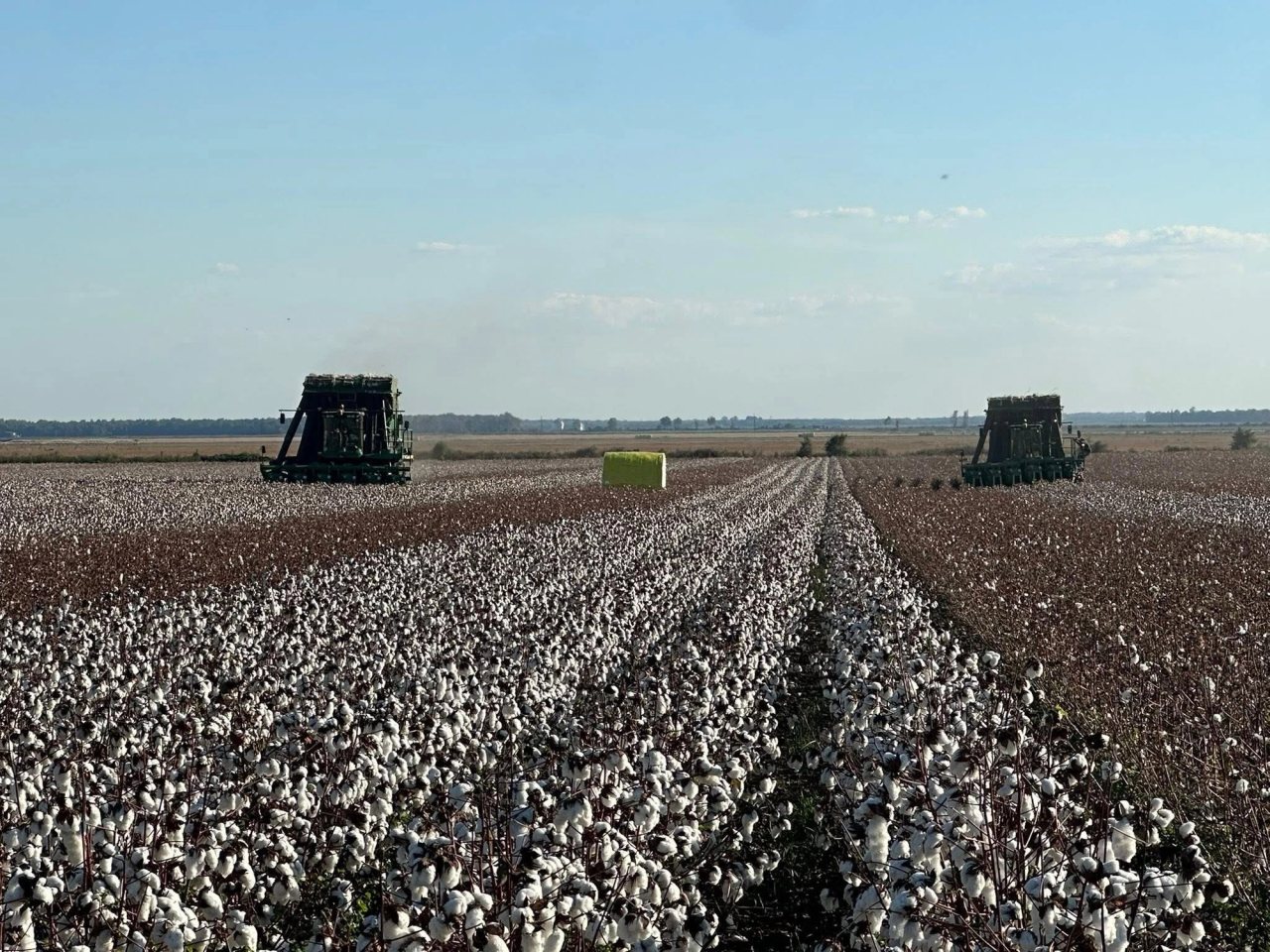
Tractors were small and a number of people still used mules to farm in the late 1950s and early 1960s. In 1960 probably 85% of the cotton was harvested by hand and by 1970, 99% was harvested by machine.
The dust bowl of the 1930s made the news, because of the dramatic film and photos of the dust clouds blackening the skies.
Constant tillage was the main culprit in the dust bowl, but also in the severe erosion from rainfall in the southeastern US that did not make the news, but was as severe or worse than the dust bowl.
As a boy I saw small and large gullies and fence post that had eroded soil almost to the top. Our school had the 4-H program and when I was about ten, our County Agent taught us about soil erosion, and the relation to excessive tillage and he mentioned a concept called no-till that resonated with me. The county Soil Conservation Service also sponsored a weeklong summer camp that taught us conservation concepts as well. This was 25 years after the dustbowl of the 1930s, but although conservation of the soil had improved, farming practices had not changed on most farms. Today, almost 100 years after the dust bowl of the 1930s, I would say that farming practices have improved, but not on most farms.
In 1974 I returned home from college and began to farm with my father. We rarely disagreed about anything, except tillage. Avoiding tillage whenever I could was my goal, but he grew up in a world in which if weeds became established, they were impossible to control and one could lose a crop to weeds. As herbicides improved, we were able to do less tillage. In 1979, I planted a cover crop of vetch on 100 acres of land. I let the vetch become very large, and then used a disk harrow to plow it under. But it took at least four and most likely five tillage trips to prepare the soil and the soil needed rain between some of the tillage trips. We did finally plant soybeans and made the best yield ever, but it was evident that plowing down a cover crop was not the way to proceed in the future. Even as late as 1979-1980, there were very few people that had experience with no-till and cover crops and in this age of information that is available via the internet, it is hard to imagine how difficult it was to obtain information on no-till.
I did hear of the Milan, Tennessee field day on no-till and began to attend during the 1980s. It was and still is a great resource. In 1985 I planted my first no-till crop of grain sorghum, following a cover crop of red clover. I used a planter form the Soil Conservation Service that I spent more hours working to repair than I did using it. It was frustrating but it gave me valuable experience. By the early 1990s we were no-tilling corn and some cotton, but weeds were a problem, as we were accustomed to using a disk harrow to incorporate herbicides and there were no herbicides to spray over the top of the crop, to effectively control all of the weeds. About this time, increasing soil organic matter on our soils became a priority, in addition to stopping soil erosion.
We were farming about 3,000 acres in crops and had about 2,000 acres in pasture that once had been in cropland. So at times I was overwhelmed in trying to change it all, but I needed to also get enough experience on a small scale, so that if I failed it would not bankrupt the farm.
In the late 1980s we also began to enroll some of our most erodible soil in the CRP program and that allowed us to focus our resources on the better land. Also in this period, I began to subscribe to a Rodale publication.
I think it was Organic Farming or Organic Gardening, and although it was not practical for us at the time, I did hope to incorporate those ideas in the future. By the late 1990s the GMO crops were available and oddly enough that offered us a method of weed control that allowed us to plant 100% no-till. It also gave me the confidence to begin adding cover crops to both help prevent erosion, but to also help build organic matter. Many people do not agree with GMO crops, but over my life I have viewed each new version of technology as a tool to allow us to continue farming and to improve the soil, until a better method becomes available.
I foresee a future in which we have biological methods of weed control and insect control and perhaps improved biological compounds to build soil health.
This year we have applied one ton/acre of chicken litter to almost 2,000 acres of land. We have been able to do this, because a long dry spell that facilitated the hauling, storage and application of litter without rain. It is difficult to scale organic methods, but not impossible. The land in cover crops, with chicken liter applied show the most promise in building soil health and yield.
The farms we owned or later bought were degraded 100 years ago or more. Today I would describe most farms in the US as degraded, because soil health is lacking, especially on soils in the humid, rainy, hot southern US.
Most of my career has been spent developing our cropland health, but we also have about 2,000 acres of pasture. Twenty years ago the pH was 4.8 - 5.3 on this land and I was shocked it was so low. But I recalled that this land was “farmed up” until it was no longer capable of producing an economic yield and abandoned to grow up in weeds and grass. A few cattle were put on it and over the years of their impact it did became a decent pasture. The P and K levels were very low as well and even the organic matter was not as expected. So to get the biology working for us, we put lime out over a 15 year period and brought the PH up to the 6.2 level. It took about 8,000 tons of limestone, but we have clover now and the cattle are healthier.
We also subdivided our pastures into smaller paddocks with electric fence and give our grass 30-45 days of rest between grazings. We apply some P and K fertilizer, as we can. The levels are so low that it takes a tremendous amount of fertilizer to move the soil test higher.
The scary thing is much of the world’s soils are in a similar state and it is not economical to bring the fertility up. About 15 years ago I read an article and the person stated that if you are blaming your land for your failures, perhaps you better look at your management first. That really struck a chord with me and led me to develop our pasture land.
All of this has cost a fortune and with the low commodity prices and high stock prices I wonder if I should have just bought stocks instead. Today, I told some younger discouraged farmers that, but then I added, I had a dream or vision of what could be done and the progress of that vision has kept me motivated all these years. It is frustratingly slow and I will not get it all done in my lifetime. I just hope my two sons will continue the progress.