




Leslie Johnson
Animal Manure Management Extension Educator

University of Nebraska - Lincoln
Spring field decisions start below the surface. Get science-backed recommendations tailored to your soil, crops, and climate, then close the loop with real-world results.
Science-backed soil health guidance from agronomists who understand your land, your crops, and your seasons.

🌱 Spring Soil Prep
Test your soil now before planting season. Early intervention on nutrient deficiencies can boost yields by 15-20%.
17
Questions Submitted
13
Expert Answers
36,806
Acres Represented
9
States Represented
Get expert agronomic advice in three simple steps
Share your soil conditions, crops, location, and the issue you're dealing with. Photos and soil test results help too.
Our agronomists review your data, research your specific conditions, and develop recommendations for your operation.
Get actionable answers you can take to the field. Your question also helps other farmers facing the same challenge.
Farmers, researchers, and ag professionals building soil knowledge together
“This is also why community-oriented platforms matter. Spaces like Soil Health Exchange can help create the kind of environment where farmers, engineers, and researchers are not working in separate silos, but instead building around shared questions and shared needs.”
“This is an awesome review and assessment of the continuum of this project over the course of these various publications and research efforts. I think another key point to highlight is the ability to formulate the Hierarchy of Land Use and Management associated with various quantifications of the dynamic properties and soil functions.”
“Our best cotton in 2025 was where we had a cover crop plus chicken litter that was applied in the fall. It is difficult to get chicken litter where we farm, and wet weather hampers our efforts. But the drought we are in at the moment has allowed us to get much needed chicken litter spread.”
Latest research, guides, and field insights from our team
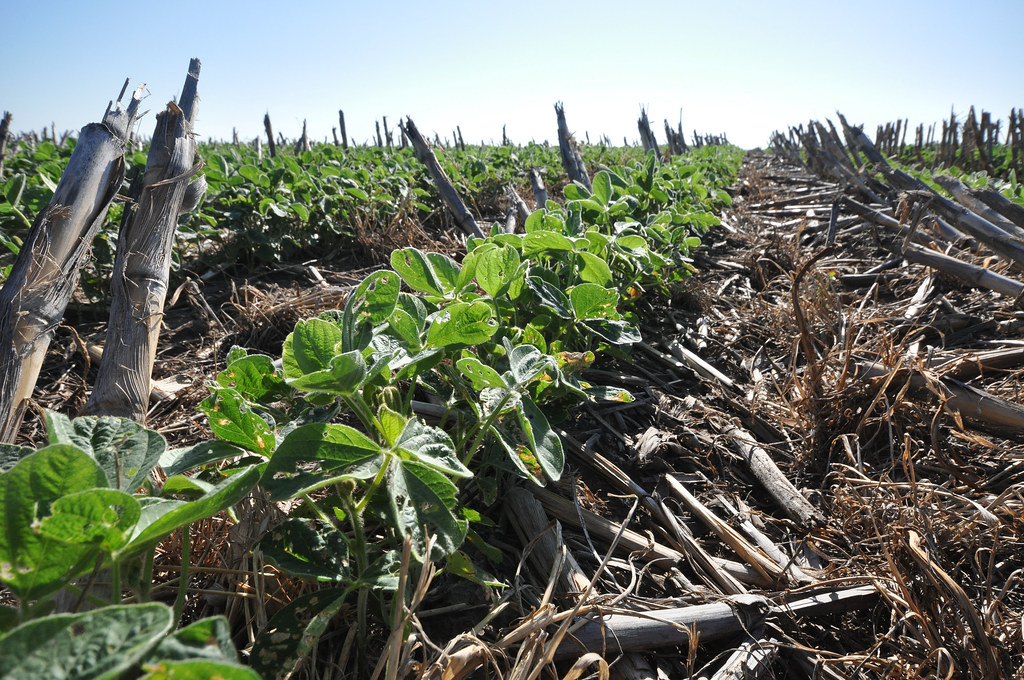
Roller-crimping can reduce glyphosate use, but its success is crop- and region-specific: reliable for soybeans in humid areas, risky for corn, and unsuitable for semi-arid Plains.
The realistic per-acre cost of cover cropping ranges from $15 to $100 — but the break-even math depends on which benefits you capture. Here are the real numbers by region.
PLFA is the most reproducible method for measuring living microbial biomass in soil — but no validated thresholds exist for interpreting the numbers. Here is what the science actually supports.
Expert conversations about soil health, farming practices, and real-world solutions
Soil carbon sequestration is real, but it’s not limitless, and the “how” matters. This episode breaks down the mechanistic constraints that determine whether carbon inputs become stable SOC or return to the atmosphere as CO₂.
A data-driven wrap-up of U.S. organic agriculture in 2025: what the latest science says about soil health and climate resilience, why record demand collided with an “acreage gap,” and how new policy and enforcement (including the Strengthening Organic Enforcement rule) reshaped the organic label. We also cover the on-farm realities—labor and cost pressures—and the technologies gaining traction, from robotic weed control to bio-fertilizers, plus what these shifts signal for 2026.
Every answer is grounded in science and tailored to producer realities. We are building a trusted network of specialists across agronomy and soil systems.
Animal Manure Management Extension Educator

University of Nebraska - Lincoln
Western Region Outreach Scientist and Applied Research Leads

Ward Laboratories Inc.
Assistant Professor of Agronomy and Soil Fertility

New Mexico State University

Run a quick soil assessment or ask your question directly. Answers are published to help the whole farming community.
Get notified when new solutions are published and receive seasonal soil health tips from our experts.
No spam, ever. Unsubscribe anytime.