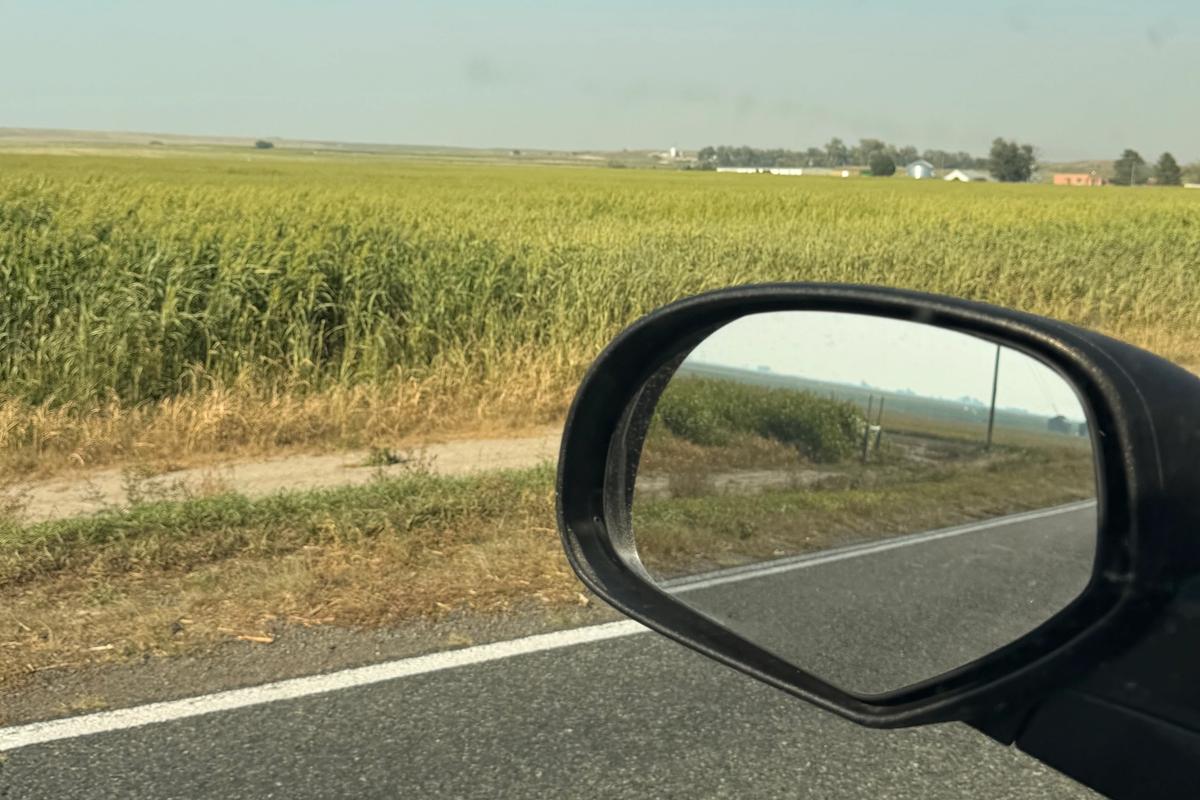
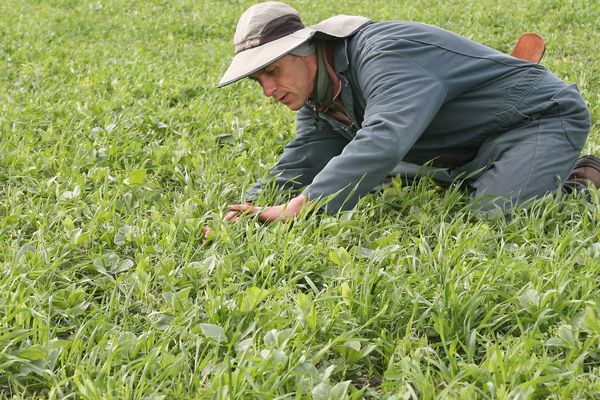
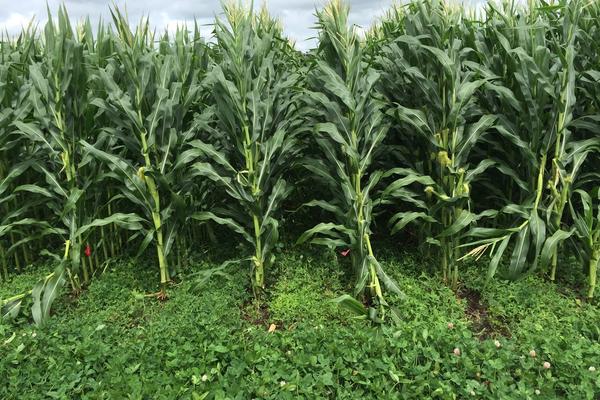
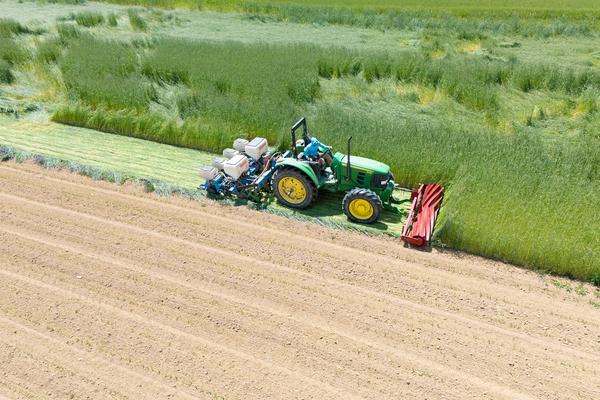
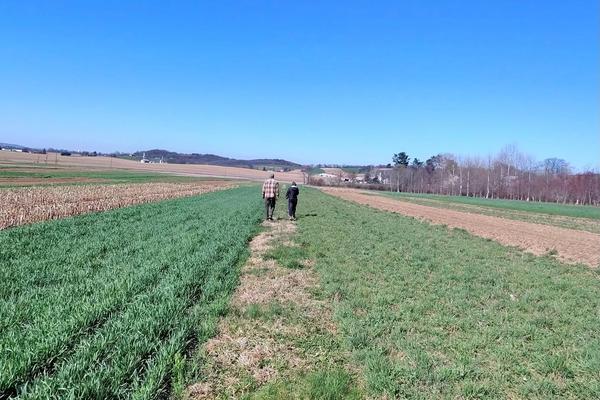
Cover-crop decisions rarely stay at a simple yes or no. Here is what 657 farmers said about where the practice fits, where it does not, and what they watch before trying again.
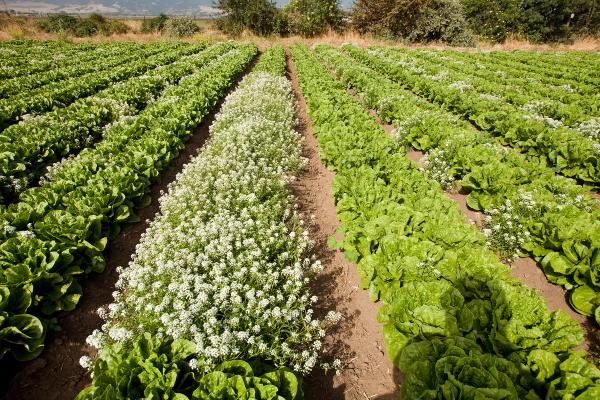
Flowers can bring useful insects to a farm. Learn which life stages attack pests, how to design habitat around farm work, and how to check for crop protection.
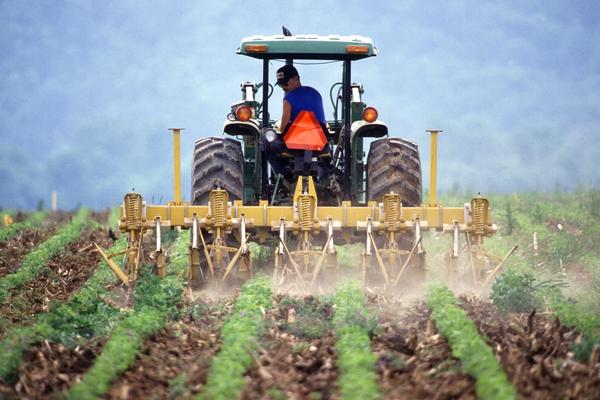
Match weed control to the crop, the weed, and the work calendar. A practical guide to seedbeds, tarps, mulch, cultivation, rotations, and keeping habitat useful.
Follow water across the farm, find the losses worth fixing, and build a practical conservation plan for rainfall, irrigation, soil, storage, and water quality.
A farm does not need dozens of crops to become more diverse. Explore practical ways to add useful diversity through rotations, intercrops, livestock, perennials, and habitat.
The missing connection between soil benefits, farm economics, and the value of stewardship—and how TerraValue can turn field intelligence into an ecosystem dividend.
A practical guide to turning storage capacity, a representative manure analysis, crop need, hauling cost, field conditions, and state requirements into a fall application plan.
A field-by-field guide to deciding whether fall nitrogen should be used at all, how the long gap before crop uptake changes the risk, and when moving N to spring or in-season makes sense.
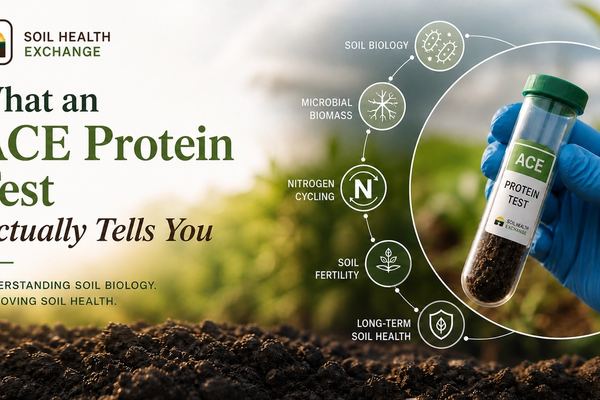
An interactive, field-guided tour of soil organisms, the functions they can support, the conditions that shift the web, and what common biological tests measure.
The number of crops in a rotation matters less than what each crop changes. This evidence-led guide shows how sequence, timing, functional contrast, crop legacy, economics, and operational fit determine whether a rotation actually works.
Weeds can reveal patterns in drainage, compaction, fertility, disturbance, and management—but no species is a soil test. This field guide shows how to turn a weed patch into a hypothesis, verify it, and choose a defensible response.
A practical guide to understanding a corn nitrogen recommendation, checking its economics, accounting for manure and other credits once, and deciding what needs local confirmation before application.
Living mulch can protect soil and keep roots active, but the same companion crop can compete with corn or soybeans. This research-backed guide explains species fit, row-zone suppression, water and nitrogen tradeoffs, weed management, trial design, and break-even decisions.
Find the right fall cover crop for the job. Compare cereal rye, oats, crimson clover, hairy vetch and forage radish by planting window, ecosystem services, seeding rate, cost, winter survival, termination and nitrogen potential.
There is no line in a farm ledger for the rain that stayed, the soil that did not leave, or the crop failure that never happened. The first Soil Health Exchange Editorial is about building the economics that can finally see that work — and return its value to the farm.
A complete guide to USDA organic certification: who holds authority, the roadmap from land history to certificate, what happens when a certifier finds a noncompliance, the records that sustain certification, and which supply-chain operations need certifying.
Regenerative Organic Certified is a certification overseen by the Regenerative Organic Alliance and built on an organic baseline. This guide covers its three pillars, the Bronze, Silver, and Gold levels, the published fee schedule, producer certification versus brand licensing, and how a farm-to-product claim stays intact.
A certificate does not create acreage, processing capacity, or dependable delivery. This guide shows buyers how to define demand, verify current supply, understand transition bottlenecks, and build credible producer programs.
Organic, regenerative, and Regenerative Organic Certified are related ideas, but they are not interchangeable. This guide explains who defines each term, what can be verified, and which claims belong on a product label.
Part 6 of the CEMA 216 Farmer’s Guide: download a fillable field-and-report workbook, decode common NRCS abbreviations, organize pre-work, laboratory, sampling, shipping, repeatability, deliverable, privacy, and review records, and use the current official resource desk.
Part 5 of the CEMA 216 Farmer’s Guide: assemble a traceable final package, audit every required cover-page, map, result, interpretation, monitoring, privacy, and delivery item, and resolve omissions before NRCS administrative review.
Part 2 of the CEMA 216 Farmer’s Guide: turn the conservation objective into a mapped, repeatable sampling plan; collect the required three composites correctly; and preserve the field record for final-year monitoring.
Part 4 of the CEMA 216 Farmer’s Guide: use SHAPE and matched comparisons correctly, investigate conflicting indicators, decide whether PLFA or enzymes are worth the cost, and connect soil-health results to farm outcomes.
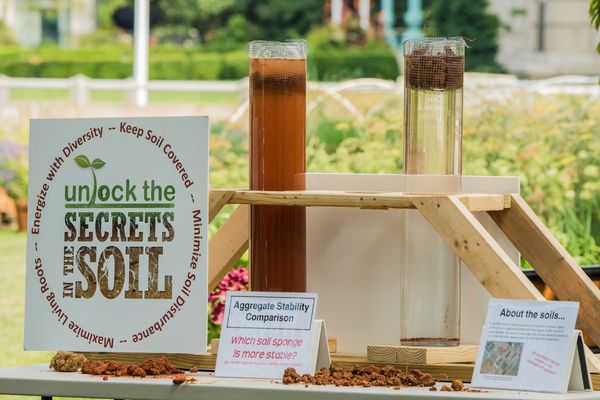
Part 3 of the CEMA 216 Farmer’s Guide: interpret aggregate stability, soil organic carbon, respiration, labile carbon, and bioavailable nitrogen using their methods, units, and field context.
Part 1 of the CEMA 216 Farmer’s Guide: understand the NRCS requirements, choose a Qualified Individual and laboratory, build a valid sampling plan, and confirm contract coverage before collecting soil.
NLFA and PLFA are lipid-biomarker tests, but they measure different lipid pools. Learn what each result means, how AMF-associated 16:1ω5 should be interpreted, why fungal:bacterial ratios are not universal health scores, and what to ask a laboratory before comparing results.
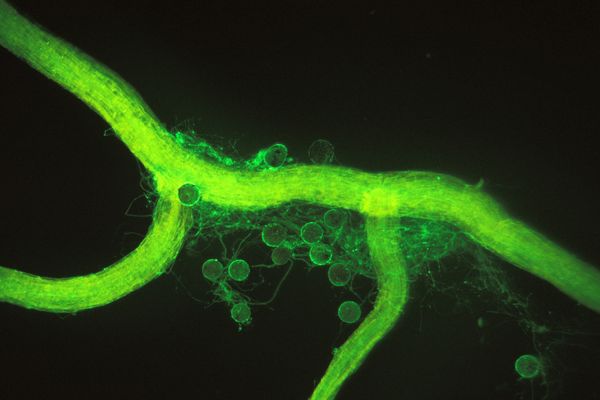
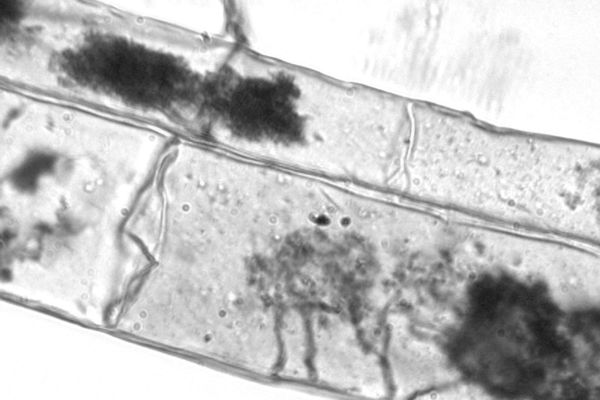
Arbuscular mycorrhizal fungi connect living roots to a much finer soil-foraging network. Here is how the partnership works, which crops host it, what the field data show, how management affects it, and when an AMF inoculant is—or is not—worth testing.
There is no single AMF number. This practical guide explains how to measure root colonization, spores, infective propagules, hyphae, biomass, DNA, community composition, inoculant establishment, and nutrient transfer—from basic microscopy to isotope tracing and advanced imaging.
Agricultural carbon markets in 2026 are more mature, but they are still highly conditional. Farmer returns depend on acreage, baseline practices, verification costs, and contract terms, so the practical question is whether a carbon program creates meaningful net value for a specific farm.
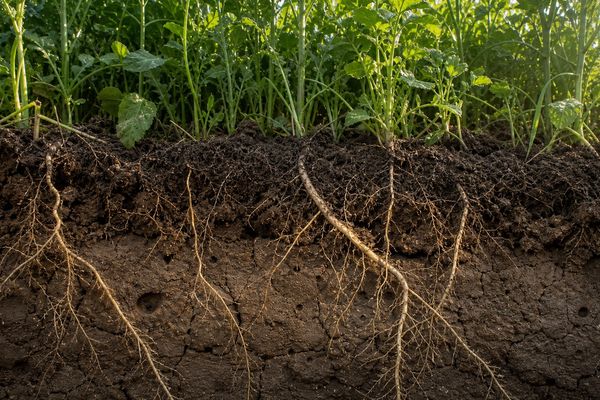
Deep-rooted cover crops can improve porosity by creating biopores, but choosing the right crop and judging the result is not simple. Evidence shows these roots can help following crops find pathways through compacted layers, but they do not fully repair bulk compaction or replace a well-timed subsoiler.
If your local NRCS office is hard to reach, you still have options. Start with Extension to build a field-level soil-health plan, then use your conservation district, state NRCS office, or a certified Technical Service Provider to connect that plan to EQIP, CSP, or other cost-share programs.
Healthy soil can improve water storage, but the popular claim that every 1% increase in soil organic matter stores 20,000 gallons per acre is usually overstated. A more realistic expectation is a modest, texture-dependent gain in plant-available water, plus better infiltration, deeper rooting, and improved drought resilience.
A practical way to assess replant risk, separate disease from other soil constraints, compare preplant treatments, choose rootstocks, and budget the orchard before trees go into the ground.
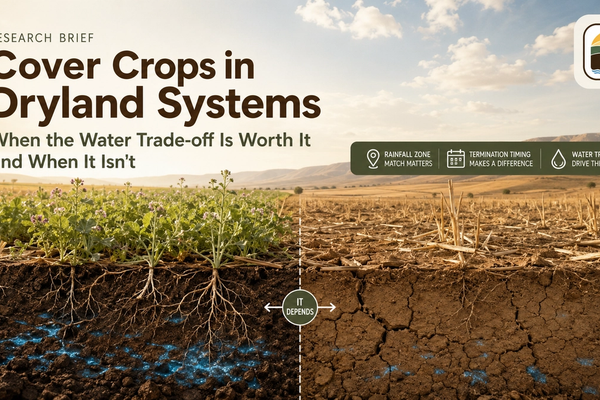
Cover crops cost water — that much is true. But whether that cost kills your next wheat crop depends on rainfall zone, termination timing, and rotation type, not on a blanket rule. This article works through the actual trade-off numbers for dryland grain and wheat-fallow systems so you can make the call for your operation.
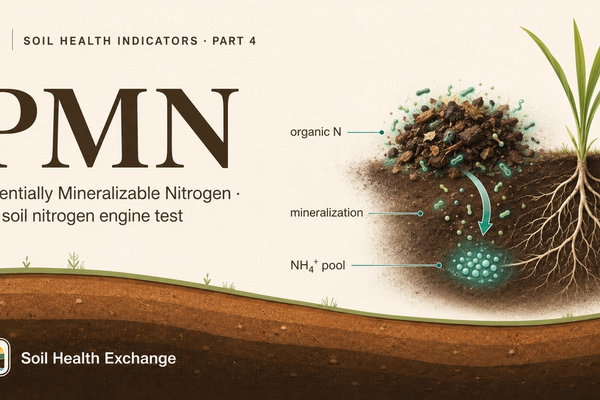
PMN estimates a soil's capacity to release plant-available nitrogen under a defined laboratory method. Learn what changes the result, how to compare samples, and when it can support a nitrogen decision.
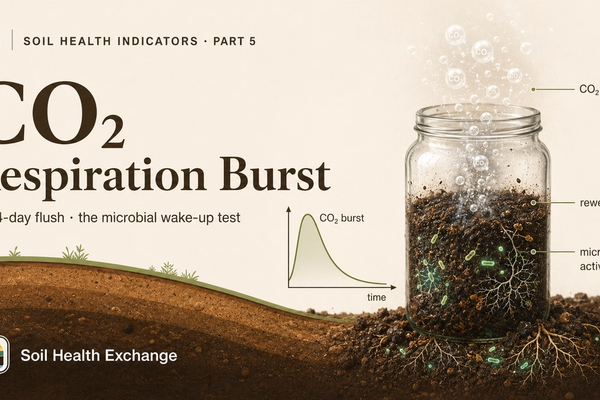
Part 5 of our soil health indicator series: how the CO2 burst test (Solvita, Haney, Cornell CASH) measures the living, active fraction of your soil's carbon, how to read the number against texture-specific research benchmarks and producer-facing CO2-C bands, which management practices actually move it, and why the same soil can give very different answers depending on which lab and method you use.
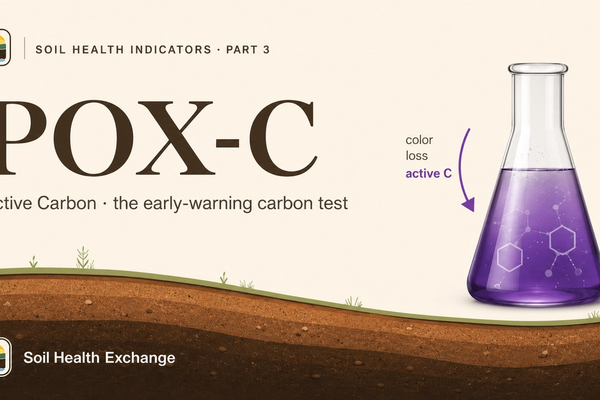
Permanganate-oxidizable carbon (POX-C) is the most popular "active carbon" soil health test for good reason: it's cheap, repeatable, and moves with management faster than total organic carbon. Here's what the number means, how to read it for your soil, what actually shifts it, and the limitations that should keep you from over-interpreting it.
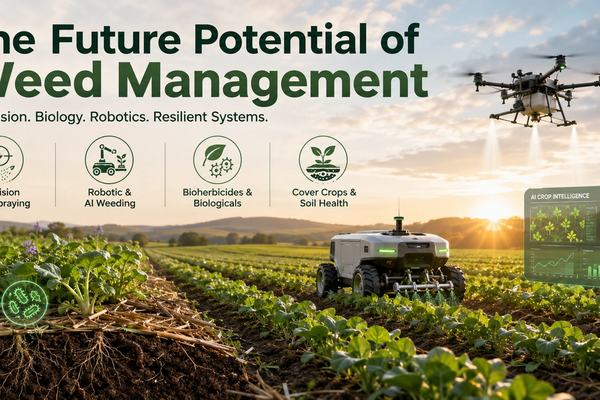
A practical guide to combining prevention, crop competition, herbicides, mechanical control, precision spraying, and seedbank management—and to separating field-ready tools from promising ideas.
Soil Health Exchange Research Desk||3 min|39 reads
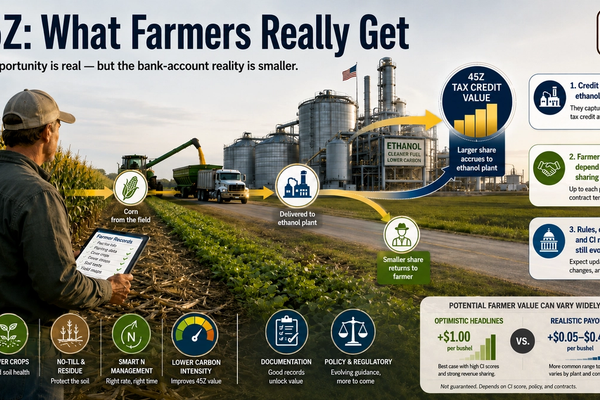
$200 per acre is the headline. The realistic range is $16–$162 per acre depending on CI reduction, sharing percentage, and yield — with $71 per acre as the most defensible middle estimate. Run your own numbers in the embedded calculator, and read the honest math, the documentation burden, and what to do now.
A field guide to matching cover-crop species and growth stage with roller-crimping, mowing, tillage, winterkill, grazing, or a labeled herbicide plan—without losing the cash-crop planting window.
A current research roundup of cover-crop adoption, benefits, observed costs, yield effects, grazing returns, and 2026 incentive rules, with the limits of each dataset made explicit.
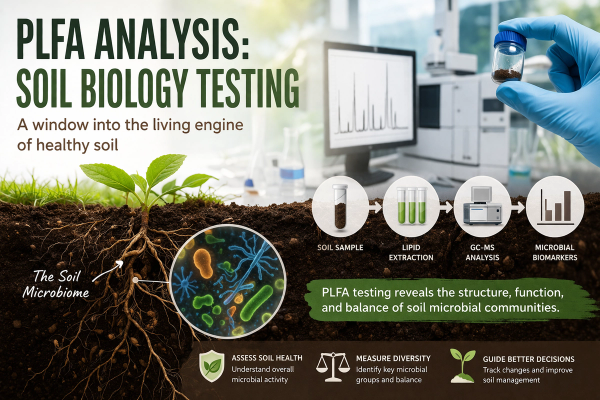
PLFA is an established quantitative method for tracking directional changes in living microbial biomass under consistent protocols — but no validated thresholds exist for interpreting the numbers. Here is what the science actually supports.
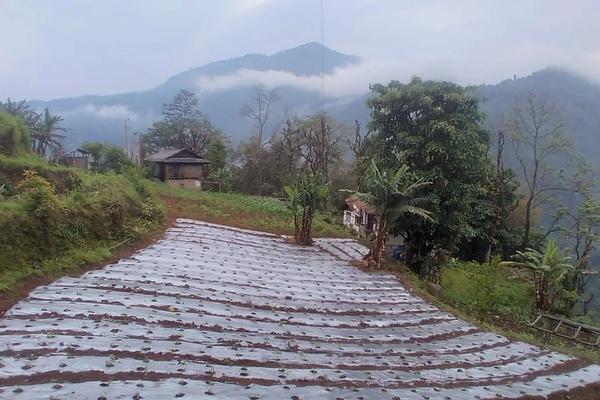
Sikkim shows what coordinated public policy can do for organic certification across a state. It also shows why production support, processing, markets, and farmer income must be built alongside certification.
Virtual fencing isn’t automation—it’s timing. In sheep and goats, precise moves protect root recovery, reduce parasite exposure, and keep nutrients cycling where they belong: in the soil.
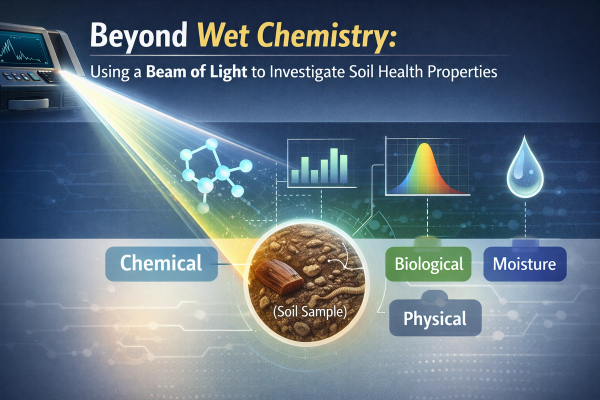
Mid-infrared spectroscopy can estimate many soil health indicators from one rapid scan, reducing cost and turnaround while making large-scale, routine field monitoring far more practical.
Soil microbial communities regulate nutrient cycling, soil structure, and plant stress responses—processes that directly affect crop productivity and yield stability. Microbial inoculants (often marketed as biofertilizers/biostimulants) can improve crop performance, but their efficacy is highly variable because establishment and function depend on environmental and biological context.
A sandy, semi-arid soil should not be graded against a humid clay loam. Here is how Soil Health Gap, ecological reference units, and a Two-Tier framework can replace generic targets with fairer, field-specific benchmarks.
A soil test earns its keep when it changes a costly decision. Field-response data show where phosphorus is likely to pay, where it probably will not, and why representative sampling matters more than a long list of analyses.
Saurav Das||3 min|12 reads
Stay informed
New articles, seasonal field insights, and research translation delivered to your inbox.