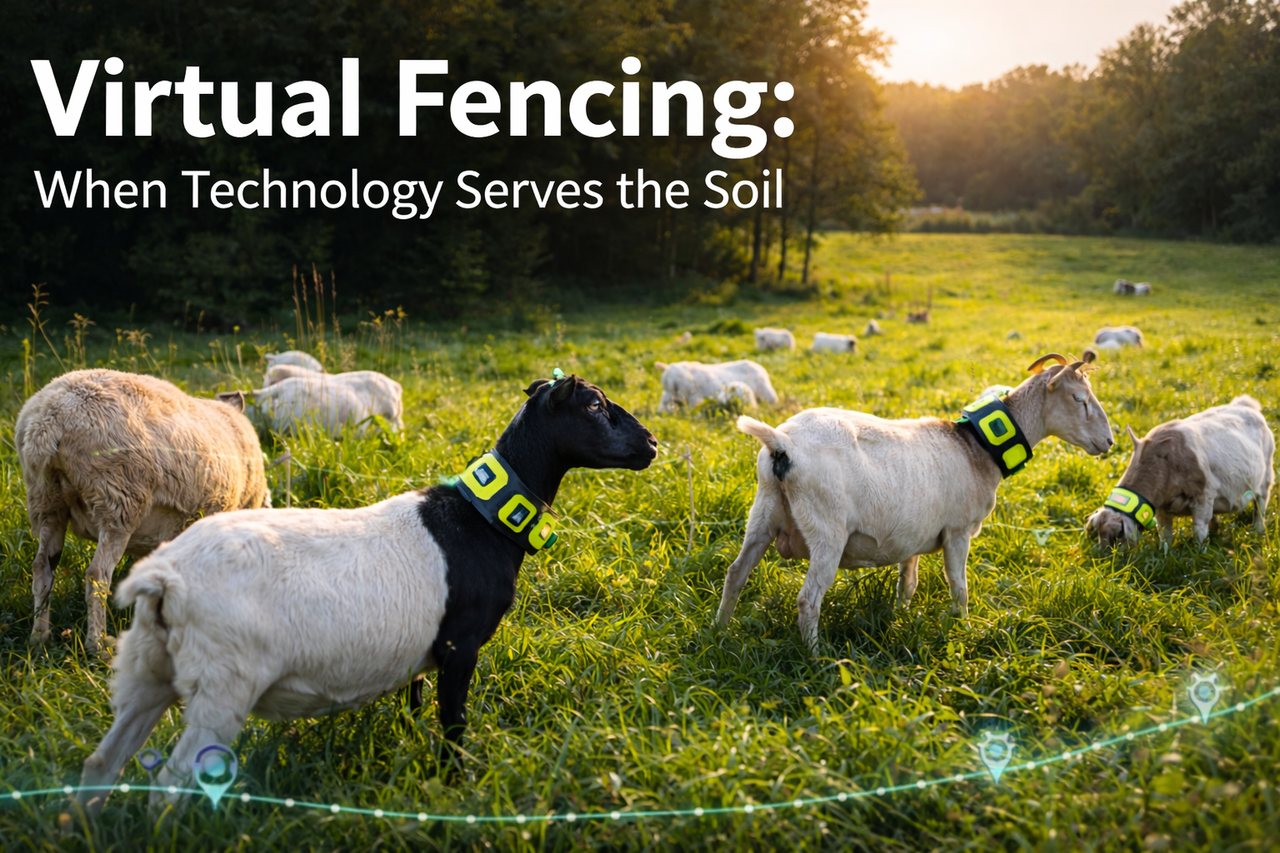
Soil Does Not Care About Bluetooth
My wife, our two sons, and I manage sheep and goats across a landscape that carries memory: twenty-two years of CP2 CRP, fescue-dominant hay ground that exported nutrients for decades, a 2024 soybean field transitioning away from chemical dependency, native warm-season grasses rebuilding after invasive pressure, and forest edges slowly responding to managed browsing.
Soil does not care about innovation. It responds to pressure, rest, and timing.
The only reason virtual fencing matters is if it improves those three.
The Struggle: Small Ruminants Are Not Cattle
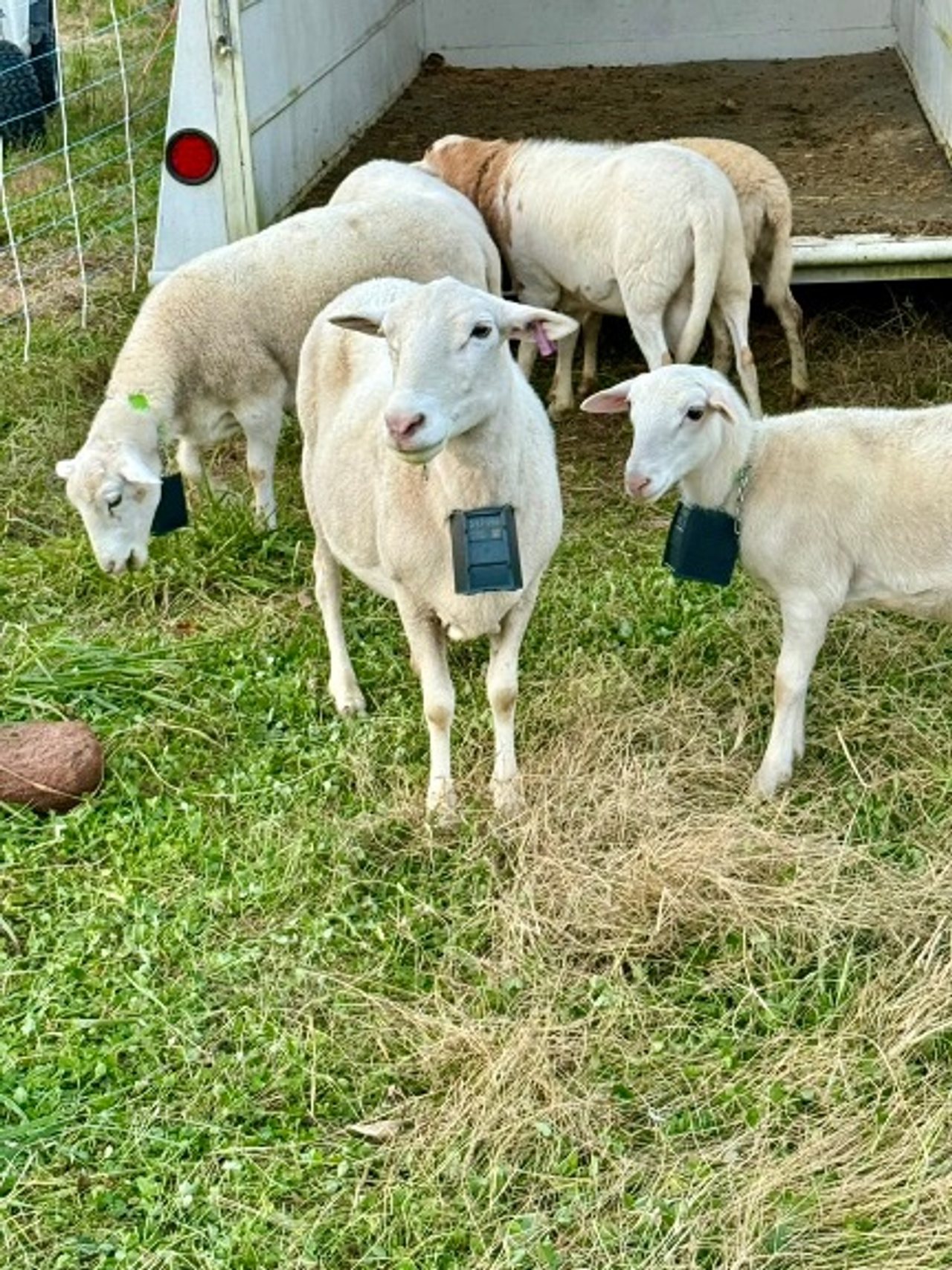
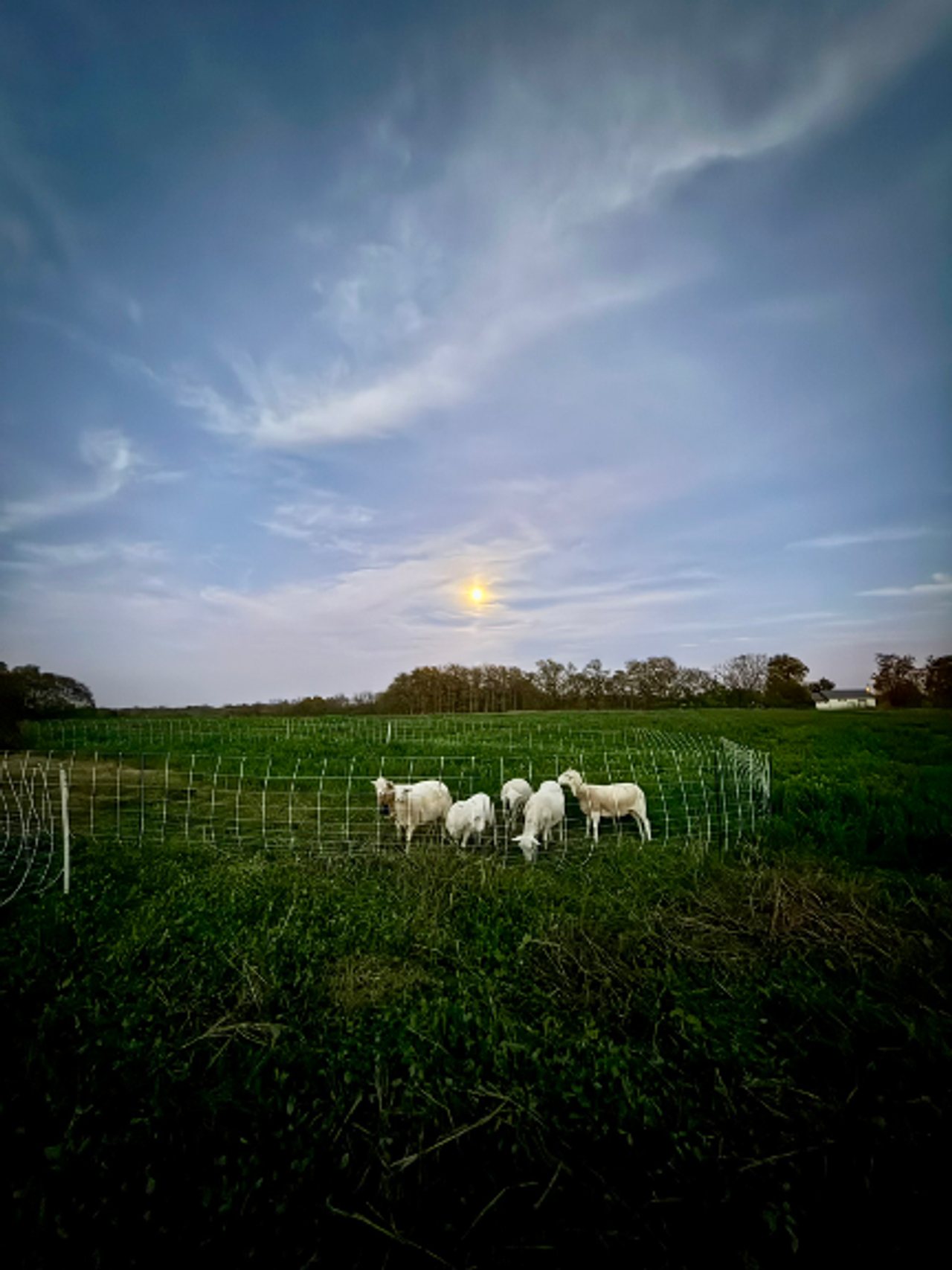
Most virtual fence systems were engineered for cattle. Sheep and goats quickly teach you otherwise. Early implementation meant collar adjustments, reinforcing tone association with temporary poly wire, boundary testing when forage incentive dropped, and accepting that perimeter fencing remains non-negotiable.
Training older, stubborn goats to respect a virtual boundary proved more difficult than expected. Animals that spent years testing physical fences do not unlearn that instinct overnight. Tone association takes longer. Pressure at the boundary increases. In some cases, retraining feels like undoing years of learned behavior.
We are now evaluating whether starting fresh with younger goats, animals that learn the virtual boundary as their first system, may produce cleaner, more consistent results.
Technology adoption in livestock is not just hardware. It is behavioral imprinting.
Virtual fencing is not automation. It amplifies management. It exposes weak assumptions quickly — and that friction builds clarity.
The Success: Precision Where It Counts
Where virtual fencing began to prove its value was not in labor savings, but in timing precision.
We were able to:
• Move animals before overgrazing occurred
• Exclude recently impacted areas to protect root recharge
• Adjust density based on forage height instead of calendar dates
• Target woody encroachment without fragmenting the entire system
Precision compounds. Soil health is cumulative.
Parasites: The Early Biological Indicator
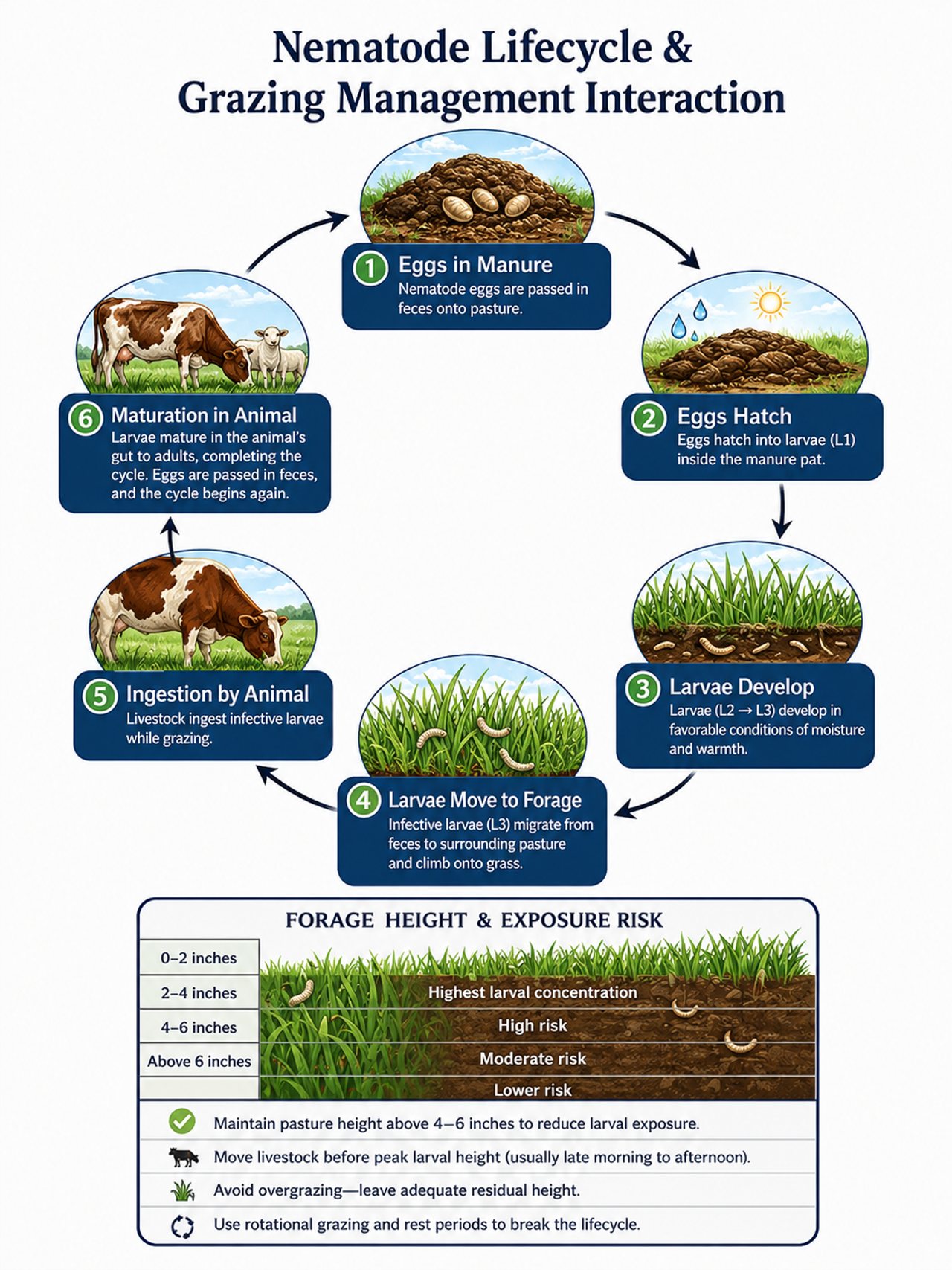
Small ruminant parasites follow a predictable lifecycle: eggs shed in manure, larval development under moisture, migration upward on forage, and reinfection during grazing. Extended occupancy increases exposure windows. Short-duration grazing reduces them.
Routine fecal egg counts using McMaster slides showed manageable parasite loads well below intervention thresholds in sampled animals under disciplined rotation. No deworming was required. This is not a long-term dataset. It is an early biological signal that timing matters.
Animal health and soil health are linked through grazing management. When we move before peak larval climb and maintain adequate forage height, we protect both root systems and livestock.
Tool or Multiplier?
Virtual fencing becomes a distraction when treated as a labor-saving gadget. It becomes a multiplier when treated as a precision instrument serving soil biology.
If it sharpens timing, shortens parasite exposure cycles, protects root recharge windows, and keeps nutrients cycling on the property, it belongs in the regenerative toolbox.
How to Learn More
For producers:
• Start with strong perimeter fencing
• Use temporary physical training lines early
• Monitor forage height, not just acreage
• Conduct baseline fecal egg counts
For researchers and collaborators:
• Link boundary data to forage height modeling
• Quantify parasite exposure relative to movement timing
• Measure soil biological response under reduced chemical inputs
Regenerative agriculture is not anti-technology. It is pro-alignment. When digital tools serve ecological timing, resilience follows.