- Location
- Como, MS
- Crop
- Cotton
- Soil
- Silty Loam
- Acres
- 7,000
The challenge
“How to build soil organic matter ?”
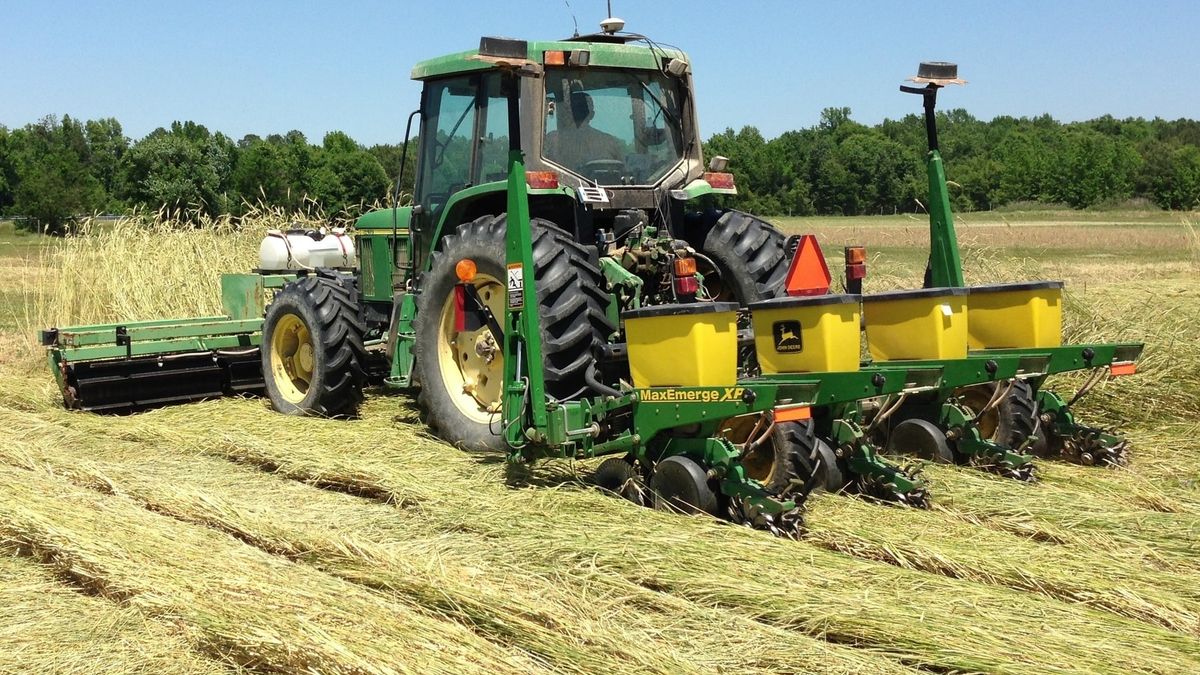
For a silty loam in north MS cotton, the fastest SOM gains come from one simple equation:
Net SOM gain = (more C inputs + better aggregation) − (erosion + rapid decomposition).
You’re already doing the two biggest “minus” controls (no-till + cover crops). To accelerate SOM, focus on the next limiting steps below.
1) First: stop “losing carbon” faster than you can add it (silty loam priority)
Silty loams can build SOM well, but they also erode and crust easily. If you lose just a thin layer of topsoil in a big storm, you can erase multiple years of cover-crop carbon gains. So the #1 SOM move is maximize year-round cover + surface residue (especially over winter/early spring).
2) Push cover crop biomass (this is the main SOM “throttle”)
SOM responds to consistent biomass more than fancy mixes. In practice, aim for ≥4,000–6,000 lb dry matter/ac of winter cover most years (higher is better if it doesn’t cost you planting moisture).
A proven cotton-friendly approach is a grass + legume mix:
- Cereal rye for high biomass + weed suppression
- Crimson clover or hairy vetch to lower C:N and reduce N tie-up
MSU seeding-rate guidance for blends (typical ranges):
- Cereal rye 25–40 lb/ac
- Crimson clover 12–16 lb/ac (PLS)
- Hairy vetch 20–25 lb/ac
- Radish/brassica (optional) 3–6 lb/ac
3) Termination timing: don’t let SOM goals hurt cotton stand/yield
Termination is where many cotton systems “leak” yield (and then people abandon covers).
Two key points:
- MSU notes termination timing should account for soil moisture, insects (“green bridge”), and the cash crop; terminating earlier can reduce pest transfer risk.
- Research in cotton shows that very late termination can start to penalize cotton growth; for example, crimson clover terminated in Feb–Apr produced similar cotton height at first bloom, while May termination reduced height.
Practical rule (rainfed north MS): terminate ~3–5 weeks before planting cotton unless you have strong soil moisture and a planter setup designed for heavy residue.
4) Make legumes “work” by fixing N (pH + P matter more than people think)
Legume biomass (and N fixation) collapses if pH and P are off. A southern cover-crop N calculator explicitly flags best performance with soil pH ~6.0–6.5, adequate fertility, and proper inoculation.
Also—think in biomass × %N (not species names):
- Example from the calculator: 5,000 lb/ac crimson clover at ~3% N contains ~150 lb N/ac in the plant.
(Cotton won’t get all of that in-season, but it tells you what’s possible when the stand is excellent.)
5) Consider “imported carbon” if you want faster SOM change (and you can source it cleanly)
If you want SOM to move faster than cover crops alone, you need additional organic inputs.
A strong Mississippi-relevant option is poultry litter + cover residue in no-till cotton:
- An Agronomy Journal study on no-till upland soils found that integrating poultry litter with cover crops improved soil metrics and, in drier years, increased lint yield when litter was applied on top of cover residue.
Just manage P carefully (rate by soil test) and keep it covered to reduce runoff risk.
6) Set realistic timelines (and measure the right depth)
In a warm, humid climate, SOM turns over fast—so expect:
- 0–2 inch SOM to respond first (often within 2–3 years if biomass is consistent)
- 0–6 inch SOM to shift more slowly (~4–8+ years)
A useful back-of-envelope to calibrate expectations:
- 5,000 lb cover biomass/ac ≈ ~2,000 lb C/ac added (assuming ~40% C in dry matter).
- If ~10–20% becomes longer-lived SOM, that’s ~200–400 lb C/ac/year retained.
- In the top 6 inches, a 0.1% SOC increase is on the order of ~2000 lb C/ac (depends on bulk density), so you’re typically looking at multiple years of consistent inputs.
What I’d recommend you do this season (simple, high ROI)
- Pick a rye + legume mix and manage it for biomass (plant as early as you can after harvest).
- Terminate 3–5 weeks pre-plant (adjust with moisture/pest risk).
- Run soil tests with depth (0–2, 2–6, optionally 6–12) + note bulk density once so you can translate % to pounds of C.
- If available and economical, trial a small strip of poultry litter on cover residue (rate by soil test P), compare infiltration/stand/yield.
If you tell me (a) your current SOM %, (b) typical cover species and termination date, and (c) whether you’re irrigated or dryland, I can suggest a tight “cover mix + timing + N plan” that’s specific to your field and risk tolerance.
References:
- https://extension.msstate.edu/publications/cover-crops-seeding-rates-and-planting-depths-for-cool-season-species?utm_source=chatgpt.com
- Poultry Litter and Cover Crop Integration into No-till Cotton on Upland Soil
- Thirty-four years of no-tillage and cover crops improve soil quality and increase cotton yield in Alfisols, Southeastern USA
In practice
Success stories
Sledge Taylor
Success Story"Our best cotton in 2025 was where we had a cover crop plus chicken litter that was applied in the fall. It is difficult to get chicken litter where we farm, and wet weather hampers our efforts. But the drought we are in at the moment has allowed us to get much needed chicken litter spread."
Cite this
Reference this work
Soil Health Exchange Editorial (2025). Organic Matter: Cotton. Soil Health Exchange. SHE-FA-2025-0003. https://soilhealthexchange.com/cite/SHE-FA-2025-0003
Soil Health Exchange assigns a stable identifier to every published answer and article. Citations keep working even if the URL changes later.
Keep exploring
Similar questions

Red Soil Cracks in the North Carolina Piedmont: Diagnose the Limiting Layer Before Treating It
Guilford, NC
How much manure is enough — and what happens to the rest?
Clay County, Nebraska

Cereal rye is the right species for this late, pre-soybean slot
Iowa

Addressing seed rain and resprouting of Honeysuckle and Marigold
Lancaster, NE
Discussion
No comments yet. Be the first to share your thoughts!