- Location
- Nebraska
- Crop
- Corn
The challenge
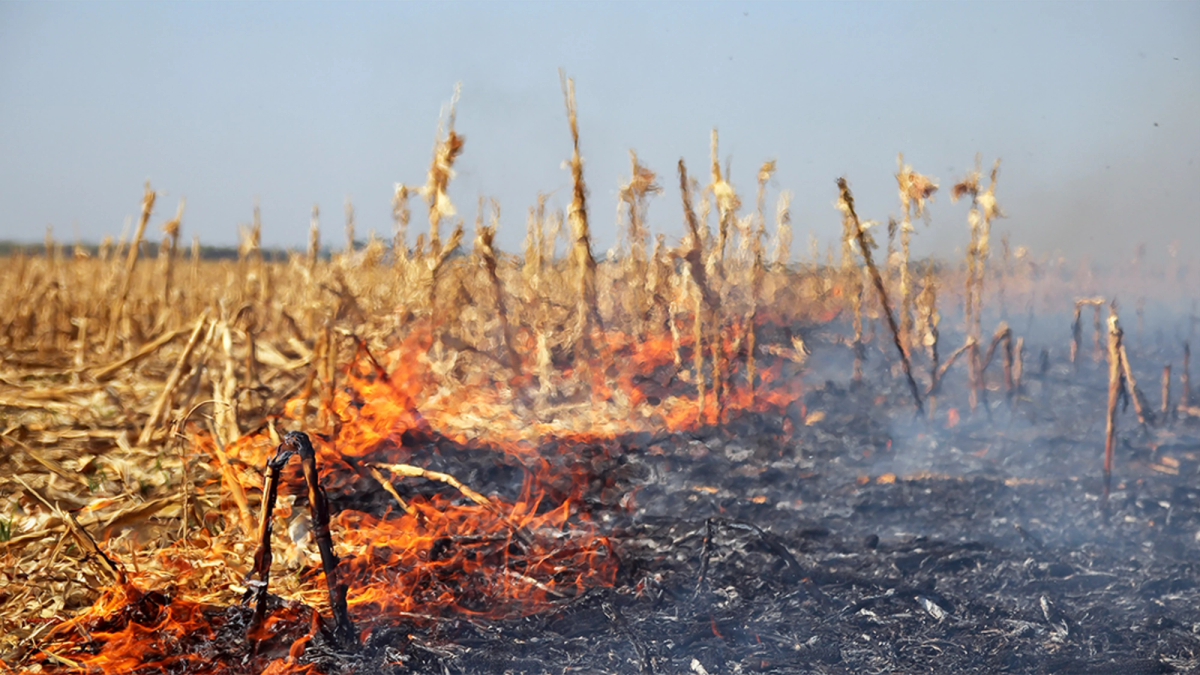
“"Fall 2022 fires in Saline County seem to be negatively impacting irrigated corn yields in at least one field. Corn yield was 70 bu/ac less based on the yield monitor between fall 2022 burned and unburned areas in the field. Farmer doesn't think nitrogen, sulfur or soil moisture was likely a yield-limiting factor, given his irrigation management and spring fertilizer program. Any potential soil health factors that could be impacting yield?"”

Humberto Blanco
Professor of Soil Science UNL Department of Agronomy and Horticulture
Residue burning is not advisable in general. Strip till or reduced till or some residue baling can be options to manage large amounts of residues if cover crops and rotations under no-till do not help at all with residue mineralization. Simply adding inorganic fertilizer and water may not address all the issues with burning.
Why Fire Impacts Soil Health
Burning residues removes N, P, S, K, and other nutrients, and often increases soil pH (acidic soil may benefit). It also adversely affects soil biological activity and community, which are needed for nitrification. It can eliminate/reduce beneficial insects and soil organisms that contribute to nutrient cycling. Residues reduce evaporation and conserve soil water 24/7 unlike intermittent irrigation. These may be some of the reasons why the field with residues burned may be yielding lower.
Water Repellency After Fire
Fire induces water repellency to soil, an immediate effect. Testing soil water repellency in fire-affected cropland soils as compared to non-fire affected soils using the water drop penetration method shows differences can be large enough to reduce rain or irrigation infiltration in fire-affected soils. The soil appeared hydrophobic, it took several small rains until the soil started allowing rain to infiltrate after the fires.
Field Observations
In Nuckolls County, the 2023 corn in the 2022 wildfire areas were not harvested due to the drought (non-irrigated fields in that area). Most everyone attempted to seed rye after the wildfires just to get some ground cover. Where winds blew the soil and the rye seed away, the corn grew better. Where the rye established (spindly and terrible stand), there was no corn at all, or it was only a few inches tall. However, the rye did help hold the soil in place. This though suggests a tradeoff under extreme moisture limitation, rye provided soil stabilization and reduced wind erosion, but likely depleted soil moisture (and potentially reduced early N availability), exacerbating drought stress and impacting corn establishment.
In northeast Nebraska, irrigated soybean from burned field had a yield penalty of 8 bu/ac compared to irrigated soybean from unburned field.
Recommendation
It would be great to run some soil health tests (rapid tests) between the burned and unburned fields to better understand the specific soil health impacts in your situation.
Topics
Cite this
Reference this work
Humberto Blanco, Jenny Rees, Mitiku Mamo (2023). Soil Health Factors Impacting Yield Following Wildfire. Soil Health Exchange. SHE-FA-2023-0002. https://soilhealthexchange.com/cite/SHE-FA-2023-0002
Soil Health Exchange assigns a stable identifier to every published answer and article. Citations keep working even if the URL changes later.
Keep exploring
Similar questions
Archive lineage: CropWatch UNL · Read original publication →
Discussion
No comments yet. Be the first to share your thoughts!