- Location
- IA
- Crop
- Corn
- Acres
- 1,000
The challenge
“I planted cereal rye cover before corn. How much nitrogen credit do I get, when does it become available, and how should I adjust my fertilizer program?”

Jed Grow, PhD
PhD, Agronomist and Soil Scientist, CCA, 4RNMS · AGVISE Laboratories · North Dakota, United States
Well, not as straightforward. It depends on the biomass and when you terminated it.
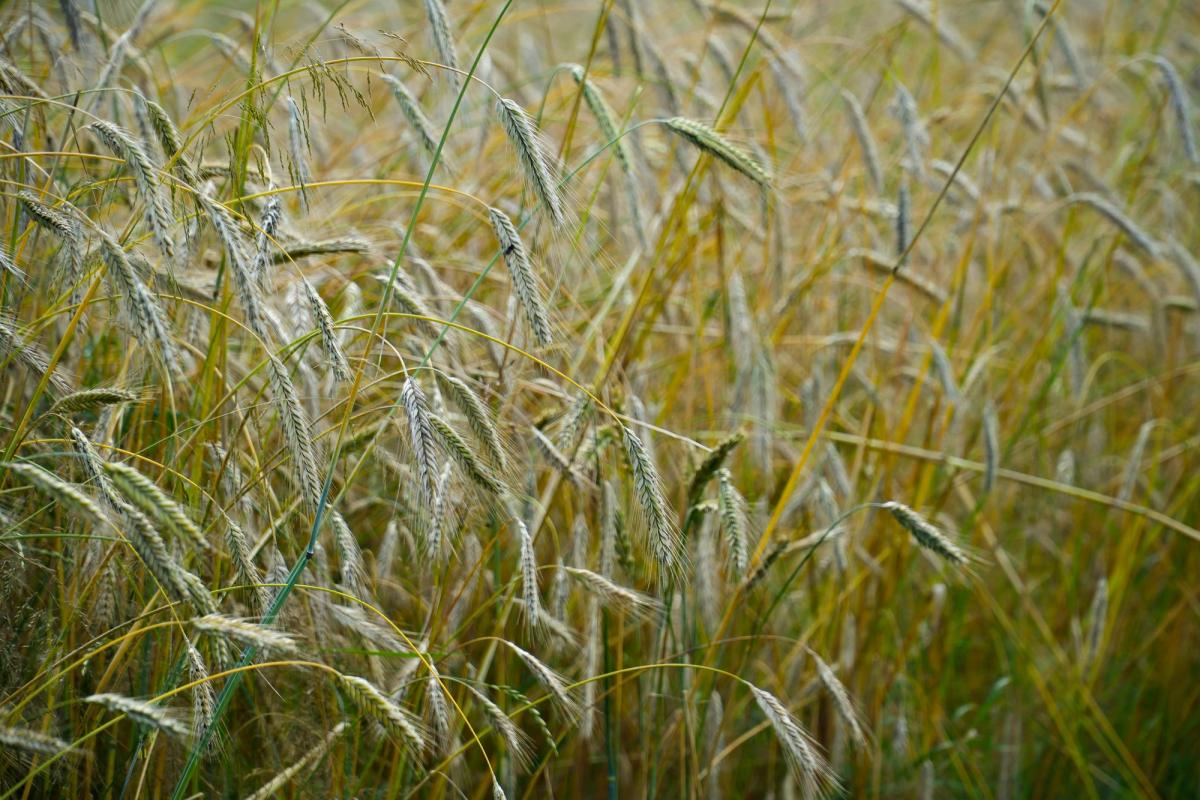
If rye biomass reaches 1,000 lb/A, consider adding starter nitrogen and/or sulfur applied near the row at planting. Rye can tie up N when there's a lot of biomass, and depending on the conditions, you might see an N penalty almost immediately.
Research at Iowa State showed that adding starter N is a management practice that can offset the negative corn yield effects of a rye cover crop. Overall, I think there's about a 2% yield drag in Iowa following rye. However, research has shown that in a rye cover crop system before corn with early rye termination, starter N — in either tilled or no-till systems — can offset potential negative effects of the cover crop. A higher starter rate (30 lb N/acre) could be especially useful if you intend to apply the majority of fertilizer N as a sidedress.
That said, this comes with a caveat: this work is still being researched. Other studies in Iowa have shown that 50 lb N/acre as a starter following rye increased early-season N uptake but had an inconsistent impact on corn yields.
Terminate when rye is less than 8 inches tall to minimize the risk of N immobilization and reduced corn yield potential. Annual ryegrass terminated by a fall frost, or brassica mixes, are less risky for N tie-up.
As far as a future N credit goes, there's often 20–60 lb of N per acre in aboveground biomass. Vetsch noted that 60% or more of that N could become available within 10 days. This is based on research at Iowa State (Sawyer et al. 2017) showing that 60–77% of the nitrogen in cereal rye was released 105 days after spring termination.
Disease pressure is another factor to consider.
Key takeaways:
- Terminate cereal rye before it reaches 8 inches tall or ~1,000 lb/A biomass to minimize N immobilization risk.
- Consider 30 lb N/acre starter at planting, especially if you're applying the majority of N as sidedress.
- Expect ~2% yield drag on average in Iowa following rye, with high variability across studies.
- Aboveground biomass typically contains 20–60 lb N/acre; 60–77% releases within ~105 days of spring termination (Sawyer et al. 2017).
- Annual ryegrass (winter-killed) and brassica mixes carry lower N tie-up risk than cereal rye.
- Account for disease pressure in the rye-to-corn transition.
Cite this
Reference this work
Jed Grow, PhD (2026). Cereal Rye Before Corn: Should You Adjust Your Nitrogen Rate?. Soil Health Exchange. SHE-FA-2026-0001. https://soilhealthexchange.com/cite/SHE-FA-2026-0001
Soil Health Exchange assigns a stable identifier to every published answer and article. Citations keep working even if the URL changes later.
Discussion (2)
The 64 thousand dollar question that nobody has answers to. Been doing covers for years and crops part of that rotation have been fantastic, but I haven't dropped my bagged fert applications by any sufficient amount, maybe 10 units odds..
Keep exploring
Similar questions
How much manure is enough — and what happens to the rest?
Clay County, Nebraska
Reducing Cover-Crop Herbicide Use in Nebraska: Three Lanes, Measured Before Scaling
Nebraska

Cereal rye is the right species for this late, pre-soybean slot
Iowa
Organic Corn in Clover Living Mulch: Protect the Row and Test the Yield Response
PA
I work with many farms that have a harvested huge rye or triticale crop prior to corn planting and I always suggest extra nitrogen or at least 45 # N or they will get a drag or yellow, weaker stand starts. It takes 230 units of N out of ground over the life of a triticale or rye that is 4t of dm and 18% cp. As we strive for higher yields and plant our cover crops earlier, we need more N.