- Location
- Hayes County, Nebraska
- Crop
- Wheat, Corn, Grain Sorghum
- Soil
- Blackwood Silt Loam
- Acres
- 3,000
The challenge
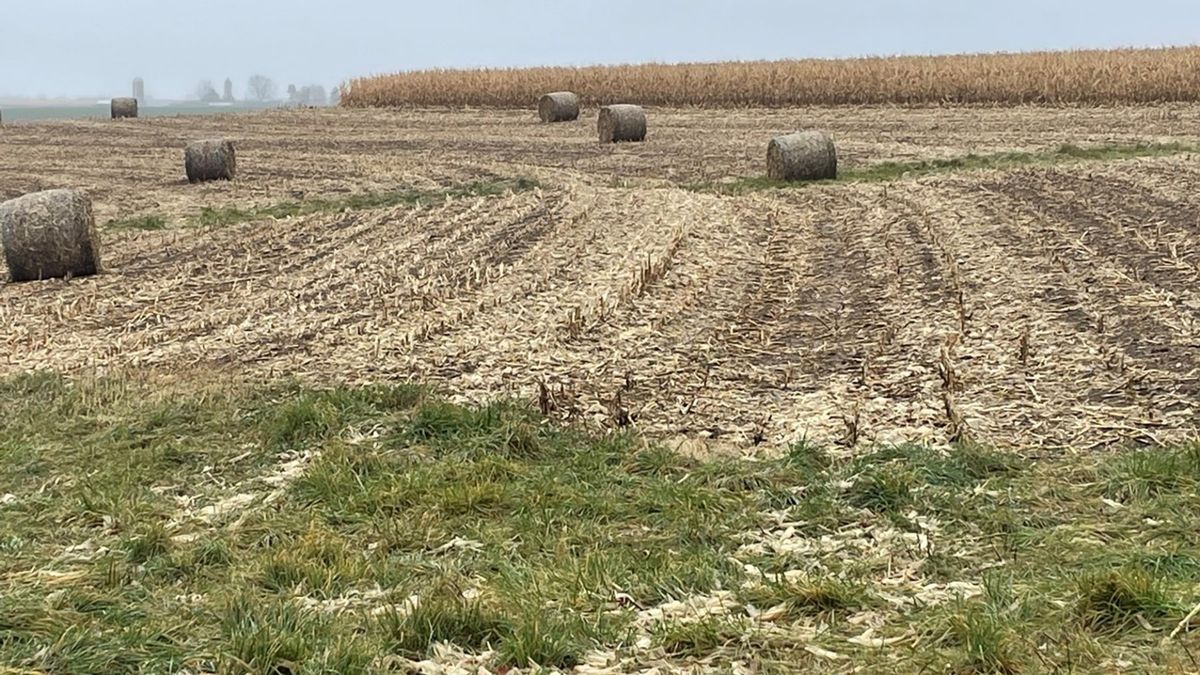
“"I farm with my dad in southwest Nebraska in Hayes County. We farm roughly 3,000 acres, all of which is dryland. We produce wheat, corn and grain sorghum. We have one field in particular that has us stumped. The field is 99 acres. Its soil type is Blackwood silt loam. We had terraces built on this field in 2010. Prior to the terraces being built, it was consistently one of our best-yielding fields. Since the terraces were built, it has become one of our worst-yielding fields. This field was also ripped shortly after the terraces were built to try to prevent any compaction issues that may have resulted from the construction of the terraces. None of the fertility programs we have tried seem to remedy the problem. Any insight into the causation of this problem, or any solutions you might be aware of would be greatly appreciated."”

Carolina Córdova
Assistant Professor and Statewide Soil Health Specialist UNL Department of Agronomy and Horticulture
Understanding Level Terraces
Level terraces, also known as flat channel terraces, are ideally suited for regions with arid to semi-arid climates and gentle slopes not exceeding 4%. This design includes a terraced slope, a level channel for water capture, and a supporting ridge. Despite the higher initial construction costs and the need for ongoing upkeep, the significant benefits they deliver — such as improved water retention leading to higher crop yields in low-precipitation zones like western Nebraska — can justify the investment.
Probable Challenges from Terrace Construction
Disturbance and Loss of Topsoil: The process of constructing terraces involves moving soil, which often results in the top, fertile layer of soil being disturbed or removed. This layer is vital for plant growth as it contains the highest concentration of organic matter and nutrients. Its loss can leave the less fertile subsoil exposed, creating a challenging environment for crops that may take years to remediate naturally.
Soil Compaction: Terracing equipment can compress the soil beneath it, creating a denser soil structure. A recent survey of the field shows excessive traffic and farm equipment use, which may be a primary cause of soil compaction. Compacted soil has fewer air pockets, which can restrict root growth and reduce the soil's ability to absorb and infiltrate water.
Nutrient Redistribution: The movement of soil during terrace building can lead to the fertile top layer being unevenly spread, with some areas losing nutrients and others gaining them. This redistribution can affect the consistency of crop growth across the field.
Recommended Solutions
Detailed Soil Testing: Conduct extensive soil tests for compaction (bulk density and soil penetrometer test), nutrient profile and other soil health indicators to inform decisions on soil amendments and fertilizer applications.
Crop Rotation and Cover Crops: Introducing a variety of crops through rotation can enhance soil structure and health. Cover crops, such as legumes, can fix nitrogen in the soil, improve organic matter content, and prevent erosion.
Managing Compaction: Minimize machinery travel frequency in the field using GPS for controlled traffic farming. Adopt no-till or reduced tillage as a long-term management plan. If ripping, ensure the tip of the subsoiler is at the bottom edge of the compacted layer.
Manure Application: Applying manure is a traditional and effective way to add organic material to the soil. It improves physical structure, enhances moisture retention, promotes beneficial microorganisms, and provides a slow-release source of nutrients.
Remote Sensing Recommendation
Consider using drones for remote sensing to assess and evaluate the regions with low yield, then target specific areas for tailored fertilizer or organic amendments.
Topics
Cite this
Reference this work
Carolina Córdova, Mitiku Mamo, Humberto Blanco, Jenny Rees, Robert Klein (2023). Terrace Effects on Soil Fertility and Yield. Soil Health Exchange. SHE-FA-2023-0003. https://soilhealthexchange.com/cite/SHE-FA-2023-0003
Soil Health Exchange assigns a stable identifier to every published answer and article. Citations keep working even if the URL changes later.
Keep exploring
Similar questions
Understanding Soil Health Challenges in Midwest Corn and Soybean Fields
Nebraska
Natural Solutions to Soil Compaction — Beyond Mechanical Means and Cover Crops
Nebraska
How much manure is enough — and what happens to the rest?
Clay County, Nebraska
Soil Health Factors Impacting Yield Following Wildfire
Nebraska
Archive lineage: CropWatch UNL · Read original publication →
Discussion
No comments yet. Be the first to share your thoughts!