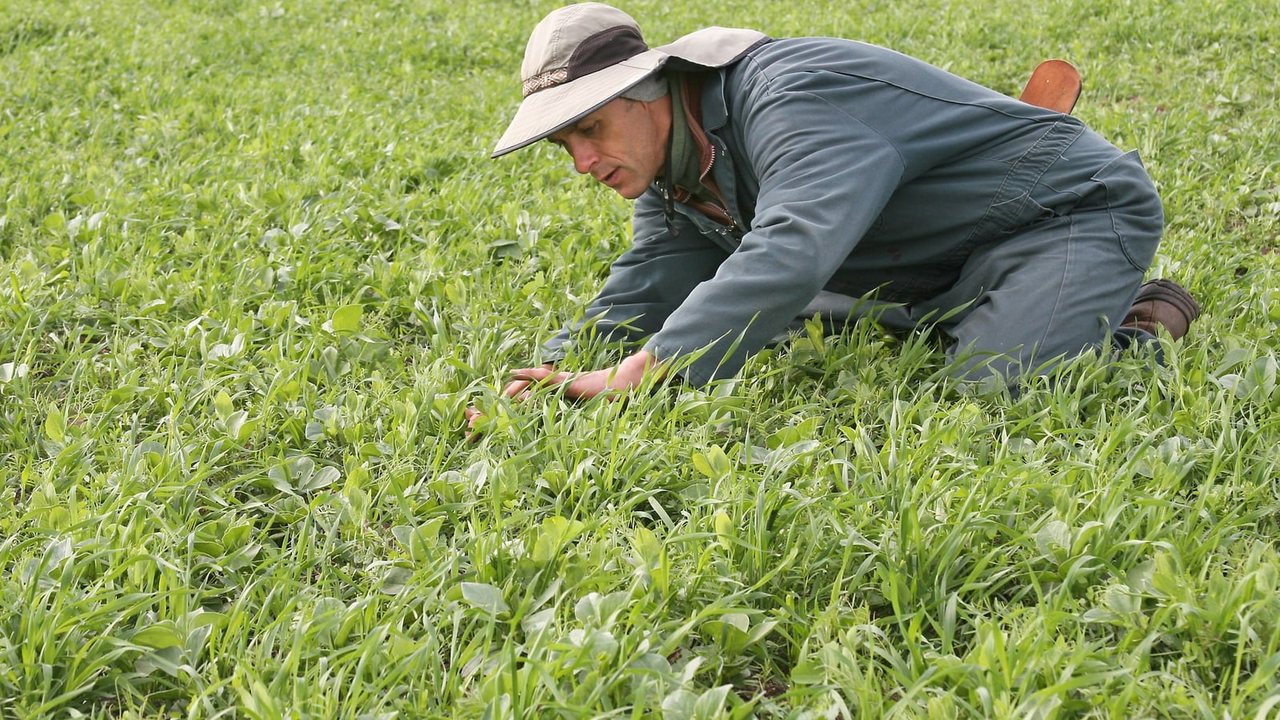
Fall cover-crop season is already underway. Some fields coming out of small grains, vegetables or silage are green, while many corn and soybean acres are approaching an interseeding or post-harvest window. If you are still choosing seed, this is a good moment to match each field with one clear job: protect the soil, hold nutrients, add nitrogen, suppress weeds, provide forage or create more living roots.
Each of these species brings something different. The best fit is the one that can establish in the time available, do the field’s most important job and leave you with a spring plan you can carry out.
Treat the rates and costs as starting points, not prescriptions. Before ordering seed, check your state NRCS Cover Crop (340) standard, local Extension recommendations, the seed tag’s pure live seed information, planting method, herbicide rotation restrictions and the needs of the following crop.
Short on time? Start here
- The planting window is getting tight: cereal rye is usually the most dependable of these five choices for late establishment.
- You want a simpler spring: oats or forage radish may winter-kill where local winters are cold enough; plan to scout for survivors.
- Nitrogen is the main goal: crimson clover or hairy vetch can contribute N when planted early enough to establish, inoculated where needed and allowed to build biomass.
- You want both cover and N: a reduced-rate grass-legume mix can combine soil protection with N fixation, provided the components share a workable termination window.
Quick comparison: pure stands
| Species | Best fit | Typical pure-stand rate | Example seed-only cost from one 2026 retail list | Nitrogen credit? |
|---|---|---|---|---|
| Cereal rye | Late planting, erosion control, nitrate capture, spring residue and weed suppression | Drill 60–120 lb/ac; broadcast 90–160 lb/ac | $18–$36/ac at the drilled rate | No fixed-N credit. It scavenges existing N and mature residue can temporarily immobilize N. |
| Oats | Fast fall cover, nutrient capture, fall forage and a likely winter-kill option in colder regions | Drill 64–96 lb/ac; broadcast 96–128 lb/ac | $36–$54/ac at the drilled rate | No fixed-N credit. It captures and later recycles existing N. |
| Crimson clover | Biological N fixation, spring growth, flowers and grass-legume mixes | Drill 15–18 lb/ac; broadcast 22–30 lb/ac | $33–$40/ac at the drilled rate | Possible after assessment. Delaware guidance provides a regional example of 40–80 lb available N/ac depending on biomass and legume share. |
| Hairy vetch | High spring biomass and N potential; commonly mixed with rye |
How to use the cost column: the numbers compare the pure-stand drilled rates using one retail price list accessed August 23, 2026: cereal rye $0.30/lb, oats $0.56/lb, crimson clover $2.20/lb, hairy vetch $2.20/lb and daikon radish $1.90/lb. Local quotes will vary. Add freight, inoculant, coatings, quantity discounts, planting and termination to the farm budget. Oat conversions use the standard 32-lb bushel. Use the seed tag’s germination and purity values to calculate the rate and cost on a pure live seed (PLS) basis.
These are pure-stand ranges. In a mixture, reduce each component from its monoculture rate. A species’ percentage by weight is not the same as its share of plants or function in the field; seed size, germination and competitiveness matter too.
Match the cover crop to the job
One well-chosen cover can do several useful jobs. USDA NRCS identifies erosion reduction, soil organic matter, nutrient cycling, weed suppression, infiltration and seasonal habitat among the functions of cover crops. Start with one primary goal, then treat the other services as welcome additions.
| Desired service | Strong candidates | What helps the cover deliver |
|---|---|---|
| Erosion control and surface protection | Cereal rye; early-planted oats; rye-legume mixes | Early, even establishment and enough canopy or residue to cover vulnerable soil. |
| Nitrate capture and water-quality protection | Cereal rye, oats and forage radish | Establishment while residual nitrate is accessible and roots are still actively growing. Captured N is recycled, not newly fixed. |
| Biological nitrogen addition | Hairy vetch and crimson clover | The correct inoculant where needed, good nodulation, enough growing time and a healthy spring stand. |
| Weed suppression | Cereal rye for durable spring residue; oats for quick fall cover | A uniform stand and enough biomass to shade the soil or form a mulch after termination. |
| Rooting and soil structure | Rye and oats for fibrous roots; radish for a large taproot | Matching root architecture to the diagnosed issue while also addressing traffic, drainage or tillage causes. |
| Pollinator and beneficial-insect habitat | Crimson clover and hairy vetch if allowed to flower | A flowering window that fits cash-crop planting and termination. Avoid treating while pollinators are actively foraging. |
These are possibilities, not guarantees. A timely, uniform stand of one well-chosen species can provide more value than a complicated mix planted after its best window.
Choose the termination method with the seed
Spring management gets easier when you choose the termination method along with the seed. The practical options are natural winter-kill, an herbicide program, tillage, mowing or roller-crimping. The right fit depends on the species, growth stage, weather, residue amount, equipment and following crop.
| Species | Likely spring condition | Good-fit termination approaches | Timing that matters |
|---|---|---|---|
| Cereal rye | Living and capable of rapid spring growth | Label-compliant herbicide while actively growing; full-width tillage; roller-crimping at the correct stage | Roller-crimping alone becomes much more reliable around anthesis, when anthers are visible and shedding pollen. Mowing before that stage commonly allows regrowth. |
| Oats | Often winter-killed in colder regions; may survive a mild winter or warmer climate | Winter-kill followed by spring scouting; herbicide or tillage if plants survive; mowing only after adequate reproductive maturity | Confirm winter-kill in spring. Early mowing can produce regrowth; winter-killed residue usually decomposes quickly. |
| Crimson clover | Living where adapted and winter-hardy | Label-compliant herbicide; tillage/incorporation; mowing or roller-crimping near full bloom | Early termination reduces biomass and N contribution. Early mowing or rolling may suppress rather than kill; terminate before viable seed if volunteers are a concern. |
| Hairy vetch | Living, increasingly viney and tangled in spring | Label-compliant herbicide; tillage; close mowing at full flower; roller-crimping near early pod set | Penn State research found the most consistent roller-crimper control when the first small pods were visible. Waiting improves control and N potential but can conflict with cash-crop timing. |
Find the method that fits your system
- Winter-kill can be the simplest route. Oats and radish are good candidates in colder regions, but a spring scouting pass confirms whether any plants survived.
- Herbicide termination can fit several growth stages. Performance depends on species, size, temperature, spray coverage, tank-mix interactions and resistance, so use a locally recommended program and follow every product label, including plant-back, grazing and harvest restrictions. This guide intentionally does not provide pesticide rates.
- Tillage can provide a full kill and speed residue breakdown and N release. It may be a good fit where tillage is already part of the system; weigh that against soil disturbance and loss of surface residue.
- Mowing works best when annual covers have reached flowering or another reproductive stage. Earlier mowing may be useful for suppression, but rye, clover or vetch can regrow.
- Roller-crimping can preserve an excellent surface mulch when biomass and maturity are right. For rye, the key stage is anthesis. For hairy vetch, early pod set is more reliable than early flowering. In a mixture, plan around the latest-maturing component or keep another termination option available.
Earlier termination usually means less spring moisture use, less residue and an easier planting pass. Waiting can build more biomass, weed-suppressing mulch and legume N. The choice is a tradeoff: set the timing from the cover-crop goal, cash-crop planting date, soil moisture and the termination options you can reliably use. Planting green—seeding into a living cover—also requires suitable planter setup, pest and moisture monitoring, N management and a dependable rescue option.
1. Cereal rye: dependable when the calendar gets tight
Cereal rye is the most cold-tolerant of the commonly used winter cereals. SARE reports germination at soil temperatures as low as 34°F, which helps explain why rye remains useful after many other fall options have lost their planting window.
Choose rye when the priority is late establishment, erosion control, residual-nitrogen capture, spring residue or weed suppression. Its fibrous roots hold the soil, while aboveground biomass can create a durable mulch.
Rye usually overwinters and grows quickly as temperatures rise. Its high-carbon residue may temporarily tie up soil N, so decide on termination timing and an early-season N strategy before planting rye ahead of corn. Ahead of soybeans, plan for moisture use, planter performance and termination.
- Rate: 60–120 lb/ac drilled; 90–160 lb/ac broadcast and lightly incorporated.
- Illustrative seed cost: $18–$36/ac at the drilled rate.
- Nitrogen credit: No. Rye captures nitrate that is already in the system; it does not fix atmospheric N.
- Termination: Herbicide or full-width tillage can terminate vegetative rye; roller-crimping alone becomes much more reliable at anthesis/pollen shed. Mowing earlier is unreliable as a complete kill.
- Plan for: Spring moisture use, temporary N immobilization, planter residue handling and dependable termination.
One quick naming note: cereal rye and annual ryegrass are different species with different seed sizes, rooting patterns and termination behavior.
2. Oats: quick fall cover with a lighter spring lift
Oats germinate quickly and can produce valuable fall groundcover when seeded early enough. In much of Zone 7 and colder, spring oats planted in late summer commonly winter-kill. That can leave protective residue without an overwintering crop to terminate.
Oats need time to do the job. SARE recommends allowing roughly six to ten weeks of cool-season growth. With that head start, oats can build useful biomass before winter. A late stand may still emerge but provide less erosion control, weed suppression and nutrient capture. Because winter-kill varies by region and year, keep a backup termination plan.
- Rate: 2–3 bu/ac drilled, or about 64–96 lb/ac; 3–4 bu/ac broadcast for a thick winter-killed mulch, or about 96–128 lb/ac.
- Illustrative seed cost: $36–$54/ac at the drilled rate.
- Nitrogen credit: No. Oats may capture substantial residual N, but that is nutrient recycling rather than biological fixation.
- Termination: Let winter-kill do the work where it is dependable, then scout in spring. Terminate survivors with a locally appropriate herbicide or tillage program; mowing is more reliable after reproductive growth than while oats are vegetative.
- Plan for: An early planting window, possible survival in a mild winter and faster residue decomposition than rye.
Oats are also useful as a nurse crop for a slower legume. Reduce the oat rate in a mix so it does not overwhelm the legume.
3. Crimson clover: nitrogen potential and a strong regional fit
Where winters and planting windows suit it, crimson clover brings a useful combination of biological N fixation, spring biomass and nectar when allowed to flower. It works particularly well with small grains: the grass adds cover and nutrient scavenging while the clover adds N-rich residue.
It needs more fall growing time than rye. SARE’s national guide suggests planting about six to eight weeks before the average first frost, then adjusting for region, elevation and cultivar. Winter survival is dependable in much of the South but less consistent toward the northern edge of adaptation.
Inoculate when the appropriate rhizobia may be absent. Use the inoculant specified for clover, keep it cool and fresh, and verify nodulation in the field. Low pH, nutrient limitations and wet soil can sharply reduce fixation.
- Rate: 15–18 lb/ac drilled; 22–30 lb/ac broadcast.
- Illustrative seed cost: $33–$40/ac at the drilled rate, before inoculant.
- Nitrogen credit: Field assessment required. Delaware guidance gives a regional example of 40–80 lb available N/ac for red or crimson clover depending on dry biomass and stand composition. A 2026 Vermont Extension example estimates that a good stand containing 100 lb total N/ac might supply roughly 50 lb/ac to the next crop in the first season.
- Termination: Herbicide, tillage or mowing/rolling near full bloom. Early mechanical termination can regrow; waiting increases N and biomass but narrows the cash-crop window.
- Plan for: Early planting, regional winter survival, well-drained soil and termination before seed set where volunteers would be a concern.
4. Hairy vetch: strong N potential with a planned spring exit
Hairy vetch is more winter-hardy than many annual legumes and can produce substantial spring biomass. In a rye-vetch mix, rye contributes durable residue and nitrate capture while vetch contributes biologically fixed N and lowers the combined residue’s carbon-to-nitrogen ratio.
SARE recommends seeding hairy vetch about 30–45 days before a killing frost for winter-annual use. Moisture at establishment helps build a strong stand. Vetch becomes viney in spring, and mechanical control improves from full flower toward early pod set, when biomass and N contribution are also high. Set the termination window before choosing vetch ahead of an early-planted crop.
- Rate: 15–20 lb/ac drilled; 25–30 lb/ac broadcast.
- Illustrative seed cost: $33–$44/ac at the drilled rate, before inoculant.
- Nitrogen credit: Possible after field assessment. Delaware guidance estimates about 45–100 lb available N/ac for hairy vetch or winter pea depending on dry biomass and legume share. SARE reports that well-established Northeast stands can approach 100 lb available N/ac by mid-May, but that should not be assumed for a late or thin stand.
- Termination: Herbicide or tillage can terminate earlier growth. Close mowing is most effective at full flower, while roller-crimping alone becomes more consistent around early pod set. Avoid allowing viable seed.
- Plan for: Viney residue, hard seed and volunteer risk, later spring maturity, possible winter injury and growth-stage-sensitive termination.
If the following crop needs an early planting date, budget a more conservative vetch N contribution. Earlier termination usually means less biomass and less N, but it may be the better whole-rotation decision.
5. Forage radish: fast fall capture and useful root channels
Forage radish—also sold as daikon or tillage radish—is a fast-growing brassica with a thick taproot. It can capture nutrients from the soil profile and leave channels after the root decomposes. Those channels may support water movement and following-crop roots. Radish works best as one part of a compaction strategy that also considers traffic, drainage and the depth of any restrictive layer.
Radish needs an early start. Planting too late sharply reduces canopy, root size and nutrient capture. It commonly winter-kills after sustained hard freezes, but survival depends on cultivar, plant size, snow cover and location. The residue breaks down quickly, so it provides less durable spring cover than rye.
- Rate: 8–12 lb/ac drilled; 12–20 lb/ac broadcast.
- Illustrative seed cost: $15–$23/ac at the drilled rate.
- Nitrogen credit: No fixed-N credit. Radish can recycle N already present in the soil, but release after winter-kill may occur before the following crop can use it.
- Termination: Rely on winter-kill only where field experience supports it, then scout. Terminate surviving plants with an appropriate herbicide, tillage or mowing before seed formation.
- Plan for: Early planting, odor as large roots decompose, limited spring residue and rotation considerations with brassica cash crops.
Estimate a nitrogen credit from the stand you actually grew
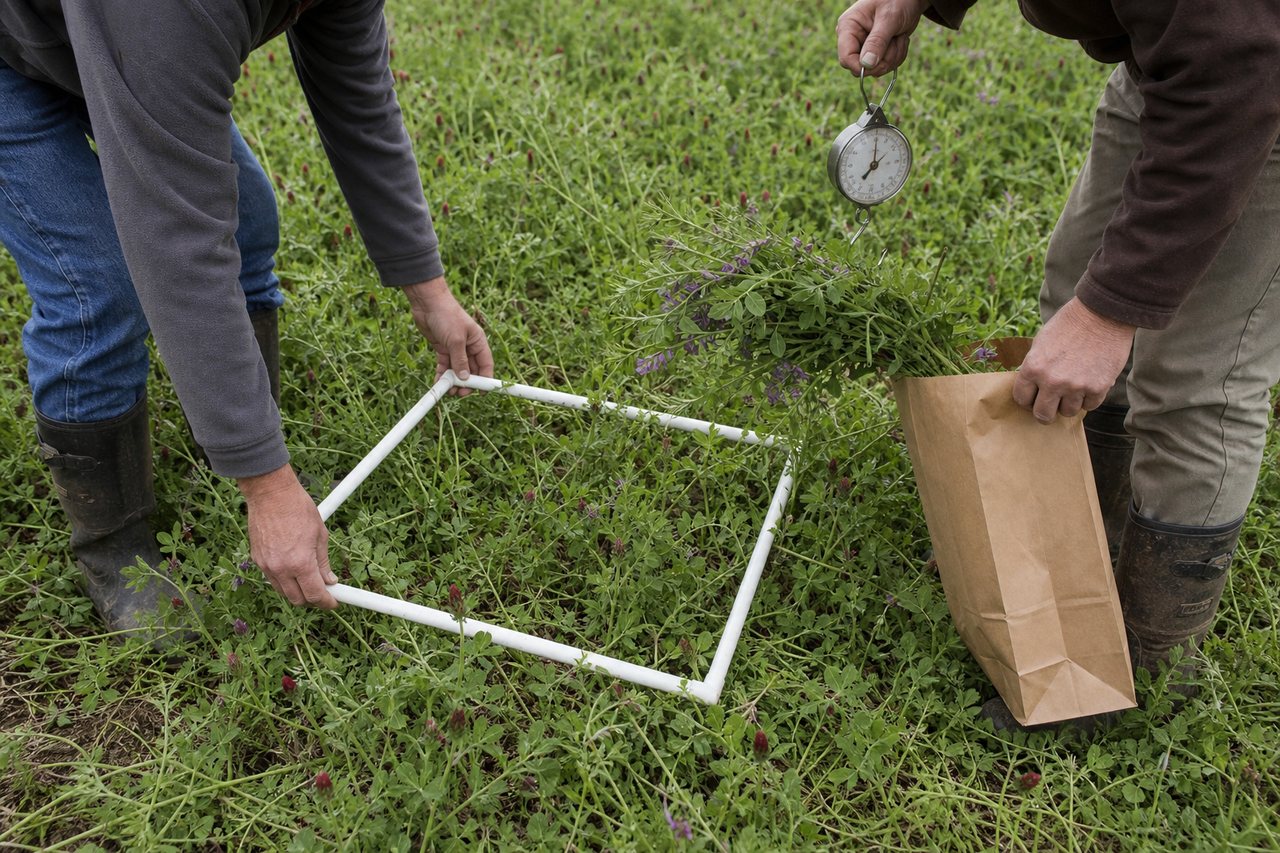
Base the nitrogen credit on representative biomass sampling, legume share and tissue analysis.
Only legumes add new nitrogen through biological fixation. Grasses and brassicas retain and recycle nitrate already in the soil. A useful fertilizer credit starts with the biomass and legume share of the stand that actually grew, not simply the species listed on the seed tag.
Even for a legume, three different numbers are often confused:
- Total N in aboveground biomass. This is dry biomass multiplied by tissue N concentration.
- N released from the residue. Release depends on species, carbon-to-nitrogen ratio, maturity, termination method, temperature and moisture.
- N synchronized with cash-crop demand. Nitrogen released too early can be lost; nitrogen released too late does not meet early crop demand.
A practical spring routine is to:
- Sample several representative quadrats before termination, keeping the legume and nonlegume portions separate in a mixture.
- Determine dry biomass and tissue N through a laboratory or use the stand-quality method published for your region.
- Apply the local plant-available-N factor rather than crediting all biomass N. North Carolina’s biomass guide explicitly notes that measured total nutrients are not all immediately available.
- Use a pre-sidedress soil nitrate test or another locally recommended in-season check when the following crop has high N demand.
For a first-year field or a thin stand, start with a conservative credit and verify it with a locally recommended in-season test.
Build a realistic per-acre budget
A useful budget looks beyond the seed bag. Include:
- seed, freight, seed treatment and legume inoculant;
- drilling, broadcasting, aerial application or interseeding;
- incorporation or another step to improve seed-to-soil contact;
- spring scouting and termination;
- extra planting or residue-management passes;
- possible changes in cash-crop planting date, fertilizer need or yield; and
- fencing, water and harvest costs if the cover will be grazed or harvested.
Recent farm records show why local budgeting matters. A 2025 analysis of 41 Minnesota farms reporting consistently from 2022 through 2024 found direct cover-crop costs from $14 to $277/ac, with a $42/ac median. Intended use—soil cover, forage, feed or seed—was the main driver. These observed Upper Midwest costs describe different enterprises and should not be used as a national price or expected return.
It is worth checking financial assistance early. In the same cohort, 27% of farms received support; among recipients, payments covered 54% of cover-crop costs. EQIP and other program rates, eligibility and specifications vary by state and practice scenario. Contact the local NRCS or conservation-district office before planting if cost share is part of the plan.
A field-ready selection checklist
A few minutes with this checklist can prevent surprises in both fall and spring:
- What is the one primary job? Erosion control, nutrient capture, N fixation, weed suppression, forage or a rooting goal may point to different species.
- How much growing time is realistically left? Oats, clovers, vetch and radish need earlier starts than cereal rye. A calendar date alone is not enough; soil moisture and forecast temperatures matter.
- What winter outcome do I expect—and what is the backup? A crop that usually winter-kills still deserves a spring scouting plan.
- What follows? Mature grass residue ahead of early corn needs a different N and termination plan than rye ahead of soybeans.
- How will seed reach moist soil? Drilling usually permits a lower rate. Broadcast seed may need more seed, timely rain and light incorporation or residue movement.
- Are there herbicide plant-back, grazing or harvest restrictions? Review every product used in the cash crop and follow its label.
- How will the cover be terminated? Match species and expected growth stage to the equipment, tillage system, herbicide program, crop-insurance requirements and cash-crop planting date.
Start with one clear goal, one species or manageable mix, and a termination plan you can carry out. The best choice is one that establishes on time, serves the field’s highest-priority need and fits the crop that follows.
Ready to compare options for a specific field? Use the Soil Health Exchange Cover Crop Lab to build a date-aware plan around location, rotation, goals and preferred termination method.