- Location
- MI
- Crop
- Corn
- Acres
- 2,000
The challenge
“Is there anything else that we can use as a burn down that doesn’t harm the biology like roundup?”
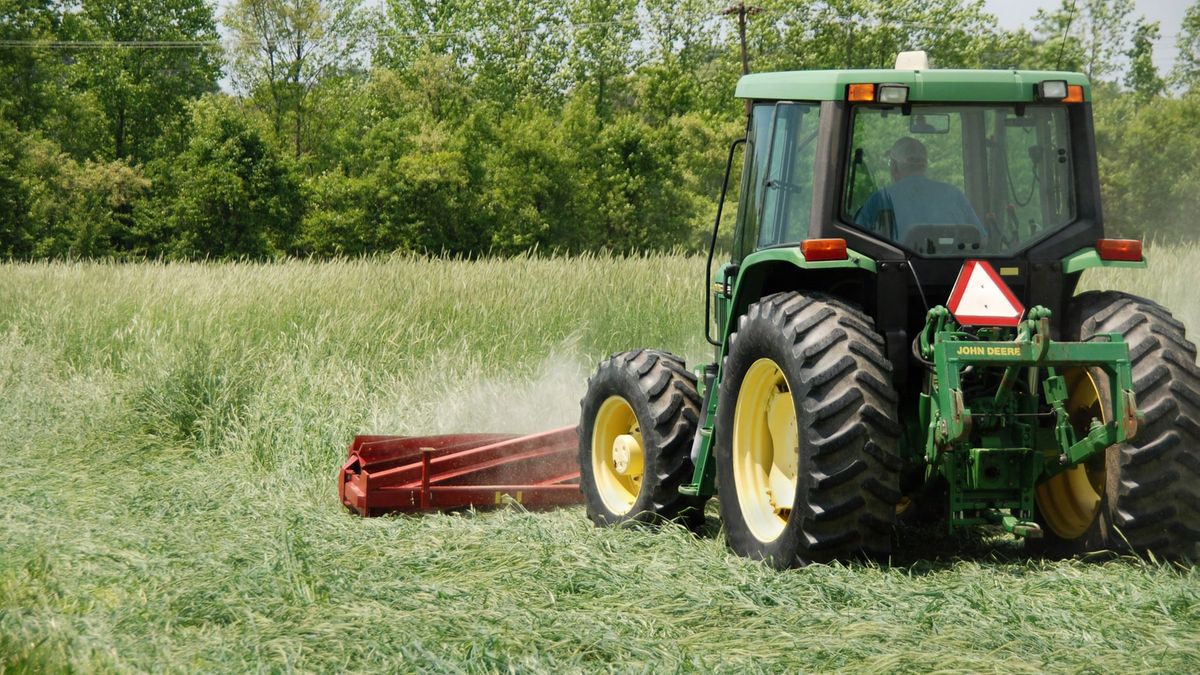

Burn-down alternatives and soil microbiology
While atrazine and paraquat can be used for burn-down, they may also affect soil microbiology, sometimes in ways that warrant as much consideration as glyphosate. The impact on biology, especially soil biology, can be minimized by reducing unnecessary chemical residues in the environment.
The principles of integrated pest management apply well here — three levers keep rates lower and use more strategic:
- Leveraging crop rotations
- Relying on scouting
- Using targeted herbicide applications
Building system resilience
Unfortunately, herbicides are often an important part of maintaining productivity, and one way to improve resilience is to increase plant and soil diversity so the system is better buffered when applications are necessary.
- Cover crops — If not already adopted, cover crops are an important step toward improving system resilience.
- Diversifying cover crop species — A more diverse mix may help foster a microbiome better able to withstand chemical stress.
- In-season alternatives — Intercropping or overseeding cover crops could be strategies to support in-season weed control and reduce reliance on repeated applications, thereby lowering potential disturbance to soil biology.
Monitor and fine-tune
From a soil health perspective, management needs to be fine-tuned to the system to balance trade-offs and benefits. Can some of the practices above be tested or combined with those already in place? If so, consider experimenting with some of them to see if they work for your system. Soil health assessments performed before and after alternative and standard management are implemented can help monitor whether those practices are working well for your system.
- C mineralization (soil respiration) — A good indicator of microbial activity.
- Enzymes and PLFAs — Useful proxies for microbial function.
Next Step:
- Can the rate or number of applications be adjusted? Usually, harm to soil biology depends on the chemical's residual rate in the soil.
- Are other strategies to build soil biology being adopted? More diverse cover crops foster a diverse microbiome.
- Can you consider in-season strategies to reduce rates of application? Intercropping or overseeding cover crops could be strategies to reduce the need for in-season applications.
Practical Options to Reduce Herbicide Use
Several approaches can complement or partially substitute for burn-down — each carries its own trade-offs to weigh against your system:
- Roller-crimping — Terminating a high-biomass cover (cereal rye, hairy vetch, winter peas) mechanically at anthesis can eliminate or sharply reduce burn-down need. Timing and biomass are critical for success.
- Mowing or flail mowing — Works for some annual covers; less reliable on perennials. Pairing a mow with a reduced-rate herbicide is often more dependable than either alone.
- Targeted, shallow tillage — Strip-till or vertical tillage carries a soil health cost, but in some systems it may be a smaller cumulative cost than repeated broadcast applications. Worth comparing on a few acres.
- Grazing integration — Livestock can biologically terminate covers and reduce weed pressure while cycling nutrients. Infrastructure-heavy, but pays back across multiple soil health indicators.
- Stale seedbed — Allow a weed flush ahead of planting, then terminate with a lower-rate application or light tillage. Shifts weed pressure off the crop.
- Precision and banded application — See & Spray-style or in-row banded systems can cut volume 60–80% versus broadcast. Capital-intensive, but the operating cost and soil biology exposure drop proportionally.
- Competitive crop establishment — Narrow rows, uniform emergence, and well-matched seeding rates close canopy faster and suppress weeds without added inputs.
As with the practices above, start with one or two on a small block alongside your standard program. The goal isn't always full herbicide elimination — it's a system that needs less of it because the biology and the cover are doing more of the work.
Cite this
Reference this work
Julia Barra Netto-Ferreira, PhD (2026). Burn-Down Alternatives for Corn: Reducing Herbicide Pressure Without Sacrificing Weed Control. Soil Health Exchange. SHE-FA-2026-0007. https://soilhealthexchange.com/cite/SHE-FA-2026-0007
Soil Health Exchange assigns a stable identifier to every published answer and article. Citations keep working even if the URL changes later.
Keep exploring
Discussion
No comments yet. Be the first to share your thoughts!