- Location
- KY
- Crop
- Hay/pasture
The challenge
“Are virtual fence or collar works as they promise? what are the challenges, and is there any subscription, a farmer have to pay? Is it worthwhile and cost-effective? Have anyone use any of these :Drover, Monil, Vence, NoFence, Gallagher (eShepherd), Skygraze, Collie or Halte and share your experience?”
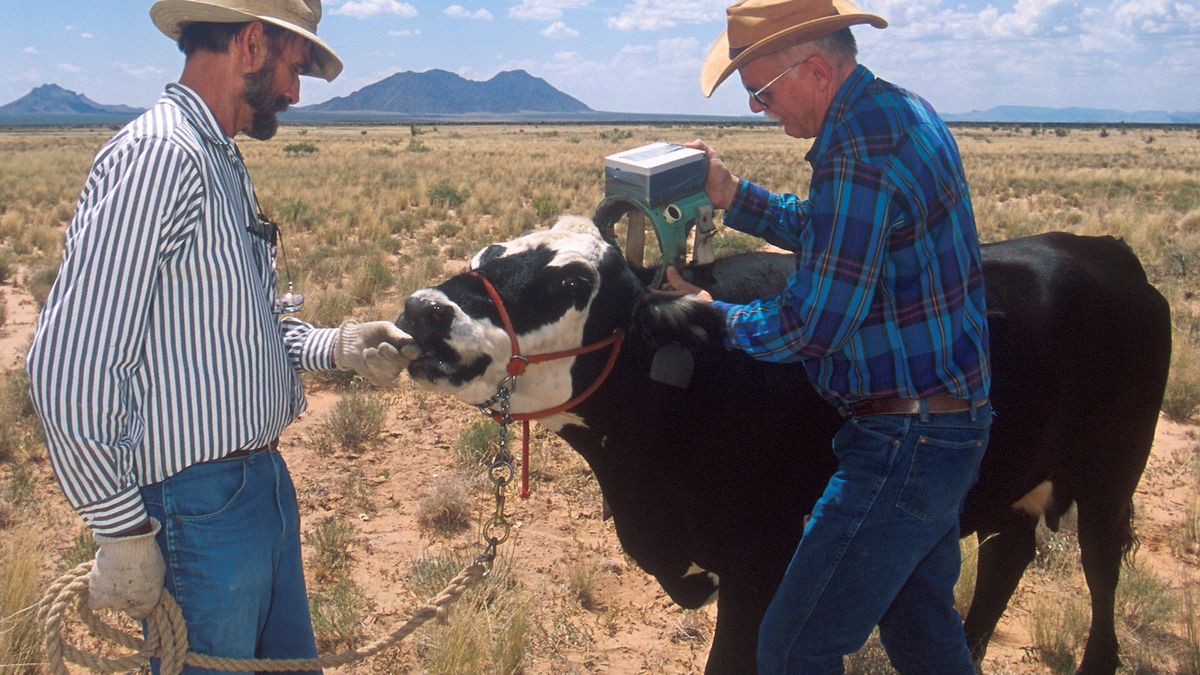
Short version: the collars do what they claim inside your fence line, but they are not magic and they are not cheap to run. Here is the honest picture for a Kentucky hay/pasture operation.
Does it actually work?
Yes — and this is well-documented. In a multi-year peer-reviewed beef rotational-grazing trial, cattle stayed inside the virtual boundary the large majority of the time, with heifers adapting in roughly 5-7 days. The share of times an animal got an electrical pulse (versus just the audio beep) fell to about 5% during grazing, and cows with a prior year's experience dropped to roughly 1.6-2.2% (J. Environ. Management 2025). A separate adaptation study saw warnings fall from about 3.5/day to under 1/day over an ~11-day learning period with 'no substantial impact on behaviour and welfare' (Animals/PMC 2024). Once trained, cattle respond mostly to the beep and are pulsed only rarely — but note that pulses are reduced, not eliminated, so a low rate continues indefinitely. (These welfare and pulse-rate data are for electric-pulse collar systems specifically; a non-shock system like Drover, below, would need its own data.)
How it works: a GPS collar gives an escalating cue as the animal nears a boundary you draw on a map — an audio tone first, then a brief pulse only if it keeps going. Best practice (NMSU Extension B-132) is to overlay the virtual line on existing physical fence, train the whole herd at once, then graduate to complex tasks like riparian exclusion over the first several weeks.
The subscription question — yes, all of them charge
There is no subscription-free option. Every vendor charges an ongoing per-collar (or per-head) fee for the software and connectivity. What differs is whether you also buy a base station and whether you own, buy, or lease the collar. The per-collar/per-year figures below are from a University of Arizona Cooperative Extension VF-manufacturer comparison (April 2024), 2025 independent reporting, and the vendors' current pricing pages; confirm with a quote, as pricing changes often:
- Nofence (Norway) — no tower; cellular collars. Collars ~$349 (0-24) or ~$309 (25+), first 12 months' subscription included; then ~$45/collar/yr (~$6.50/mo) for under 100 collars, dropping to ~$35/collar/yr (~$4.50/mo) at 100+ (Nofence US pricing page). This is the lowest recurring per-collar fee of the cellular options and needs no infrastructure — good for smaller herds if you have cell coverage. Spare cattle charger ~$85, spare battery ~$80 (U. Arizona).
- Gallagher eShepherd (NZ) — buy hardware outright (~$250/collar). Now marketed as cellular-first ('no longer dependent on expensive base stations'); a LoRa base station (~$5,000) is optional for poor coverage. Recurring fee ~$24/collar/yr on cellular or ~$18/collar/yr with a base station. The ~$250 collar and the ~$24/~$18 per-collar/yr subscription figures come from the April 2024 U. Arizona comparison, not the Gallagher cellular release — confirm the current cellular subscription with a quote. Solar collars estimated at ~7-10 years (U. Arizona).
- Vence (Merck Animal Health) — base-station model, collars leased. Self-install station ~$10,000 (or ~$12,500 pro-installed); collar subscription ~$40/collar/yr; single-use batteries ~$10 each, ~2/yr, lasting ~6-9 months. Min ~200 acres; uses multiple base stations. Merck does not publish list prices — request a quote. Best for larger acreage/many head (U. Arizona).
- Halter (NZ) — base-station model (~$3,000-$4,500/station; the higher figure is from 2025 reporting and Halter does not publish list prices, so request a quote), collars leased (~2-yr contract); ~$60/collar/yr; lifetime warranty, ~5-yr solar collar life, multiple base stations. Amortized over 5 years this works out to roughly $72/cow/yr all-in (U. Arizona). Now one of the most-deployed US systems — operating across 20+ US states as of late 2025 (verify it covers KY); confirm current availability. Halter also launched a direct-to-satellite collar in 2026 that removes the cell/tower requirement — the most relevant option for poor-coverage hollows and timber.
- Monil (Norway) — has entered the US market with published US pricing: ~$310/collar with the first-year subscription included, then roughly $80/animal/yr; ~10-day training. Now shipping in initial US states — confirm KY availability (Monil US pricing/availability page).
- Drover (US, getdrover.com) — a real US virtual-fence company, but not yet for sale — in ranch trials, with launch announced for early 2027. It differs from the others: it uses ear tags (no resizing as cattle grow) and Electrical Muscle Stimulation rather than an electric pulse. No pricing or independent trial/welfare data published yet — one to watch, not buy now.
- Corral (US) — purchased collars ~$250, ~$50/collar/yr, ~2-yr solar life; listed as a near-term US entrant in the U. Arizona comparison.
- Skygraze, Collie — these names circulate in the trade, but I could not confirm current US pricing or independent trial data from reliable sources. Treat as unverified/early-stage and verify directly with the vendor.
The real challenges (from ranchers and extension)
- Connectivity dead zones — hilly ground, hollows, creek bottoms, and dense timber degrade reception, and some rural areas lack the data plans needed. This is the #1 risk on KY's rolling terrain. Important: a LoRaWAN base station is also line-of-sight limited and is not a guaranteed fix — you may need multiple towers on high ground (NMSU B-132). For genuinely off-grid ground, a direct-to-satellite collar (e.g., Halter's 2026 satellite option) can remove the coverage constraint entirely.
- Collars falling off in brush, rough terrain, or predator encounters — bulls especially lose collars.
- Fit maintenance — collars must be re-adjusted as cattle grow; gathering to adjust or charge adds recurring handling labor (ear-tag systems like Drover avoid the resizing step, but are not yet for sale).
- Battery management — Vence uses single-use batteries lasting only ~6-9 months (shorter with intensive moves, ~$10 each); Nofence collars are rechargeable; eShepherd and Halter use multi-year solar.
- Not a perimeter fence — poorly trained animals can push through, and it won't keep neighbors' cattle out. Keep your real exterior fence.
- Learning curve — budget roughly 6 months of planning/setup before it runs smoothly.
Is it worthwhile and cost-effective for YOU?
The economic case is strongest where you would otherwise build or maintain a lot of cross-fence — new 5-wire runs about $16,000/mile, rising to over $40,000/mile in difficult terrain (NMSU B-132). For a modest KY herd, though, the recurring per-collar fee plus any base station can be hard to justify. Amortized over five years, the U. Arizona comparison put eShepherd around $74-$88/cow/yr, Halter around $72/cow/yr, and Vence around $110/cow/yr (all on a 100-head, base-station scenario); Nofence's no-tower model carries the lowest recurring fee per collar but a higher per-collar purchase. Press coverage consistently frames cost — not the technology — as the main barrier. The wins that fit a KY hay/pasture operation are clear: intensive rotational grazing on permanent pasture, protecting streams and regrowth, and flexible paddock shifts without building interior fence.
Kentucky-specific caveat
The strong evidence is from Western rangeland and NZ/EU dairy systems. I found no Kentucky or Southeast extension trials on virtual fence in tall-fescue pasture. The compliance and welfare findings should transfer, but humid-climate collar durability, signal through dense forage, and Southeast coverage are not yet documented. One local hazard worth planning around: on KY-31 tall fescue, avoid initiating training during peak summer fescue toxicosis (the summer slump) — heat-stressed cattle on endophyte-infected fescue are behaviorally and thermally compromised, so train in spring once forage is even, or in fall, not the July heat. Call University of Kentucky Cooperative Extension's Forage program about any KY demo or KY Grazing Conference data, and confirm coverage on your specific farm before buying.
Topics
Cite this
Reference this work
Soil Health Exchange Team (2026). Virtual Fencing. Soil Health Exchange. SHE-FA-2026-0021. https://soilhealthexchange.com/cite/SHE-FA-2026-0021
Soil Health Exchange assigns a stable identifier to every published answer and article. Citations keep working even if the URL changes later.
Keep exploring

Discussion
No comments yet. Be the first to share your thoughts!