Loading...
Growing good things takes time
Loading...
Growing good things takes time
Land systems
Corn, Cotton, Hay/Pasture, Cropland, Pasture/Rangeland
7
Answers
1.1k
Reads
7
States
12.0k
Acres
20
Articles
Acres are represented from producer-submitted field context, not measured outcome claims.
Reach milestones
3 of 6 · next: Root Network (2,500 reads)1,147 reads across answers and articles




A formal biography has not been added yet.
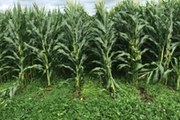
Treat organic corn in clover living mulch as a replicated strip trial, not a whole-field recommendation. Protect a measured in-row zone, retain living interrow cover where corn is not limited, and judge the system on stand, weeds, moisture, yield, operations, and net return over at least two seasons. The strongest red- and kura-clover trials improved yield in only one of two years.
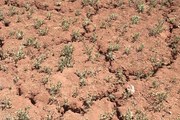
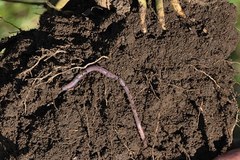
Cracks alone do not prove compaction or a need for gypsum. Paired pits, roots, infiltration, and soil tests should identify the limiting layer first. Where surface structure is weak, cover crops, retained residue, and nutrient-budgeted compost or manure can improve aggregation and moisture buffering over seasons without replacing a verified hardpan or sodium diagnosis.
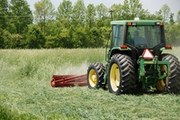
Crimp cereal rye or triticale at anthesis, not simply at heading; treat the post-wheat seed list as one mixed winter-killed recipe drilled about 0.5 inch deep; and use annual/Italian ryegrass, red clover, and forage collards as the simplest Nebraska corn-interseeding core. If corn follows cereal rye, place 30–50 lb actual N/ac near planting as part of the total seasonal N plan.
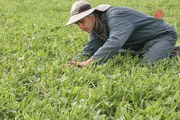
In an 11-site SE Nebraska on-farm study, increasing functional-group richness raised cover crop biomass by ~29%, while adding more species of the same type gave only ~2.3% (not significant) — and no mixture beat the most productive single species on biomass (Florence et al., PLOS ONE 2019). That 29% reflects a six-functional-group design (cool- and warm-season grasses, legumes, brassicas/broadleaves) — broader than the simplified three-group teaching frame used below. Function > count is well supported; whether it pays on WI grain-corn ground depends entirely on whether you can establish the mix at all.
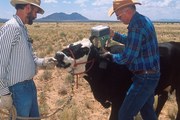
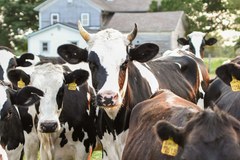
The technology reliably contains cattle for rotational grazing and stream/regrowth exclusion, but the recurring subscription plus terrain/coverage risk decide whether it is worth it for a modest KY herd.
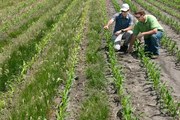
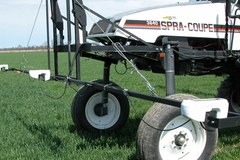
Two gates decide whether this is a 2026 or a 2027 project: your corn's leaf-collar stage (V4-V6, not 'knee-high') and what residual herbicides are already in the ground. If long-residual products are down or you can't source a drill and seed in days, plan for 2027 rather than forcing a same-week stand.
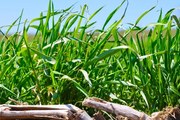
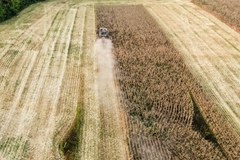
Cereal rye seeded by late October is inside the recommended central-Iowa window and overwinters reliably, so species choice is easy. The main planning question is seeding logistics: drilling behind the combine is the most reliable method and should be the default, with aerial/broadcast into standing corn reserved as a moisture-dependent contingency only for acres that cannot be drilled before the deadline.