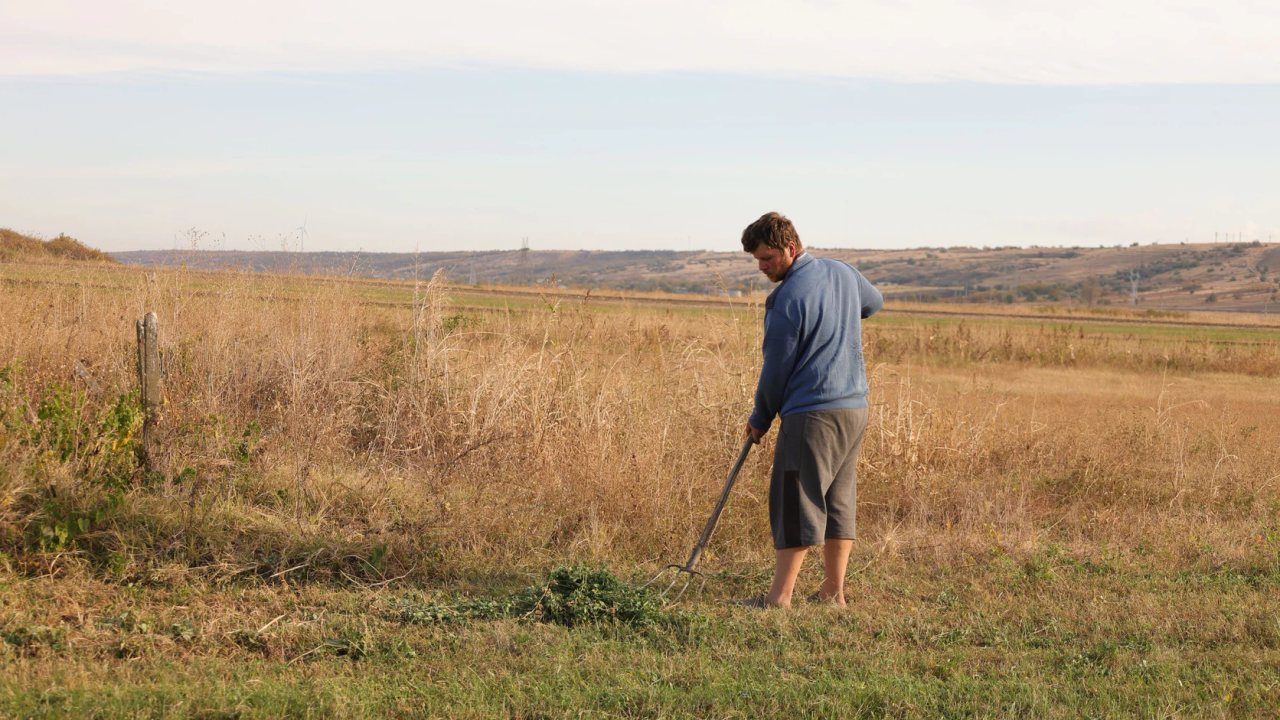
Your first organic sale starts well before harvest. You need to know which land is eligible, how you will manage the crop, who will certify it, and where it will go. This guide follows those decisions from the first application through the records and annual review that keep certification in place.
Choose the people who will help you through it
Who to work with
| Who | Their role | When to contact them |
|---|---|---|
| Accredited certifier | Reviews the OSP and inspection evidence; makes certification decisions | Before applying or changing inputs, land, products, facilities, or labels |
| Inspector | Visits the operation and reports observations and record checks to the certifier | To arrange access to the people, fields, facilities, and records needed for inspection |
| Extension educator or organic adviser | Helps with production planning, records, and application preparation | When you need help adapting practices or organizing the work |
| Buyer | Agrees on product specifications, volumes, price, and delivery | Early enough to plan production, certification, and the first sale |
| USDA National Organic Program | Sets national rules and accredits and oversees certifiers | To find official standards, certifier listings, and certified-operation records |
Step 1: Define what you want to certify
Start with the production and marketing plan. Identify the parcels, crops, livestock, wild-crop areas, products, facilities, and handling activities that may fall within certification. A farm may have both organic and nonorganic production, but it must be able to prevent commingling and contamination and maintain clear records for each part of the operation [7][8].
- What product will be marketed as organic?
- Which parcels, greenhouses, orchards, pastures, livestock groups, or facilities are involved?
- Who owns and manages each part of the operation?
- Will harvesting, storage, packing, processing, brokering, or labeling occur under the same business?
- When does a buyer need certified supply, and is that date realistic?
Step 2: Establish land and material history
For crop land, the three-year period runs from the last application of a prohibited substance to harvest. Gather input records, maps, leases, and prior-manager statements that establish that history. Land with adequate records may already meet the period when you apply. The application date does not start a new three-year clock [7].
Step 3: Choose a certifier early
USDA-accredited certifiers can issue certificates under the national standards, but their service regions, fees, sector experience, timelines, languages, and application systems differ. USDA’s Organic Certifier Locator is the authoritative starting point. Ask prospective certifiers whether they serve your location and certification scope, what documents they expect, how they review materials and labels, and how their fees are structured [5].
Step 4: Build the Organic System Plan
The Organic System Plan (OSP) explains how the farm or business will meet the standards. Describe your practices, inputs, monitoring, records, and measures for keeping organic and nonorganic products separate. A farm plan covers field histories, fertility, seeds, weeds and pests, buffers, harvest, and storage. A handler’s plan covers suppliers, receiving, processing, sanitation, formulas, labels, and inventory [7][10].
Write it around work your team recognizes: which field gets planted, who checks a seed order, where a crop is stored, and how shared equipment is cleaned. Use the same field names, product names, and lot codes in the plan and daily records.
Step 5: Application review and onsite inspection
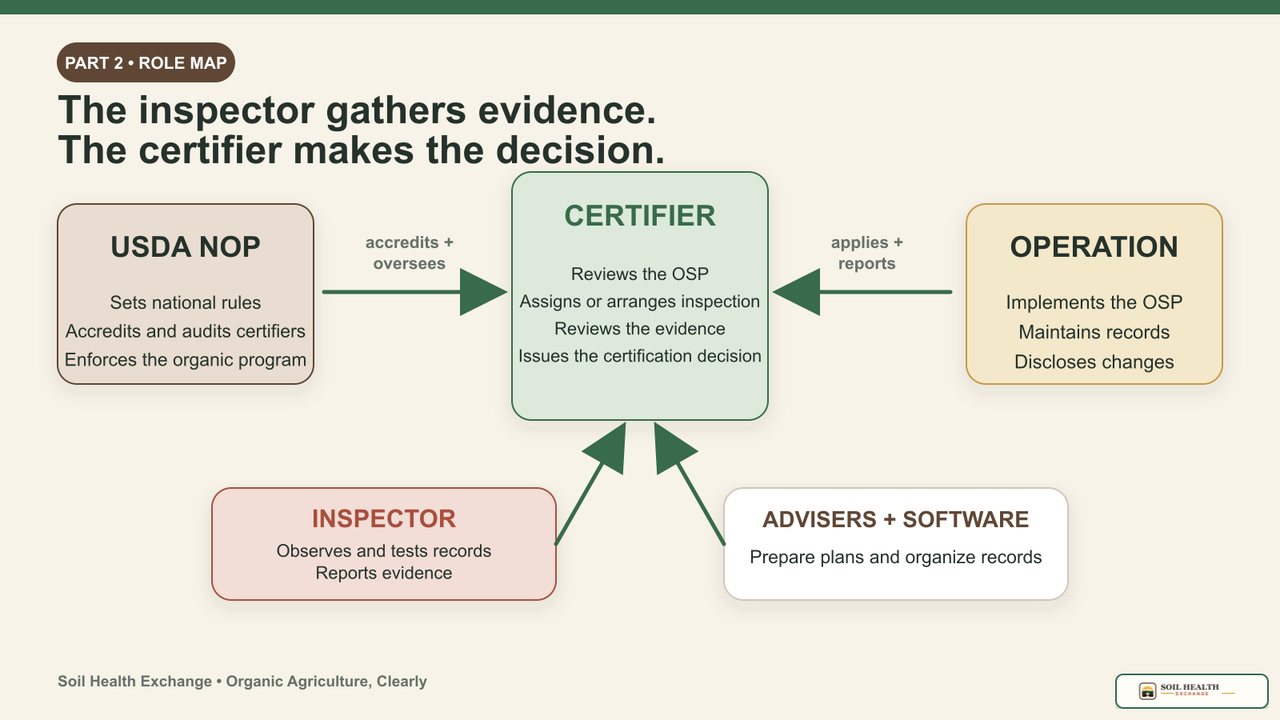
After receiving the application and fees, the certifier reviews the submission. When the file is ready, an organic inspector visits the operation. The inspection tests whether the practices, facilities, products, fields, inventories, and records align with the OSP and organic requirements. The inspector reports evidence; the certifier reviews the report and makes the certification decision [2].
Step 6: Maintain certification
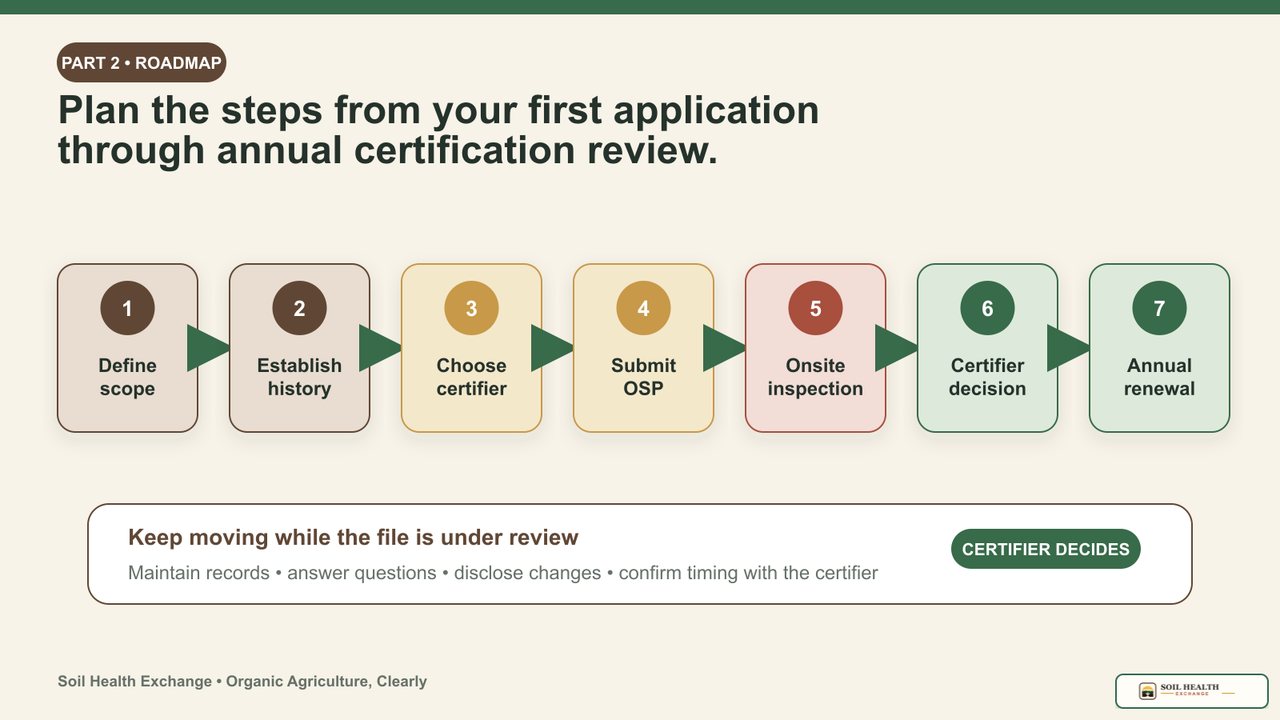
Organic certification continues through an annual review and inspection process. The operation must update its OSP when practices or products change and must maintain records that allow organic products to be traced. Additional inspections or testing may occur. Contact the certifier before introducing a new input, label, field, facility, supplier, product, or process that could affect the approved system [7][2].
Budget for certification and transition
Request a written estimate covering application and annual fees, inspection time, inspector travel, and any sales-based charges. Keep those expenses separate from transition costs: seed, weed and fertility management, equipment, labor, storage, and the period before you can sell a certified crop. Build the production budget with your crop adviser and intended buyer [2][7].
Match records to the Organic System Plan
The OSP describes your system. Records show when the work happened, where it happened, and which product it produced. Build the recordkeeping into the season so inspection preparation means finding the files you already use [7][10].
Use the same names and identifiers in the OSP and the records so each activity and transaction can be traced to the approved system.
A practical organic record map
| Record group | Examples | Question the records should answer |
|---|---|---|
| Land and facility identity | Maps, field or block IDs, acreage, buffers, storage areas, equipment, facility diagrams | Where could organic product, nonorganic product, or prohibited material be located? |
| History and eligibility | Prior land use, input applications, leases, previous-manager statements, transition dates | When did the parcel become eligible for an organic harvest? |
| Seed and planting material | Invoices, tags, organic searches when required, treatments, varieties, planting dates | What was planted, from whom, under what status, and where? |
| Inputs | Product label, formulation, certifier approval, purchase, application date, rate, location, purpose | Was the exact material approved and used as approved? |
| Production activity | Tillage, fertility, pest control, grazing, irrigation, scouting, equipment cleaning | Did actual management match the OSP? |
| Harvest and lots | Crop, field, date, crew, quantity, lot code, container, destination | Which eligible land and activity history produced this lot? |
Use stable identifiers
Calling the same parcel “North 20,” “Tomato Field,” and “Block A” in three different systems makes traceability fragile. Choose one stable identifier for every management unit and connect colloquial names as aliases. Do the same for products, lots, storage locations, facilities, suppliers, and customers.
For orchards, vineyards, agroforestry, grazing, and diversified vegetables, the management unit may be a block, paddock, alley, bed group, tunnel, or harvest zone rather than a conventional row-crop field. The identifier should match the level at which management and organic status can differ.
Get approval before using an input
Keep written input approval with the exact product label or formulation the certifier reviewed. Then record each application: date, field or other management unit, rate, operator, and purpose. A purchase receipt belongs in the file alongside the application record [9].
Build a backward and forward audit trail
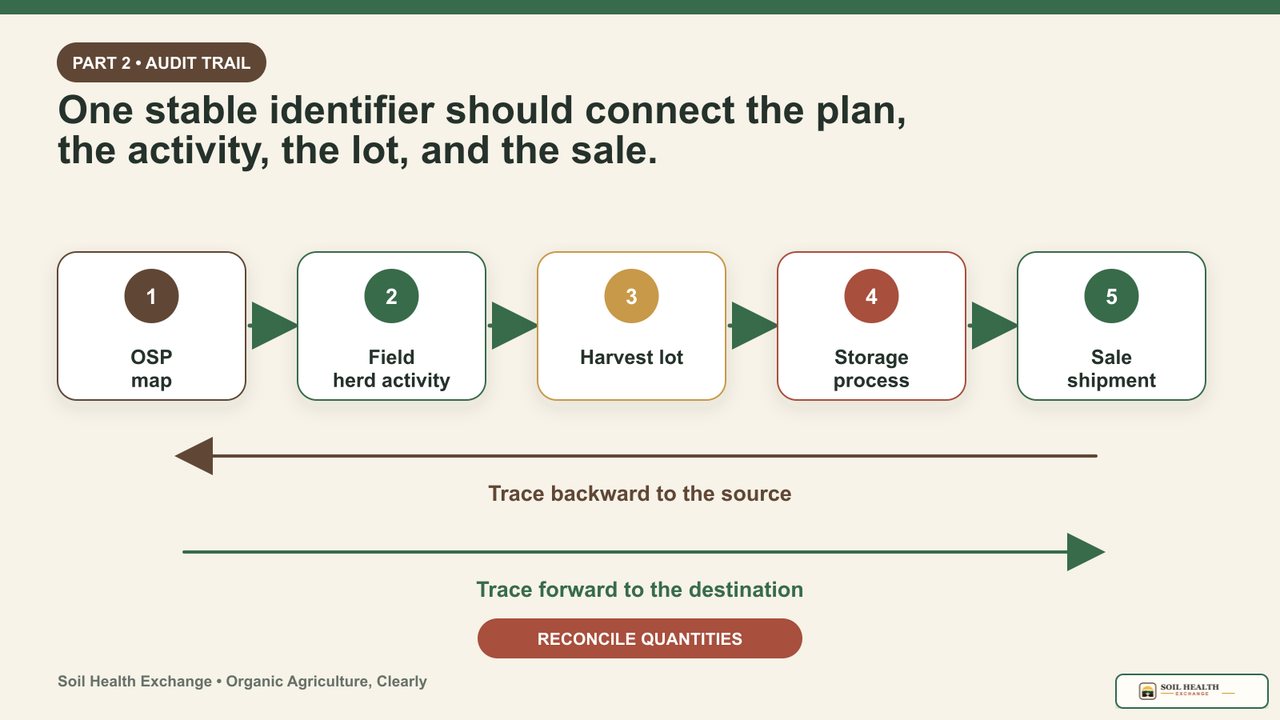
A buyer, handler, inspector, or certifier should be able to trace an organic lot backward to its source and forward to its destination. The records should also support quantity reconciliation: beginning inventory plus production or purchases, minus documented losses and ending inventory, should reasonably align with quantities sold. USDA’s strengthened enforcement framework places increased emphasis on traceability across organic supply chains [8][12].
- Select a finished lot or shipment.
- Trace it to processing or packing records, incoming lots, and certified suppliers.
- For a farm lot, trace it to eligible fields or production units and harvest records.
- Trace a source lot forward into inventory, processing, sales, and disposition.
- Reconcile the quantities and explain normal shrink, culls, cleanout, or conversion losses.
Choose a recordkeeping system the team will use
Use paper, spreadsheets, or software your team can maintain during a busy week. Keep entries legible, use consistent names, back up the records, and make them easy to retrieve. Certified operations must retain the required records for at least five years after their creation and make them available for inspection and copying [16].
Put the daily records to work with FieldLog
FieldLog, built by the Soil Health Exchange team, gives that recordkeeping a home on the field. Start with one field and carry its name through the land history, work log, and certification folder. These screenshots show sample records in the app.
Keep the transition date with the field
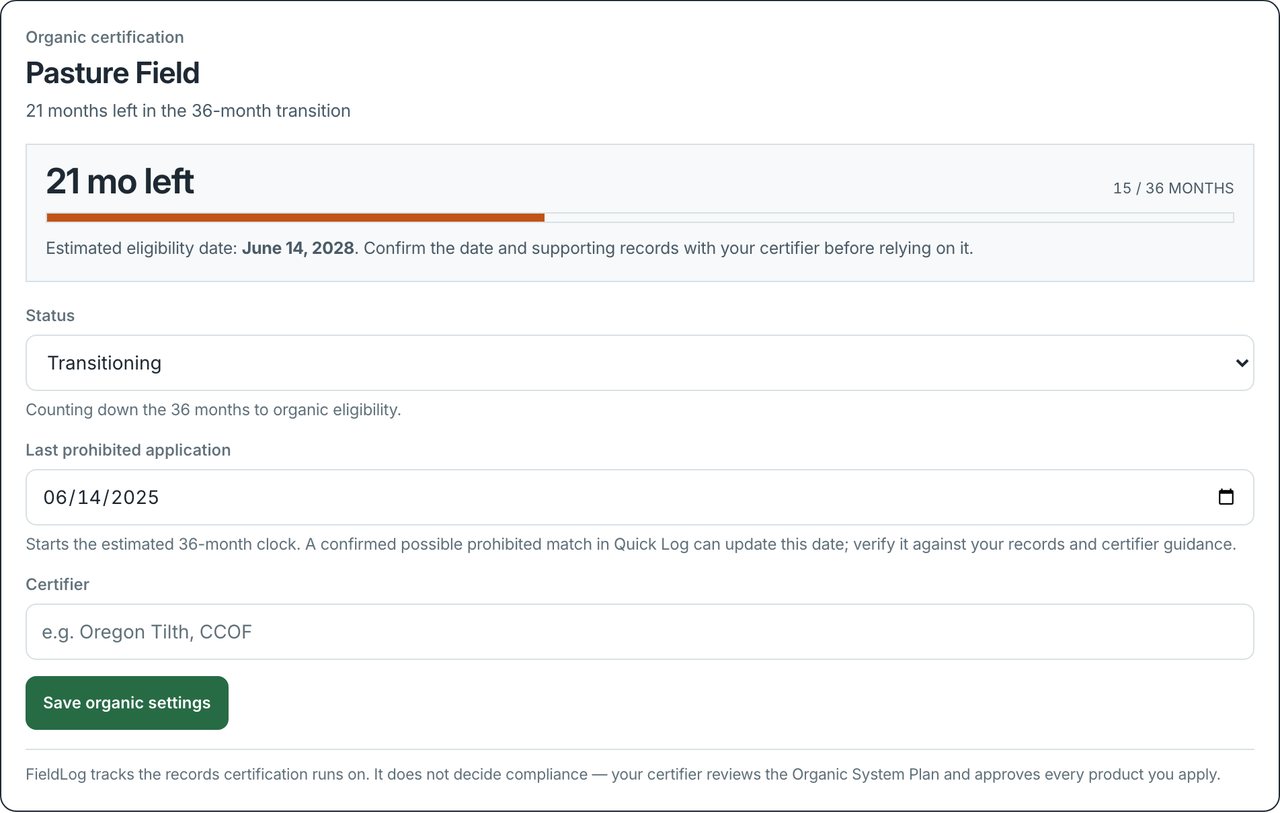
In the field’s Organic certification panel, choose Transitioning and enter the last prohibited-application date from your land-history records. FieldLog shows progress through 36 months and an estimated eligibility date. Use that date to plan the harvest you will discuss with your certifier, who reviews the supporting history and confirms eligibility [7].
Record the application while the details are fresh
After field work, record the actual date, field, crop, product, rate, treated acreage, supplier, and person who did the work. Add the purpose and seed or input lot reference in the notes. For example, a rye planting entry might read “October 2; Pasture Field; 60 lb/ac; 10 acres; seed lot RYE-2026-01.” Keep the seed tag, receipt, and written approval in the certification folder under the same field and lot references.
FieldLog’s National List name check helps identify products to review. Your certifier approves the exact product, formulation, and intended use before application; keep that written approval with the product label [9].
Export the input log for your review
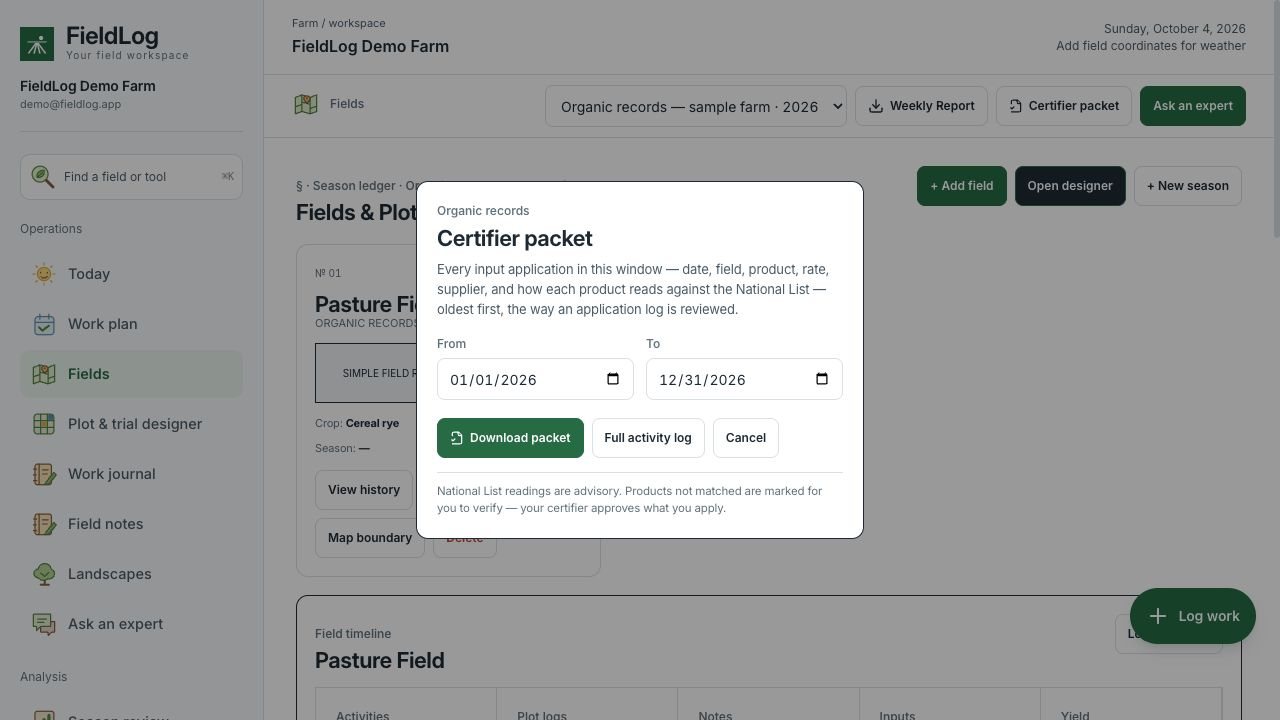
- Select a single season/project, then open Certifier packet from Today or Work plan. This export requires the project owner’s Pro plan; current plans are listed on FieldLog’s pricing page.
- Set From and To to the period your certifier requests. Download packet produces a CSV of input entries, oldest first, with date, field, crop, acreage, product, rate, supplier, National List reading, the person recorded, and notes.
- Check the CSV against completed work. Planned activities with an input can appear in the export, so remove work that has not happened and correct missing dates, rates, suppliers, or operator details before sharing.
- Use Full activity log when you also need cultivation, scouting, sampling, or other recorded work. File the exports with the OSP, maps, approvals, receipts, and harvest and sales records, using the format your certifier requests.
Try the workflow with one field before the busy season. Enter a completed job, export it, and check that someone else can follow the record back to its supporting documents. The FieldLog walkthrough shows phone logging, photos, and the field timeline.
If the certifier finds a problem
When a certifier identifies a noncompliance, the written notice states the finding, the supporting facts, and the deadline to correct it or provide a rebuttal. Submit the response and supporting evidence by that date. When the items are resolved, keep the certifier’s written resolution with your records [15].
An unsuccessful rebuttal or correction can lead to proposed suspension or revocation. The notice explains the reasons and rights to mediation or appeal. The rules also provide for combined notices when correction is impossible and direct proposed suspension or revocation for apparent willful violations [15].
The noncompliance sequence for a certified operation
| Stage | What happens | What the operation should do |
|---|---|---|
| 1. Written notification | The certifier describes each noncompliance, the supporting facts, and the deadline to act | Read the deadline first, then assemble evidence; ask the certifier what documentation will satisfy the item |
| 2. Correct or rebut | The operation fixes the issue and documents it, or contests the finding | Submit corrections with supporting records before the stated date |
| 3. Resolution | The certifier issues written notification that the noncompliance is resolved | Keep the resolution notice with the certification file |
| 4. Proposed suspension or revocation | May follow an unsuccessful rebuttal or correction; special procedures apply when correction is impossible or a violation appears willful | Note the stated effective date and the right to mediation or appeal |
| 5. Mediation or appeal | The operation may request mediation or file an appeal under the regulations | Follow the applicable mediation or appeal deadline |
Verify the certification scope and products
Organic certification applies to the scopes, locations, and products identified in the certification file. It can cover crop, livestock, wild-crop, and handling activities. Buyers should review the operation name, physical locations when relevant, certification scope, certified products or addenda, certifier, and current status. Verify farms, processing facilities, ingredients, and finished products separately [1][6].
- Search the USDA Organic INTEGRITY Database for the operation’s legal or certified name.
- Confirm that the operation is currently certified and not suspended or revoked.
- Check the relevant scope and the products or crops associated with the certification.
- Compare the database record with the current certificate and product addendum supplied by the operation.
- Ask the certifier when the record, scope, product, or activity is unclear.
Who else in the chain needs certification
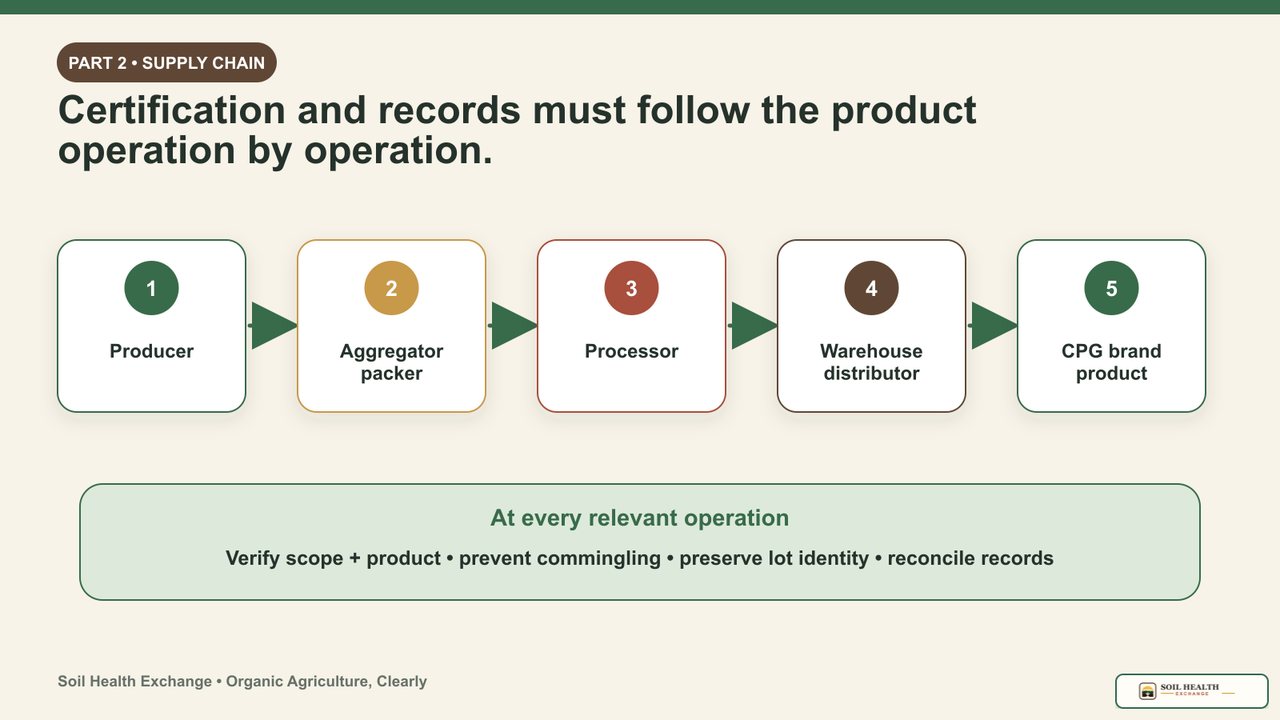
Map what each business does with the product: growing, packing, storing, processing, owning, selling, or arranging a trade. Certification responsibility follows those activities, including some transactions where a business never physically touches the product [12][13].
Questions for each supply-chain role
| Role | Activities that matter | Evidence to examine |
|---|---|---|
| Producer | Growing, raising, harvesting, on-farm packing, storage, or processing | Certified scope and products, land or livestock eligibility, OSP, harvest and sales trail |
| Aggregator or packer | Combining lots, grading, culling, washing, packing, relabeling, or storing unpackaged product | Supplier verification, lot identity, sanitation, commingling controls, incoming and outgoing quantities |
| Broker, trader, or marketplace | Selling, trading, negotiating, facilitating transactions, taking ownership, or controlling documents | Certification status, transaction records, supplier and buyer identity, certificates and product addenda |
| Warehouse or distributor | Receiving, storing, splitting, repacking, relabeling, or loading product | Packaging condition, lots, locations, inventory, pest control, and handling activities |
| Processor or co-manufacturer | Formulating, transforming, cooking, extracting, mixing, packaging, or labeling | Certified facility and products, formula, ingredients, processing aids, sanitation, label approval, mass balance |
| Importer or exporter |
Check whether an exemption applies
Some operations qualify for certification exemptions, including those with $5,000 or less in annual organic sales and certain businesses handling only sealed or retail-labeled products. Each exemption has specific activity and packaging conditions. Importing and exporting require certification. Check the exact workflow with a certifier, including any opening, repacking, relabeling, or processing [12][13].
An exempt small operation still follows the applicable organic production and labeling rules. Its products cannot carry the USDA organic seal or be represented as certified organic. Products from that exempt operation also cannot be used as organic ingredients in another operation’s certified processed product [17].
Each relevant producer and handler holds certification for its applicable scopes and products. Records connect the certified product as it moves between operations. Buyers should verify every required operation in the Organic INTEGRITY Database and review its current status, certificate, product addenda, invoices, lot records, and labels [6][14].
Confirm that each co-manufactured formula, ingredient, processing aid, sanitation procedure, package, label, and product listing fits the facility’s certified handling system. Analyze the brand’s sales, trade, labeling, ownership, and other activities separately to determine its certification responsibility.
Understand the four USDA labeling categories
Packaged-product organic claims
| Label category | Basic composition threshold | USDA organic seal |
|---|---|---|
| 100 percent organic | All ingredients are certified organic, excluding salt and water | May be used on a compliant certified product |
| Organic | At least 95 percent certified organic ingredients, excluding salt and water, with remaining ingredients meeting the rules | May be used on a compliant certified product |
| Made with organic … | At least 70 percent certified organic ingredients, excluding salt and water, with additional restrictions | May not be used |
| Specific organic ingredients | Less than 70 percent certified organic ingredients | May not be used; organic ingredients may be identified in the ingredient statement as allowed |
Label review covers composition percentage, ingredient status, National List allowances, product name, principal display panel, ingredient statement, certifier identification, seal use, and other applicable requirements. Submit final artwork through the certifier’s label-review process before printing [14][9].
Build a certification map before signing supply agreements
- Draw every organization and physical facility from source farm to final customer.
- Write the exact activity each participant performs, including ownership, sale facilitation, storage, labeling, and import or export.
- Identify which participants are certified, which may rely on an exemption, and who provided that conclusion.
- Confirm scopes, certified products, labels, and current status rather than accepting a certificate image alone.
- Design lot identity, quantity reconciliation, supplier verification, and fraud-prevention controls across handoffs.
- Require notice before any participant, facility, ingredient, formula, label, or process changes.
Leave yourself a clear next step
Start one certification folder with a farm map, land histories, the products you want to sell, and your questions for a certifier. If you are already certified, pick one recent shipment and trace it back to the field or supplier. That exercise will show where your records are ready and where the next improvement belongs.
If your next decision is adding Regenerative Organic Certified, Part 3 builds on this foundation with the additional requirements, costs, and buyer questions.