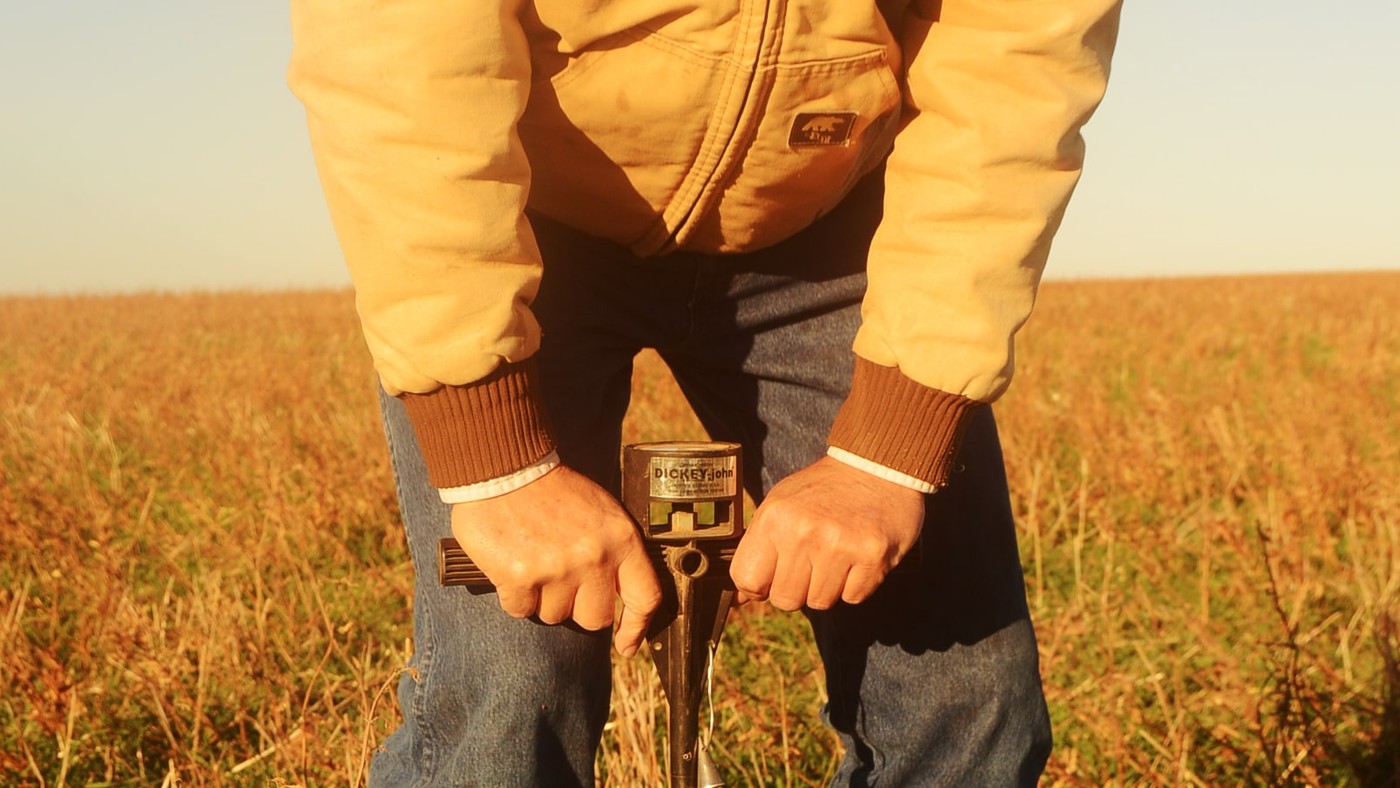
Compaction isn’t just “hard soil.” It’s a measurable shift in soil physical state. Higher bulk density means fewer connected soil pores, higher penetration resistance (the resistance to root growth), slower soil water infiltration (water logging and ponding issues), and restricted rooting (less root accessibility to nutrients).
Compacted soil restricts plants accessing water and nutrients, and this can result into yield drag that’s highly patchy (near tracks, headlands, turn rows, lanes). The good news is that you can diagnose compaction in under an hour with a shovel and a few low-cost tools, and you can match the fix to the actual constraint.
What compaction looks like in the field (symptoms worth mapping)?
Before tools, scan the pattern. Compaction often shows up as:
- wheel-track yield loss, stunting, uneven canopy
- ponding or slow infiltration after moderate rain
- shallow or “J-shaped” roots hitting a dense layer
- platy structure / horizontal layering in the topsoil or a distinct dense zone at a consistent depth
These patterns matters because they hint at where the problem sits (surface seal vs. tillage pan vs. deep traffic compaction) and why it formed (traffic when soil is wet, repeated passes with heavy equipment, high axle load, and poor residue protection).
Step 1 — Choose the right timing (moisture controls your numbers)
Penetrometer readings and even “feel” can swing dramatically with water content. As a rule: measure when the soil is moist but not plastic (often near field capacity). Wet soils are much more susceptible to compaction from traffic, and the same soil will show higher or lower resistance depending on moisture.
Discussion
No comments yet. Be the first to share your thoughts!