The bottom line
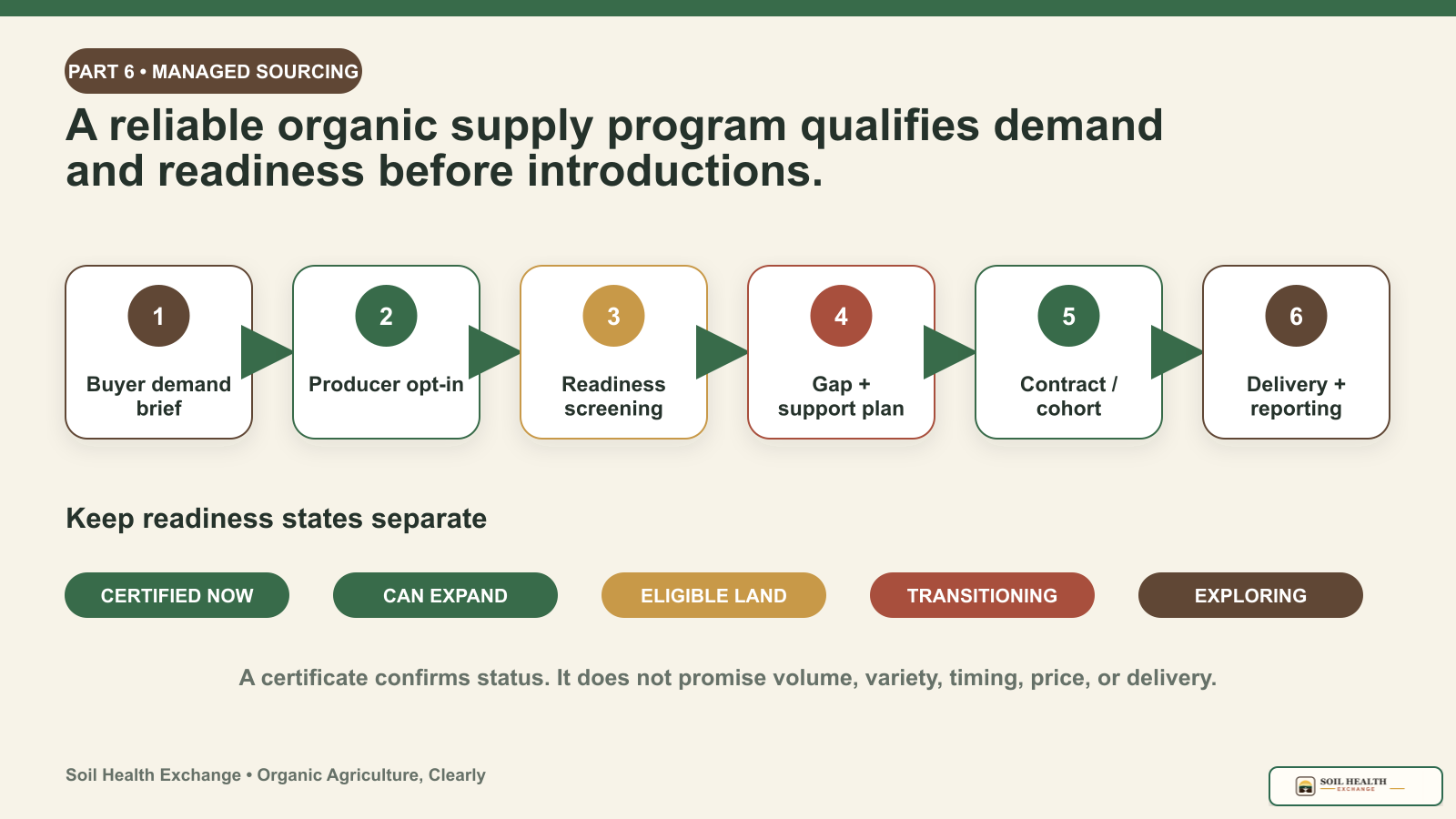
Start with a usable demand brief: commodity, variety, geography, volume, delivery window, quality specifications, certification status, handling chain, price structure, and contract terms. Separate certified supply available now from transitional or interested acreage. Verify every relevant operation and product, then address the real constraint—agronomy, land eligibility, price, infrastructure, processing, logistics, or risk. Do not ask producers to transition without a credible market signal and support plan.
“We need more organic” is not yet a demand signal
A producer cannot evaluate an opportunity without the crop or ingredient, location, volume, timing, quality specification, certification requirement, price structure, contract term, and delivery path. Turn the internal shortage into a structured demand brief before recruiting farms.
Certification and supply are different problems
Organic certification establishes whether an operation and product meet the applicable organic requirements. It does not guarantee the right variety, yield, contracted acres, harvest timing, pack style, processing characteristics, transportation, price, or delivery reliability. A sourcing program must solve both compliance and commercial fit.
The minimum organic demand brief
| Demand field | Questions to answer |
|---|---|
| Product |

Discussion
No comments yet. Be the first to share your thoughts!