- Location
- MT
- Crop
- Sugar Beet
The challenge
“Cover cropping solutions in arid dry land farming. How can we develop cover crop varieties to increase diversity of options in dry land environments, what kind of breeding development would be necessary to facilitate no-till organic in arid environment?”
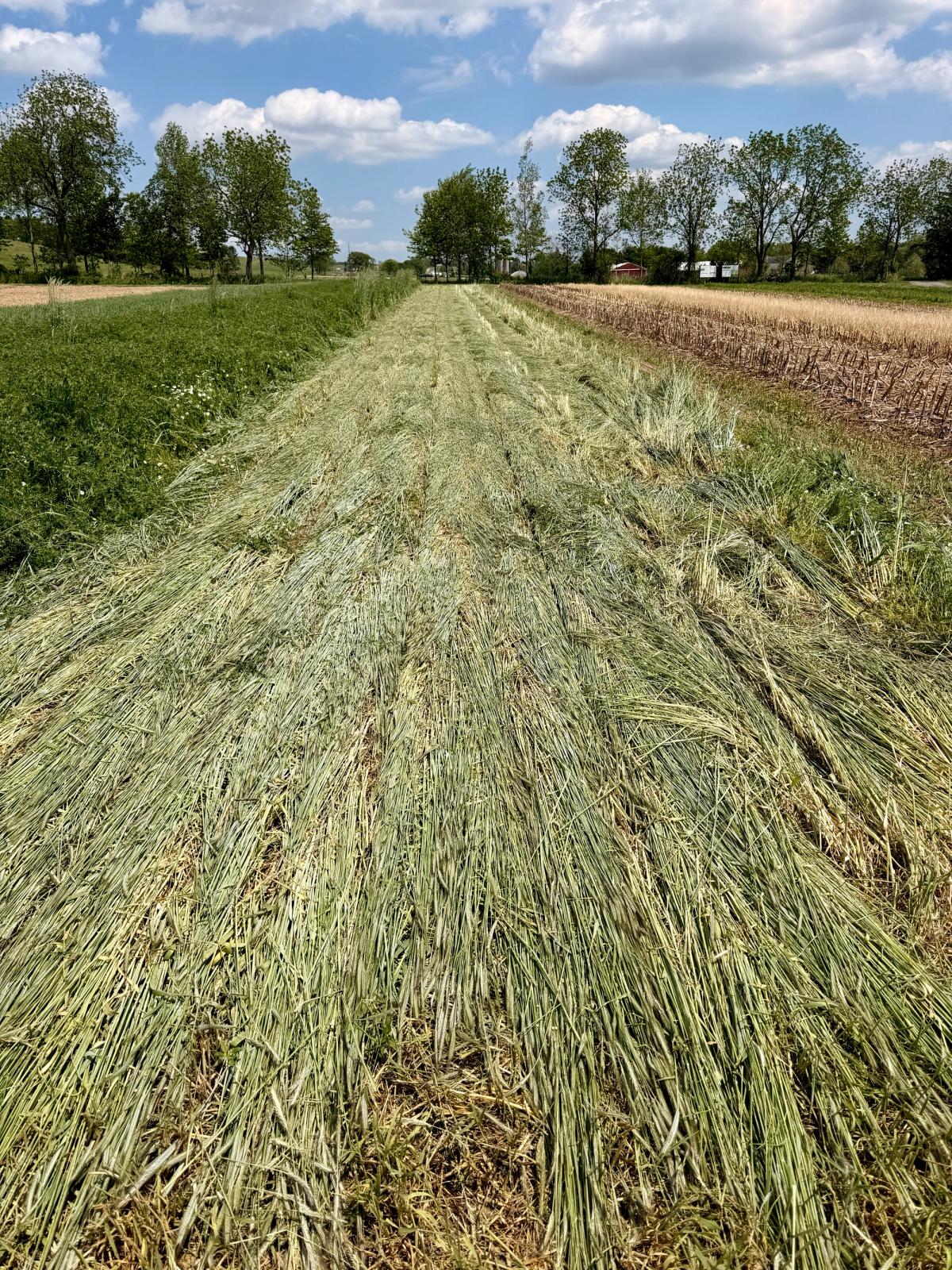
The Core Problem: Why Arid Dryland Is Different
The water math in dryland farming is unforgiving. Available soil water is the most limiting factor in dryland crop production, and farmers are rightly concerned that cover crops will extract too much water from the soil profile, limiting what's available for the following cash crop. This is not irrational fear it's the central trade-off that any realistic cover crop strategy for these systems must address directly. New Mexico State University have published a guidebook on what and how to use cover crop in semi-arid and arid system: New Mexico State University
Research have shown while having could be challenging but its doable: one of the innovative ways for cover cropping in semi-arid dryland systems is to combine no-till or minimum tillage with cover cropping. Moisture utilization by the cover crops is counterbalanced by the improved infiltration and reduced evaporative losses due to no-till.
A critical qualifier here is timing. A late-terminated summer cover crop in dryland conditions can be highly damaging; under late terminated summer cover crop, there was 7% soil water depletion at wheat planting which resulted in a 61% decline in yield. But that same late-terminated cover crop produced massive biological gains: it achieved the greatest gain in soil total and particulate organic carbon by 17% and 72%, and arbuscular mycorrhizal fungal concentration increased by 356% and 251%. This is the classic dryland cover crop trade-off in stark numerical terms; the biological ROI is real, but water timing management determines whether it's accessible. [source: nihnih]
What Species Actually Work Now (Without New Breeding)
The current species palette for dryland cover crop diversity is more populated than most farmers realize. The gap isn't zero it's concentrated in specific functional roles.
Winter annuals (the most viable entry point):
- Cereal rye is popular for winter-hardy cover because it develops a fibrous root system, tolerates low-fertility soils, scavenges nitrogen, prevents wind/water erosion, and can suppress weeds. However, there's a significant management risk in the Great Plains: cereal rye can quickly become "weedy," known as feral rye, and is a weed of dryland agriculture in the western and central United States that causes more than $26 million in annual wheat harvest losses. This is a real constraint that limits cereal rye adoption in wheat rotations specifically. [source: Cambridge Core]
- Barley, wheat, oat, and triticale are competitive cool-season grass alternatives with lower feral risk.
- For arid areas, white mustard (Sinapis alba), Oriental mustard (Brassica juncea), and rapeseed (B. napus) represent viable brassica options, alongside hairy vetch and common vetch for legume N fixation. [source: Extension]
Perennial and native species (underexplored but high-potential): Perennial grasses that are drought-tolerant offer the benefit of providing soil cover for multiple seasons without replanting. Many are dormant during summer months when irrigation is limiting, and regrow when precipitation increases soil available water. Native mixes of grasses and wildflowers will perform best for a given location, as germination and establishment are optimized for that particular location including Indian ricegrass (Achnatherum hymenoides) and crested wheatgrass (Agropyron cristatum). [source: Extension]
Research from California vineyards — a reasonably analogous arid perennial system found that native species like phacelia (Phacelia tanacetifolia), because of their adaptation to local conditions, may have better weed suppressive abilities than introduced species like rye. This native-species angle is significantly underexplored for annual dryland row crop systems and represents a real research gap. [source: biorxiv]
For the fallow replacement role specifically — the dominant dryland rotation challenge can be removed with legume cover crops, which can also increase nitrogen fixation, improve soil aggregates, and conserve soil moisture by reducing evaporation rates during drought periods through a thick layer of residue after termination. The W-S-F (wheat-sorghum-fallow) rotation common in the southern and central Great Plains has two distinct fallow windows where targeted cover crops could substitute. [source: Wiley Online Library]
The Breeding Gap: What's Actually Missing
The species palette problem in dryland systems isn't primarily a lack of species. it's that existing species haven't been selected for the specific trait combination that dryland no-till demands. Here's where the breeding investment would have the highest leverage:
1. Root architecture optimized for water capture without excessive canopy water use
This is the core breeding challenge. Longer and deeper roots with compact branching angles combined with high root length density in the deep soil profile could precisely capture water from soil that is dry at the surface but holds moisture in deeper layers. Critically, breeding programs focused on improving drought adaptation have often resulted in the development of crop varieties with reduced root biomass, because the spatial distribution of roots in the deep soil profile, not root biomass or root length, governs the capability of root systems to efficiently uptake soil water.[source: PubMed Central]
For cover crops specifically, the goal is the inverse of cash crop breeding: maximize biological output (biomass, N fixation, mycorrhizal support) while minimizing canopy-level evapotranspiration. [source: nih]
A cover crop variety bred for dryland would want: deep roots to scavenge subsoil moisture, modest canopy transpiration, and deliberately engineered early senescence to terminate itself before competing with the cash crop. That combination doesn't exist in the current commercial seed palette.
2. Rapid life cycle completion / drought escape phenology
Drought escapers plant employ strategies such as precocious flowering, increased photosynthetic ability, and fast growth to complete their life cycle before the beginning of drought stress conditions. Cover crops bred for dryland could exploit this phenological strategy directly for varieties that germinate fast on minimal soil moisture, build biomass rapidly during the narrow post-harvest / pre-planting window, then set seed or desiccate before competing with the cash crop for spring moisture. [source: Wiley Online Library]
This is a fundamentally different breeding objective than current cover crop varieties, which were selected for maximum biomass accumulation in humid conditions.
3. Allelopathy and weed suppression without herbicide dependence
And considering, Organic no-till in dryland systems, that faces a compounding problem: weed management in organic no-till systems, trade-offs in cover crop biomass and moisture conservation, and certification barriers challenge agricultural resilience and sustainability in arid and semi-arid regions. Without herbicide, the cover crop mulch layer has to do the weed suppression work, which requires high biomass production, but high biomass = high water use. This is a genuine physiological tension that breeding can only partially resolve. [source: MDPI]
The most tractable breeding pathway here is selecting for high allelopathic activity (root exudate chemistry that suppresses weed germination) at moderate biomass levels, so weed control is achieved without requiring the 4,000–6,000 lb/acre of dry matter that the roller-crimper model currently demands in humid systems.
Termination Without Herbicide: What the Research Shows for Dryland
The roller-crimper remains the primary non-chemical termination tool, but its limitations in dryland systems are significant and under-studied.
The data from humid systems is promising: in a California San Joaquin Valley study (a semi-arid context), roller-crimping resulted in 95–100% kill of cover crops, with soil cover at maize canopy closure of approximately 90% in rye plots. [source: MDPI]
However, roller-crimping requires sufficient biomass, typically 4,000+ lb/acre of dry matter to form an effective mulch. In dryland systems where biomass production is constrained by moisture, this threshold may frequently not be reached. The research-backed response to incomplete kill is combining approaches: roller-crimping combined with flaming significantly boosted termination effectiveness, with economic threshold for 85% suppression only reached when rollers were used in combination with flaming though even combined methods rarely reached 100% suppression. [source: nih]
For dryland organic no-till specifically, the most promising near-term termination pathway isn't a single technology; it's winterkill species selection. Designing cover crop mixes around species that reliably winterkill at the temperature thresholds of a given dryland geography eliminates the termination problem entirely. Spring oats, tillage radish, field peas, lentils, and some brassicas will winterkill across most of the northern and central Great Plains without any mechanical or chemical intervention, leaving dry, weed-suppressing residue in place. The breeding investment needed here is developing winterkill-reliable varieties of legumes and brassicas that also achieve meaningful biomass and nitrogen fixation before killing.
Practical Prioritization : What you can do
Given where the research stands, the most defensible dryland cover crop strategy for farmers working toward organic no-till today is:
- Enter through the fallow windows. In the W-S-F rotation, both fallow periods from wheat harvest to summer crop planting (9–12 months) and from summer crop harvest to winter wheat planting (11 months) offer windows where targeted cover crops can replace fallow without competing with a standing cash crop. These are lower-risk entry points than interseeding into a standing crop. [source: Wiley Online Library]
- Use simple mixes, not complex cocktails. Planting multi-species cover crops in dryland environments has not improved biomass production, residue cover, or weed suppression benefits when compared to a single productive species or simple cover crop mixtures. Complexity in humid systems often reduces to simplicity in dryland systems. [source: Wiley Online Library]
- Terminate early and measure soil moisture. A penetrometer and soil moisture meter at 0–6", 6–12", and 12–24" depths should drive termination timing decisions, not calendar dates. The 7% soil water depletion figure cited above the threshold that caused 61% yield loss should be a red-line decision point.
- Prioritize legumes for the organic N function. In an organic system without synthetic N, soybean and other legumes can serve as cover crops in dryland rotation, decreasing soil moisture loss, topsoil heating, and secondary salinization while providing nitrogen via biological fixation and soil microbiological processes. [source: Frontiers]
Use the cover crop tool to find what works best at your location: https://soilhealthexchange.com/tools/cover-crop-selector
Cite this
Reference this work
Soil Health Exchange Editorial (2026). Navigating Dryland Cover Crops. Soil Health Exchange. SHE-FA-2026-0012. https://soilhealthexchange.com/cite/SHE-FA-2026-0012
Soil Health Exchange assigns a stable identifier to every published answer and article. Citations keep working even if the URL changes later.
Keep exploring
Discussion
No comments yet. Be the first to share your thoughts!