- Location
- Clay County, Nebraska
- Crop
- Corn
- Acres
- 5,000
The challenge
“I'm applying feedlot manure on irrigated corn ground in south-central Nebraska. My neighbor says I can cut synthetic fertilizer entirely if I apply enough manure. Is that true, and what's the catch with cover crops in the mix?”

Leslie Johnson
Animal Manure Management Extension Educator · University of Nebraska - Lincoln · Concord, Nebraska
Thanks for the question!
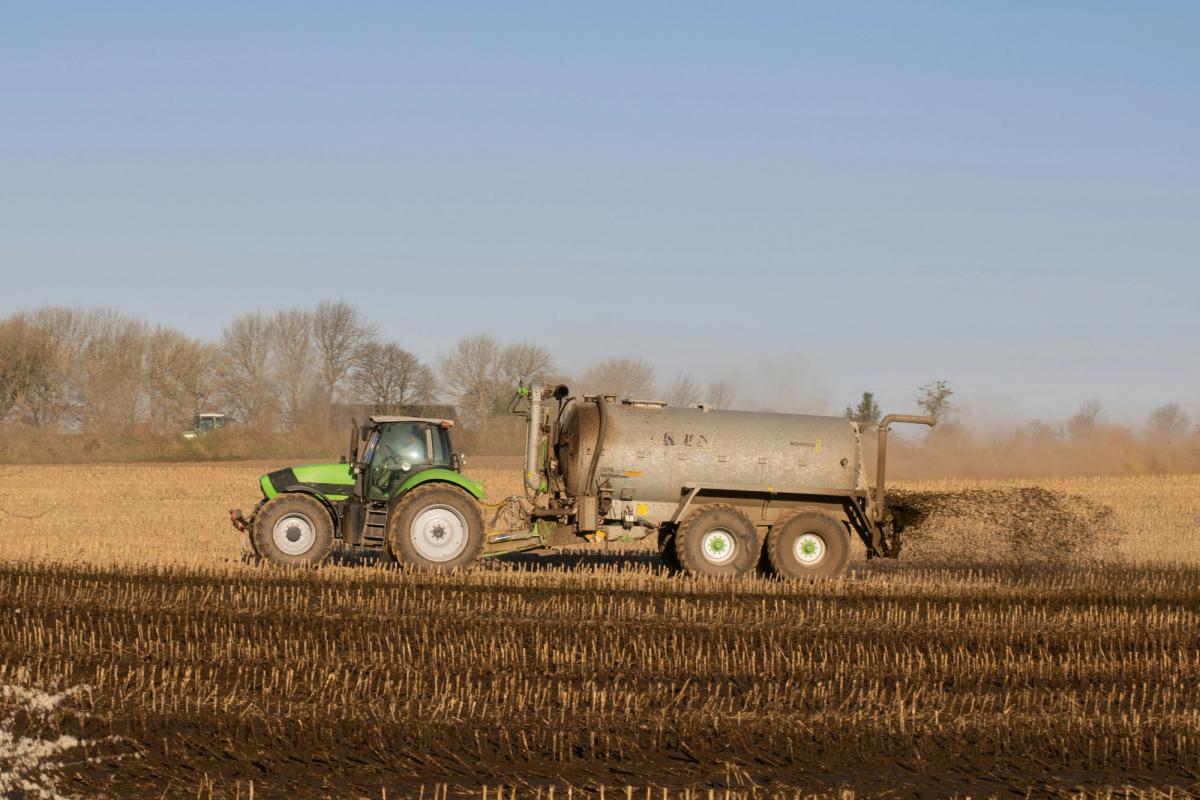
Your neighbor may be correct, but that isn't always the most economical plan. Putting enough manure on to meet any one nutrient's needs may apply excessive amounts of other nutrients that would be better to spread on more fields (and minimize fertilizer inputs across the whole farm, not just one field).
For example, if you spread enough beef manure to meet nitrogen needs, you may be applying 6 or more years of phosphorus and potassium - especially if that feedlot is feeding materials high in those nutrients like distillers grains. However, if you only want to apply a 2-3 years worth of phosphorus needs with your beef manure, you may to add additional nitrogen.
Different manures have different proportions of nutrients in them so a manure analysis prior to application is always recommended to help choose an appropriate rate.
Cover Crops
As for the cover crops question, it depends on the type of cover crop that is grown. In many cases here in Nebraska, rye is used and it is very good at scavenging and taking up nutrients that are in the soil. As the cover crop decomposes, it releases those nutrients back into the soil, making them more available for the growing crop. Just like crop residues decompose on the surface and the nutrients that are in them mineralize and become available, so does the cover crop. So like corn residue breaks down slower than soybean residue, cover crops that have a higher carbon to nitrogen ration are slower to break down than those have a lower C:N ratio. Mineralization is highly dependent on the weather. The microbial communities that break down residues and manure must have moisture and warmth for that to happen, so more mineralization happens in warm (or irrigated) summers than dry areas or in winter.
If you need help determining a manure application rate to meet your crop's needs, reach out to the local extension office or myself and we'd be happy to help!
Cite this
Reference this work
Leslie Johnson (2026). How much manure is enough — and what happens to the rest?. Soil Health Exchange. SHE-FA-2026-0040. https://soilhealthexchange.com/cite/SHE-FA-2026-0040
Soil Health Exchange assigns a stable identifier to every published answer and article. Citations keep working even if the URL changes later.
Discussion (1)
Keep exploring
Similar questions
Cereal rye is the right species for this late, pre-soybean slot
Iowa
Reducing Cover-Crop Herbicide Use in Nebraska: Three Lanes, Measured Before Scaling
Nebraska
Cereal Rye Before Corn: Should You Adjust Your Nitrogen Rate?
IA

Organic Corn in Clover Living Mulch: Protect the Row and Test the Yield Response
PA
This is absolutely profound. The depth of experience and clarity here really shows… the kind of perspective that only comes from doing the work over time. We’ve been to just about every fertilizer rig outfit around here, and we simply can’t justify the cost to fertilize at scale… not unless we dramatically scaled livestock, which isn’t in the cards right now. What’s interesting is we’re surrounded by multiple CAFO systems, so the nutrients are here… they’re just not cycling back onto the land the way they could be. We’ve got one to the north of us, Vital Farms specifically, and from what I’m told we’re acting as a watershed for roughly 550 acres that drains through our place. I’ve asked to review their nutrient management plan to better understand what’s coming downstream, but haven’t been able to get eyes on it yet. Feels like the opportunity is reconnecting those nutrient streams in a way that actually builds soil over time.