- Location
- Southwestern Ontario, Canada
- Crop
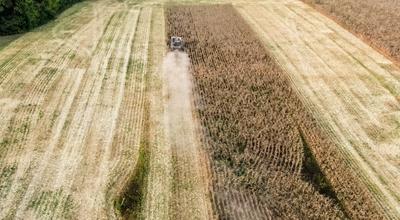
- Grain Corn Followed BY No-till Soybeans
The challenge
“A southwestern Ontario no-tiller wants to broadcast oats, possibly with radish, into standing corn around August. Could the roots help carry harvest equipment in a wet fall and protect the soil without leaving a cold, wet seedbed for 15-inch soybeans?”
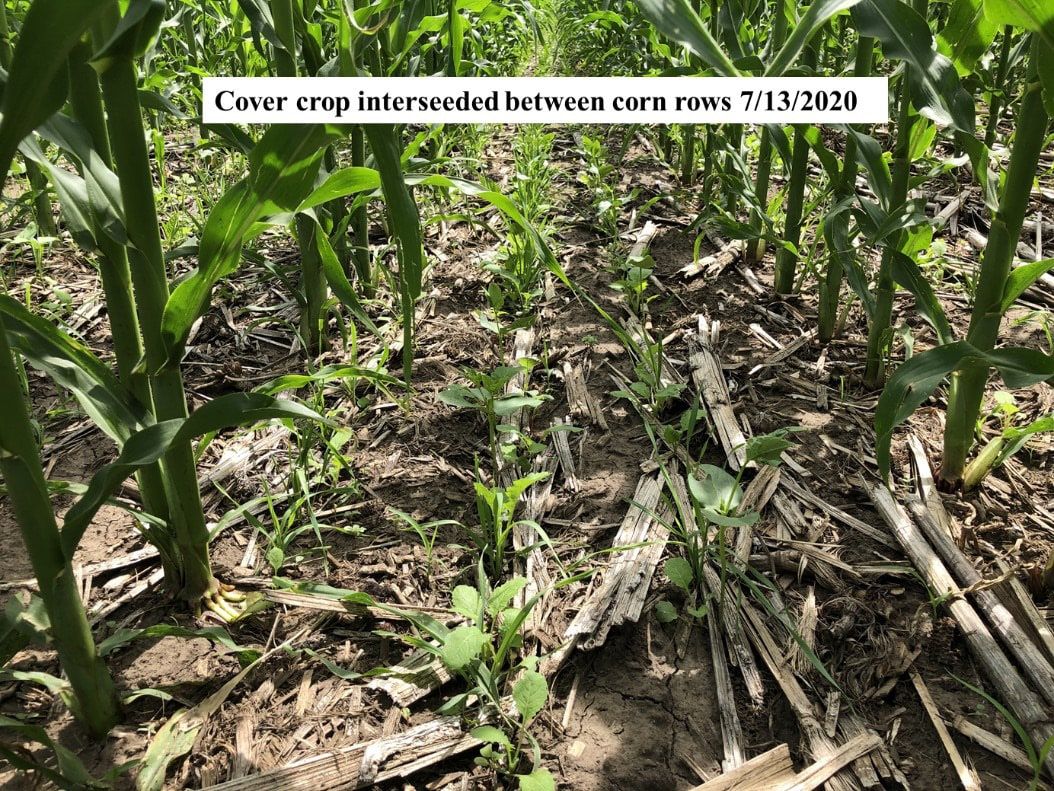
First see whether the oats establish
Oats can give you a fibrous root mat and ground cover if enough plants come up before corn harvest. Broadcasting into standing corn depends on seed reaching the ground, getting rain and having enough light under the canopy. Check the corn herbicide program for restrictions and the chance of carryover. Ontario interseeding research found that several residual herbicides reduced cover establishment, although those trials used earlier, drilled interseeding. Test oats alone first. Add a third strip with oats and radish if you want to see whether radish changes the stand or spring residue.
Read rutting and compaction separately
Ruts tell you how the surface handled a pass. Heavy axle loads can still compact wet soil below the root mat even where surface ruts are shallow. Use fixed lanes where practical and keep loads lower when the field is marginal. If the ground is too wet, wait or unload at the edge.
Leave several no-cover strips alongside the oats on similar ground. Record stand and ground cover before harvest. Along already planned passes on trafficable ground, record rut depth and soil moisture at the same depth on the same day. Compare similar axle loads, tire pressures and numbers of passes. The useful result is whether the oats repeatedly reduce rutting under comparable conditions.
Check the soybean row in spring
Ontario guidance treats oats and forage radish as usually winter-killed in an after-wheat cover crop. Scout in spring for survivors and plan termination if needed. Check soil temperature and moisture at soybean seeding depth and note whether residue mats or pushes into the slot. Compare the soybean stand across strips. Carry the practice to more acres if the fall cover is worth having and your planter still gets an even stand.
Adapted from a public AgTalk Crop Talk question. Read the original discussion.
Topics
Cite this
Reference this work
Soil Health Exchange Team (2026). Can oats seeded into standing corn help carry a wet harvest?. Soil Health Exchange. SHE-FA-2026-0074. https://soilhealthexchange.com/cite/SHE-FA-2026-0074
Soil Health Exchange assigns a stable identifier to every published answer and article. Citations keep working even if the URL changes later.
Keep exploring
Similar questions
Do radishes and turnips really break up compaction?
Northwest Wisconsin
Can roots, compost or humic acid break up soil compaction without tillage?
Nebraska

How can I fix wet gumbo spots under a pivot when the tile hasn't worked?
Nebraska
Will spring potash work for soybeans after a missed fall application?
Eastern South Dakota
From the blog
Discussion
No comments yet. Be the first to share your thoughts!