- Location
- Nebraska
- Crop
- Various
- Acres
- 1,000
The challenge
“"How does a guy alleviate soil compaction without mechanical means and long-term cover crop? I've heard guys talk that are big into soil health and regenerative ag about reducing soil compaction. Is there a way to do it with biology, compost, humic acid, or other means?"”

Patrick Freeze, Ph.D.
Western Region Outreach Scientist and Applied Research Leads · Ward Laboratories Inc. · Nebraska
Understanding Compaction
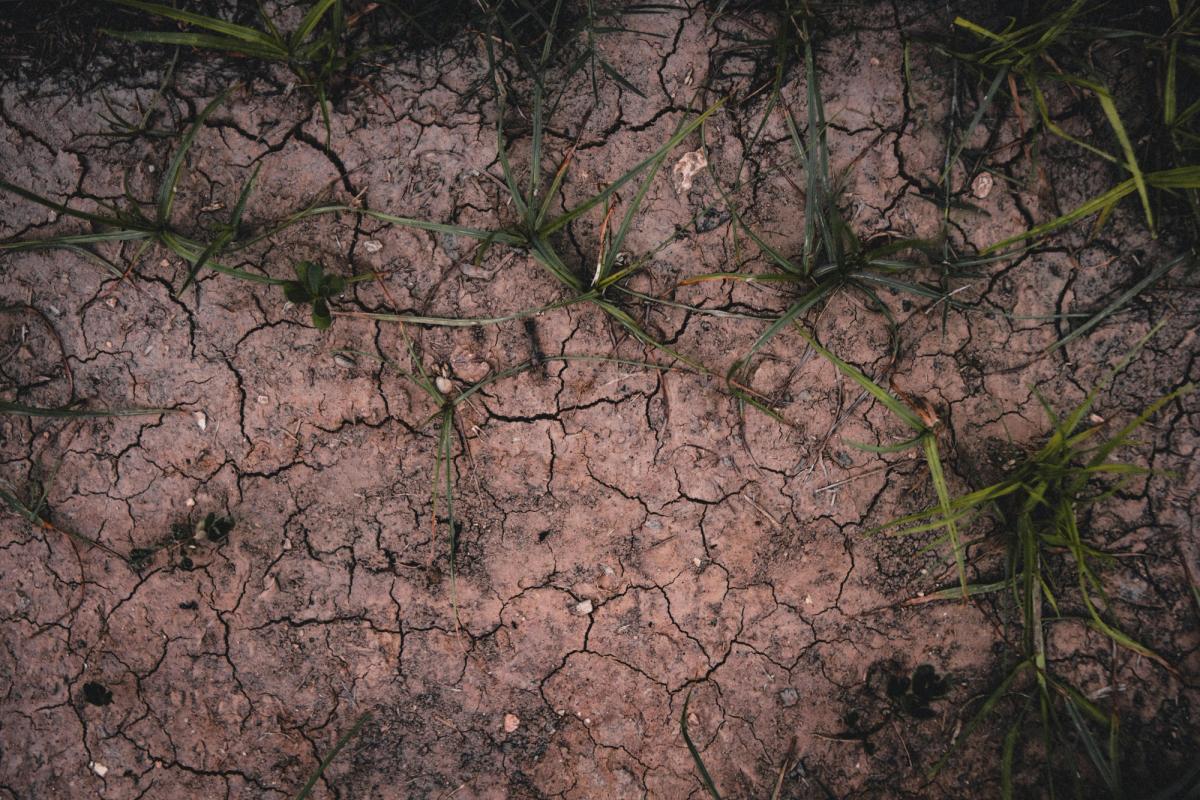
Initially, it's important to understand why the soil is experiencing compaction. Most often, the culprit is conventional tillage, where regular passes with heavy equipment compact fine-textured soil tightly. In some areas, high levels of calcium or iron, when combined with a high clay content, can lead to the formation of cemented hardpans (or iron pans, in the case of high iron content). The presence of carbonates and elevated pH levels often play a role in cemented hardpans, as calcium carbonates and iron oxides precipitating out of solution can bind clay particles together.
The Solution to the Challenge
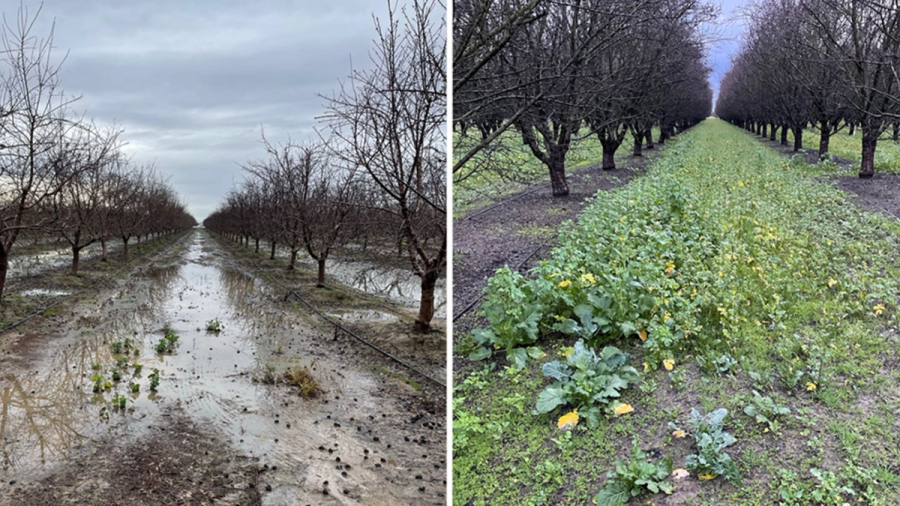
If you've already adopted minimal or no-till practices, the "natural" correction of hardpans and compacted layers typically requires the growth of deep roots and, occasionally, some soil conditioning. This conditioning, like acidification using elemental sulfur, can help dissolve the carbonates that contribute to natural hardpan formation. Meanwhile, crops and cover crops with deep-rooting species — brassicas being the most well-known — have proven to be highly effective. For instance, Daikon radishes have demonstrated their ability to break up compaction between almond trees in orchards.
If you wish to avoid continual cover crops, there are other deep-rooting species that double as cash crops: sunflowers, sorghum-sudangrass, cereal rye, alfalfa and rapeseed. In the case of iron pans, a combination of gypsum (calcium sulfate, a common soil conditioner) and brassicas can be beneficial, although this sometimes requires initial physical disruption of the hardpan since iron is a very dense mineral.
For areas with severe compaction, several growing seasons might be needed to effectively break up the hardpan (up to five for severe compaction). However, it's worth noting that in the orchard example mentioned earlier, this was achieved in just one to two growing seasons.
Considering mixed or intercropped species is also a good strategy. Options include combinations like cereals and oilseeds, vegetable and leafy species, or legumes and maize. Typically, aboveground diversity fosters below-ground diversity, benefiting both soil microbiology and root mass. It's this extensive, deep root mass that is instrumental in breaking up hardpans, especially since these roots release exudates (organic acids) that can help dissolve the binding agents within the hardpans.
Application of Humic and Fulvic Acids in Alleviating Compaction
Solid and liquid soil amendments, such as compost, manures and humic/fulvic acids, exhibit soil conditioning effects that can reduce the bulk density of the soil. As compost and manures break down, they release soluble organic carbon. This carbon is highly reactive and can assist in breaking down mineral precipitates that initially contribute to the formation of cementing agents. Moreover, this soluble carbon serves as a food source for microbes, further promoting plant and root growth. However, while solid and liquid organic amendments may not directly alleviate soil compaction on their own, they can indirectly do so by enhancing soil structure and facilitating plant and root growth.
Compost teas, humic and fulvic acids also offer these benefits, but they aren't typically concentrated enough to directly condition the soil. Intriguingly, many commercial preparations containing humic and fulvic acids also incorporate plant hormones, such as auxins, gibberellins and cytokinins. These hormones can substantially affect germination and plant growth. Some research even indicates that even modest doses can elicit a response, though the extent of this response can vary based on the crop and soil properties. If you're particularly interested, it would certainly be worth considering or trialing.
Below is a brief yield comparison between cash crops using humic/fulvic acids versus traditional fertilizers, highlighting their impact on biomass production, which could indicate potential benefits for root mass growth:
Yield: Humic and Fulvic Acids vs. Traditional Fertilizers on a Per Acre Basis
Corn:
- Humic/Fulvic Acids: +20% (Canellas, 2015. “Humic and fulvic acids as biostimulants in horticulture.").
- Traditional Fertilizers: +5-15% (Khaled and Fawy. 2011, “Effect of different levels of humic acids on the nutrient content, plant growth, and soil properties under conditions of salinity.”).
Wheat:
- Humic/Fulvic Acids: +10-15% (Eyheraguibel et al. 2008 “Effects of humic substances derived from organic waste enhancement on the growth and mineral nutrition of maize.”).
- Traditional Fertilizers: Generally consistent but may vary (Grover et al. 2009, “Corn Grain Yields and Yield Stability in Four Long‐Term Cropping Systems”).
Tomatoes:
- Humic/Fulvic Acids: +10-20% (Weber et al. 1966, “Effect of Plant Population and Row Spacing on Soybean Development and Production”).
- Traditional Fertilizers: Average +10-15% (Çimrin and Yilmaz. 2005, “Humic acid applications to lettuce do not improve yield but do improve phosphorus availability.”).
Soybeans:
- Humic/Fulvic Acids: Potential +15% (Bragagnolo et al. 2013, “Optical crop sensor for variable-rate nitrogen fertilization in corn: i - plant nutrition and dry matter production”).
- Traditional Fertilizers: +5-10% (Scharf. 1999, “On-Farm Starter Fertilizer Response in No-till Corn”).
Key Takeaway
Deep-rooted crops and cover crops (brassicas, daikon radishes, sunflowers, cereal rye) combined with organic amendments can naturally alleviate soil compaction over 1-5 growing seasons without mechanical intervention.
Topics
Cite this
Reference this work
Patrick Freeze, Ph.D. (2023). Natural Solutions to Soil Compaction — Beyond Mechanical Means and Cover Crops. Soil Health Exchange. SHE-FA-2023-0001. https://soilhealthexchange.com/cite/SHE-FA-2023-0001
Soil Health Exchange assigns a stable identifier to every published answer and article. Citations keep working even if the URL changes later.
Discussion (1)
Keep exploring
Similar questions
Archive lineage: CropWatch UNL · Read original publication →
Can "humic/fulvic acids" reduce compaction? No, This conclusion I think is as an oversimplification. If we are applying them in a concentrated band in-furrow, in the top 6" of soil you have 2 million lbs of soil which with a 1% organic matter has 20,000 lbs of naturally occurring organic substances. the addition of a quart will not change much. Now I'm assuming your referencing your other article: https://cropwatch.unl.edu/…cover-crops/
However, this only shows that the organic acids aid BECAUSE they may produce more biomass. However biomass doesn't always = less compaction, this assumes we are not removing more residue. So no they don't directly, only indirectly assuming that more biomass can decrease compaction. However there is many studies showing that organic acids have no affect on yield/biomass :
https://cropwatch.unl.edu/…cover-crops/
However, this only shows that the organic acids aid BECAUSE they may produce more biomass. However biomass doesn't always = less compaction, this assumes we are not removing more residue. So no they don't directly, only indirectly assuming that more biomass can decrease compaction. However there is many studies showing that organic acids have no affect on yield/biomass :  https://acsess.onlinelibrary.wiley.com/…2/agj2.21259