- Location
- Northwest Wisconsin
- Crop
- Radish And Turnip Cover Crops
The challenge
“Radishes and turnips are sold as compaction busters. Do they really break up compaction, and is there a difference between the two?”
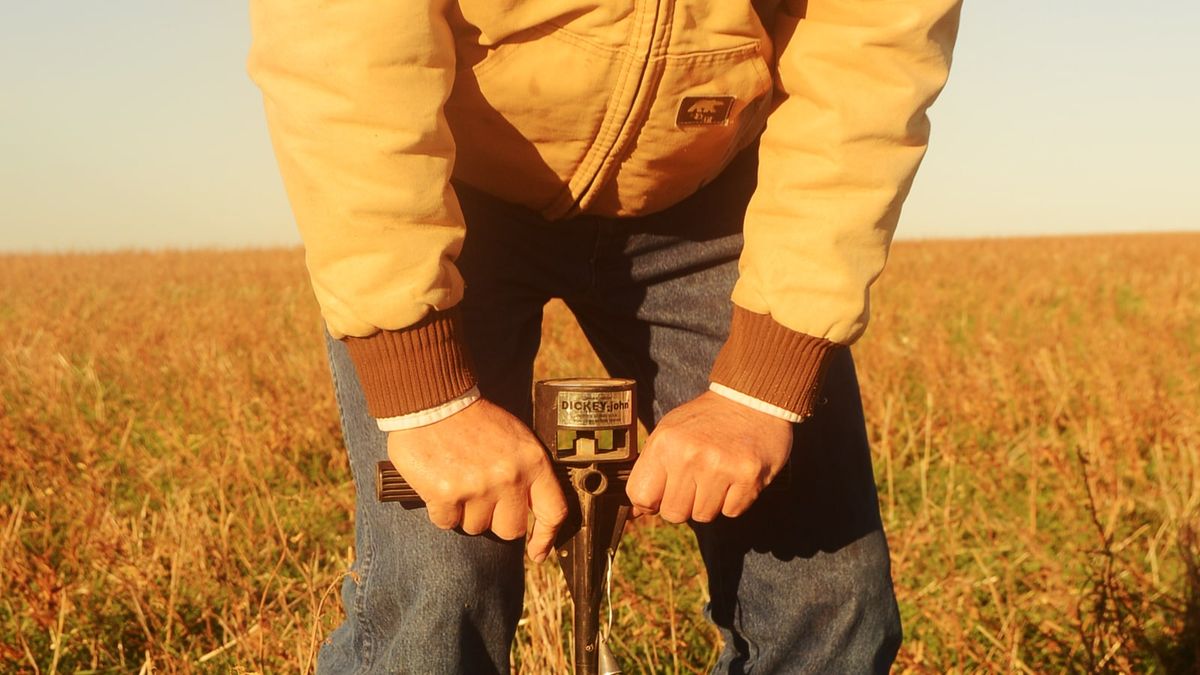
Question source: a follow-up to a Facebook cover crop discussion, collected by Saurav.
Radishes and turnips are often sold as compaction busters. Both can push roots into dense soil, and following crops can use the channels they leave. Neither loosens a compacted layer in a season. The two crops differ most in the thick part of the root, and that decides where each one helps.
What a radish root does
Forage radish grows a thick upper taproot 12 to 20 inches long, 2 to 6 inches of it above ground, and a thin lower taproot that can reach six feet or more during the fall (University of Maryland Extension).
In Maryland trials where wheel traffic created compacted layers, forage radish put more than twice as many roots as cereal rye into the 15–50 cm (6–20 inch) zone under high compaction in one experiment, and 1.5 times as many in a second. Rapeseed put about twice as many as rye in the first. Without compaction, the species differed little (Chen and Weil, 2010).
The next crops used those paths. Under high compaction, corn had more deep roots after radish or rapeseed than after rye or no cover, and corn yielded more after every cover crop, rye included, than after no cover (Chen and Weil, 2011). In a soybean study, roots grew through a plowpan in channels left by decaying cover-crop roots. The yield response was strongest at the site with the worst drought and compaction, where soybean yielded significantly more after a forage radish and rye mix, with or without deep tillage. The authors credit both the rye mulch and the radish root channels (Williams and Weil, 2004).
Turnips build a shorter storage root
A turnip's storage root forms at the base of the leaf stalks and usually measures 3 to 4 inches wide and 6 to 8 inches long, with a distinct taproot below (Alternative Field Crops Manual). Below the storage root, turnips root deep. In a classic Nebraska study of Purple Top Globe turnip, the taproot narrowed to half an inch by 12 inches deep and reached 5.5 feet. Major branches started in the top foot, then turned downward and filled the soil to about 5 feet (Weaver and Bruner, 1927).
So the difference lies in the thick, soil-pushing part of the root. The grower whose post prompted this question described a purple turnip larger than a softball with two-thirds of it above ground; a bulb sitting on the surface pushes aside little soil below. Iowa NRCS fact sheets, written with Iowa State Extension, rate both crops "very good" compaction fighters. They describe turnips as good for shallow compaction and radish as able to alleviate deep compaction as well as shallow (turnip, radish). Turnip has much thinner field evidence: one Illinois trial reported that forage turnip and oilseed radish both reduced soil compaction, in a meeting abstract without numbers (Masiunas and colleagues, 2011). The measured studies below tested radish.
What neither crop fixes
Root channels are paths through a dense layer, not a looser layer. On a Belgian sandy loam with a compacted layer at 30–50 cm, fodder radish and alfalfa roots penetrated the layer without subsoiling, but the measured soil physical properties did not improve significantly. Subsoiling broke the layer, but the effect was short-lived; fodder radish and alfalfa partially stabilized the loosened soil (Vanderhasselt and colleagues, 2024).
Other results match. In Wisconsin, oilseed radish planted in mid-August at two sites produced no penetrometer difference between treatments (Chawner and colleagues, 2014). A review of 98 publications found cover crops cut penetration resistance by 0–29%, averaging 5%, with negligible effects on bulk density (Blanco-Canqui and Ruis, 2020). Our longer guide, Compaction Without a Subsoiler, walks through that evidence.
Find the layer first
Push a penetrometer at field capacity, about 24 hours after a soaking rain, and record the depths where readings climb above 300 psi (about 2 MPa) and drop back below it. Almost no roots penetrate soil that hard (Penn State Extension). Then match the tool to the layer: turnips for shallow compaction, radish for a deeper layer, and subsoiling followed by deep-rooted covers for a severe one.
Getting the most from radish
Plant early. A radish needs warm weeks to build a big taproot before frost. Wisconsin guidance is to plant from mid-July to mid-August and to be wary of variety-not-stated (VNS) seed, which hasn't been selected for large taproots (UW Integrated Pest and Crop Management). Maryland researchers judged a September 30 planting unlikely to provide effective biodrilling. Nitrogen shortage limits radish growth and can keep it from pushing through compacted soil (University of Maryland Extension).
Judge the result with a spade. A penetrometer reads the soil between pores and misses root channels (Penn State Extension), so next summer, dig through the layer and look for crop roots following old channels. Keep heavy loads off wet ground, or the next pass can crush the channels the roots built.
Topics
Cite this
Reference this work
Soil Health Exchange Team (2026). Do radishes and turnips really break up compaction?. Soil Health Exchange. SHE-FA-2026-0063. https://soilhealthexchange.com/cite/SHE-FA-2026-0063
Soil Health Exchange assigns a stable identifier to every published answer and article. Citations keep working even if the URL changes later.
Keep exploring
Similar questions
Will a turnip or radish in my cover crop mix hurt mycorrhizae for next year's crop?
Northwest Wisconsin
Natural Solutions to Soil Compaction — Beyond Mechanical Means and Cover Crops
Nebraska
Addressing Waterlogging Issues with Soil Health Management
Nebraska
Does anhydrous ammonia make soil hard?
Nebraska
From the blog
Discussion
No comments yet. Be the first to share your thoughts!