- Location
- Iowa
- Crop
- Corn And Soy
- Acres
- 800
The challenge
“I'm considering cover crops and no-till on 800 acres of corn-soy. What will it cost me during the transition, when will I see returns, and what's the total economic case including reduced input costs?”

Musfiq Salehin, Ph.D.
Assistant Professor of Soil Science · Texas A&M AgriLife Research · Stephenville, TX
Great question—and it’s encouraging to see you considering both cover crops and no-till in a corn–soybean system.
Agronomy
These practices can provide strong long-term benefits, but it’s important to plan for the transition period from both an agronomic and economic standpoint.
1. Transition Costs (Short-term): During the first few years, you should expect some added costs, including:
- Cover crop seed (varies widely depending on species or mix)
- Establishment costs (fuel, planting, or aerial seeding)
- Termination costs, typically herbicides in a no-till system
- Potential equipment adjustments (e.g., no-till planter setup or modifications)
Herbicide selection will depend on your cover crop species and growth stage. One key management point: in a no-till system, make sure the cover crop is terminated before it reaches reproductive stages, otherwise it can become difficult to control and may create issues for planting the cash crop.
2. Yield and Risk During Transition: In the first 1–3 years, some producers may experience yield variability or slight reductions, especially if management is still being optimized. This is normal and often improves as the system stabilizes.
3. When to Expect Returns: Most of the measurable benefits tend to appear after 3 to 5 years, depending on your soil type, climate, and management consistency. Over time, you can expect:
- Improved soil structure and water infiltration/retention
- Reduced erosion and runoff losses
- Gradual improvements in nutrient cycling
4. Long-term Economic Benefits: The economic case becomes stronger over time through:
- Reduced fertilizer needs (better nutrient retention and cycling)
- Improved soil health and organic matter
- Reduced water cost (from improved soil structure)
- Increase the fertilizer use efficiency of your crops
- Increased resilience to drought or heavy rainfall, which can stabilize yields
5. Overall Economic Perspective: Think of this as a front-loaded investment. Costs are typically higher and benefits limited in the early years, but as soil health improves, input savings and yield stability begin to offset those costs. Over the long term, many producers find the system to be economically competitive—or even more profitable—than conventional systems, especially under variable weather conditions.
Breaking Down the Math: 800 Acres, Corn-Soy, Cover Crops + No-Till
What goes out (Years 1–3):
- Cover crop seed + seeding: ~$33–75/ac
- Termination: ~$8–12/ac
- Planter mods: ~$5–8/ac (amortized)
- Total added cost: ~$45–95/ac/year
What comes back in Year 1:
- EQIP cost-share: $25–50/ac in most Corn Belt states
- Net out-of-pocket: ~$20–45/ac
On 800 acres that's $16,000–$36,000/year during transition — roughly half of what it looks like before cost-share.
The yield dip (Years 1–3):
- Corn: 2–8% drag · at 200 bu/ac and $4.50/bu = $18–72/ac foregone
- Soybeans: minimal effect
- Worst case combined hit: ~$117/ac · Manageable case: ~$38/ac
But five offsets start working immediately and most farmers don't count all of them:
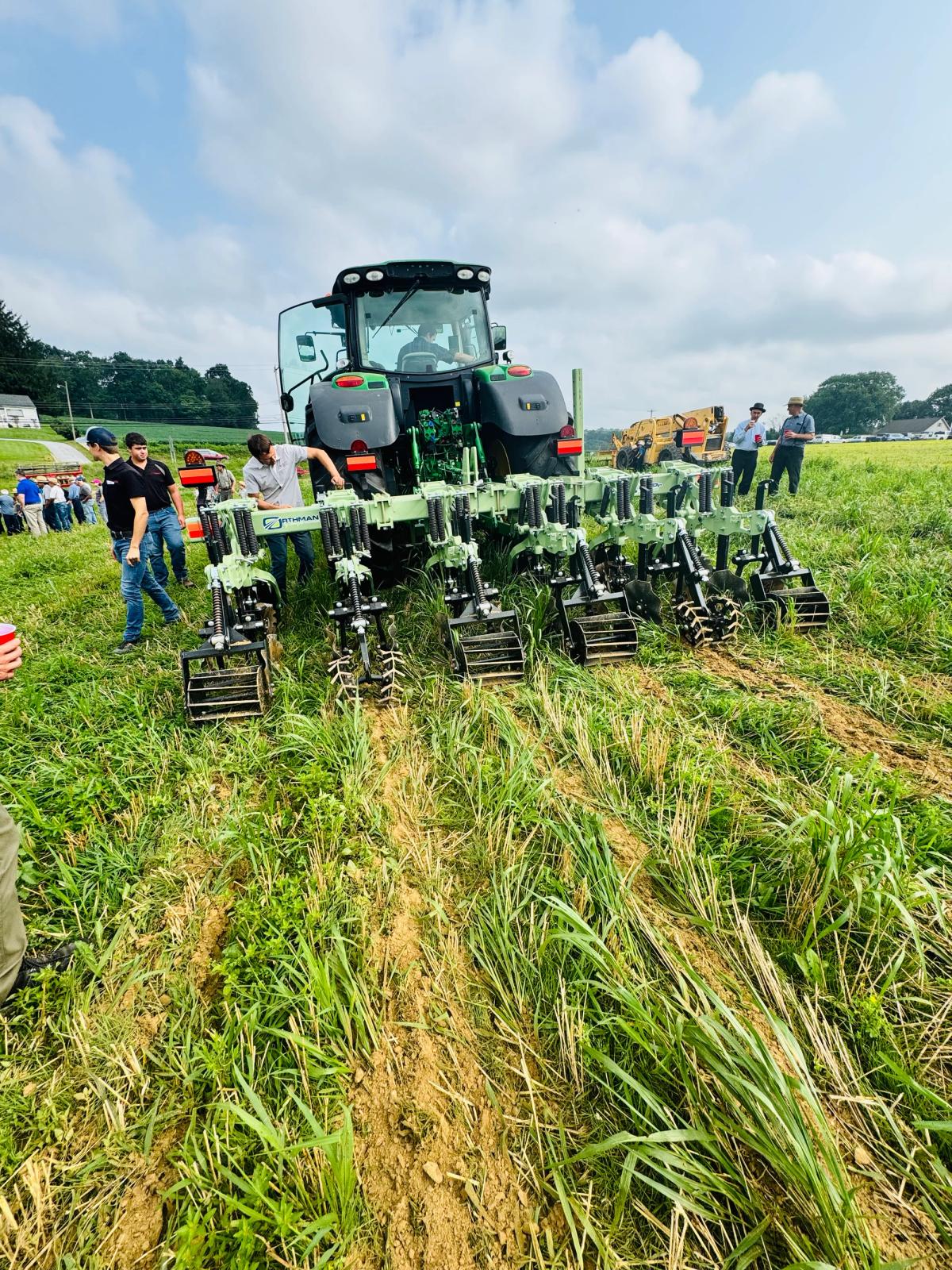
No-till fuel and labor savings (Year 1)
Eliminating 2–3 tillage passes saves 2–4 gallons diesel/ac/pass. At $3.80/gallon plus labor and equipment wear, that's $38–70/ac/year back starting in year 1 — nearly canceling transition costs before cover crop benefits begin.
Erosion cost savings (Year 1)
Cover crops + no-till reduce erosion 50–90% (USDA-ARS). On erodible ground, that's $80–240/ac/year in soil capital preserved — a real economic offset that doesn't show up on an income statement but absolutely shows up in long-term land productivity.
Legume N credit (Year 2–3 onward)
This is where species selection becomes your biggest economic lever. Cereal rye scavenges N but doesn't fix it. Hairy vetch, crimson clover, or red clover in your rotation can deliver 50–120 lbs N/ac, worth $28–66/ac in fertilizer savings annually at current UAN prices. If you're running straight cereal rye, you're leaving this offset on the table.
Rotation diversification
Adding a small grain — winter wheat or oats — into your corn-soy breaks pest and disease cycles, reduces herbicide spend by $8–15/ac by disrupting the weed seedbank, and opens planting windows that don't exist in straight corn-soy. Some identity-preserved markets are paying $0.30–0.50/bu premium for rotation wheat. Worth exploring for your geography.
Roller-crimper as a termination cost eliminator
Herbicide termination runs $12–18/ac annually. A roller-crimper runs $8,000–15,000 one-time — amortized at $2–4/ac/year on 800 acres, with payback in 3–4 years on termination savings alone. The crimped residue mulch also suppresses weeds in-season, trimming another $8–12/ac in herbicide costs. On 800 acres, that's a tool that pays for itself quickly and keeps paying.
When it flips (Year 3–5)
- N savings from legume covers: 30–80 lbs/ac · at $0.55/lb UAN = $17–44/ac annually
- Yield stabilization in drought years: $50–150/ac (Williams et al. 2016)
- AFT 26-farm median net return post-transition: $30–50/ac/year
The bottom line
The transition valley is real, but shallower than the sticker price suggests. No-till fuel savings alone nearly offset year-1 cover crop costs. Legume species selection and a roller-crimper are the two highest-leverage decisions for closing the gap faster. By year 3–5, you're not just breaking even — the math starts working in your favor across multiple income lines simultaneously.
Cite this
Reference this work
Musfiq Salehin, Ph.D. (2026). The Transition Economics of Cover Crops and No-Till. Soil Health Exchange. SHE-FA-2026-0041. https://soilhealthexchange.com/cite/SHE-FA-2026-0041
Soil Health Exchange assigns a stable identifier to every published answer and article. Citations keep working even if the URL changes later.
Keep exploring
Similar questions
Cereal rye is the right species for this late, pre-soybean slot
Iowa
How much manure is enough — and what happens to the rest?
Clay County, Nebraska
Reducing Cover-Crop Herbicide Use in Nebraska: Three Lanes, Measured Before Scaling
Nebraska
Organic Corn in Clover Living Mulch: Protect the Row and Test the Yield Response
PA
Discussion
No comments yet. Be the first to share your thoughts!