- Location
- South-central Illinois
The challenge
“A south-central Illinois grower is looking for the same humic-product strips followed over many seasons. What benefits could a grower count on after ten years of applying the product to the same ground?”
What the same-field trials found
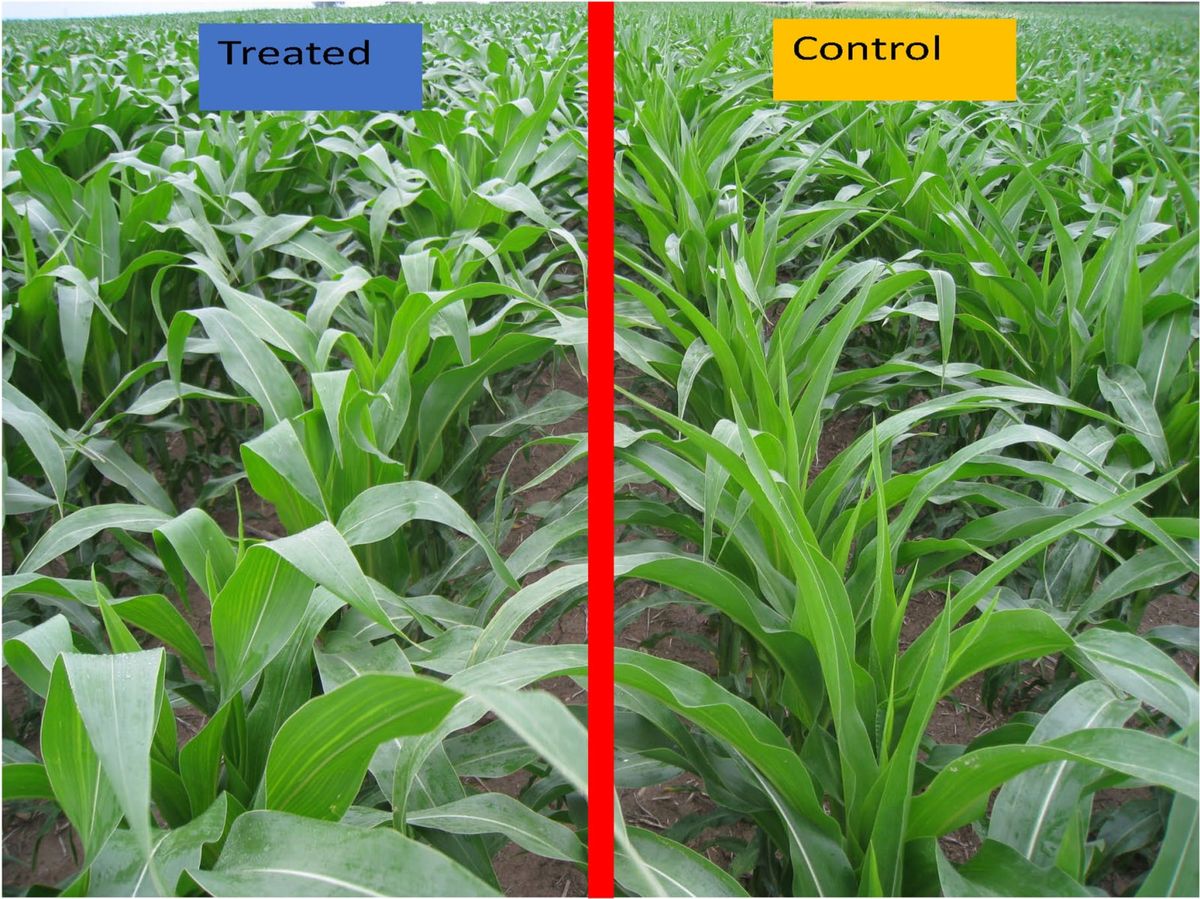
USDA researchers kept plots in the same positions for five crop seasons in an Iowa corn–soybean rotation. One humic product significantly increased yield in six of ten comparisons with untreated plots. Rates and timing changed partway through, and a nearby field responded less consistently. A USDA meeting abstract described small improvements in a few soil physical measurements after five years of application.
Measure the crop and the soil separately
Commercial humic products can be made from materials such as lignite. Formulations vary and may include added fertilizer. Soil organic matter includes many forms of carbon already in the field, including residues, microbial material and carbon associated with minerals. A change in crop growth or nutrient uptake in the application year tells you how the crop responded. For a claim about lasting soil carbon, measure the carbon in a defined amount of soil over time. For an aggregation claim, measure aggregate stability directly.
Keep the same check strips
Mark several treated and untreated pairs with GPS and keep them through the rotation. Match fertilizer and field operations across strips, and account for any nutrients in the product. Record the formulation, rate and cost. Record soil texture and pH at the start. Take paired soil samples and use the same sampling season and depth on return visits. If carbon is the goal, measure bulk density and compare stocks on an equivalent soil-mass basis. If you track microbial activity, use the same respiration test under comparable moisture and temperature conditions. To measure persistence, set aside replicated strips where you stop applying the product after several seasons and track those alongside the strips that stay treated and the original checks.
At each harvest, compare yield adjusted to the same grain moisture. Multiply the yield difference by your grain price and subtract the product and application cost per acre. That gives you a result you can use this year while the longer soil record builds.
Adapted from a public AgTalk Crop Talk question. Read the original discussion.
Topics
Cite this
Reference this work
Soil Health Exchange Team (2026). What can you expect after ten years of applying humic products?. Soil Health Exchange. SHE-FA-2026-0072. https://soilhealthexchange.com/cite/SHE-FA-2026-0072
Soil Health Exchange assigns a stable identifier to every published answer and article. Citations keep working even if the URL changes later.
Keep exploring
Similar questions
Can feedlot manure replace all the commercial fertilizer on irrigated corn?
Clay County, Nebraska

Growing milling wheat without herbicides, fungicides, or synthetic fertilizer in western Wisconsin
Pierce County, Wisconsin
Will spring potash work for soybeans after a missed fall application?
Eastern South Dakota

Can clover reduce nitrogen fertilizer purchases for grass silage?
Location Not Supplied
From the blog

Discussion
No comments yet. Be the first to share your thoughts!