- Location
- Northwest Wisconsin
- Crop
- Cover Crop Mix After Sweet Corn
The challenge
“My early-August cover crop mix after sweet corn includes turnips along with sunflower, barley, buckwheat, and medium red clover. Brassicas don't host mycorrhizal fungi. Will the turnips leave fewer of those fungi for next year's crop?”
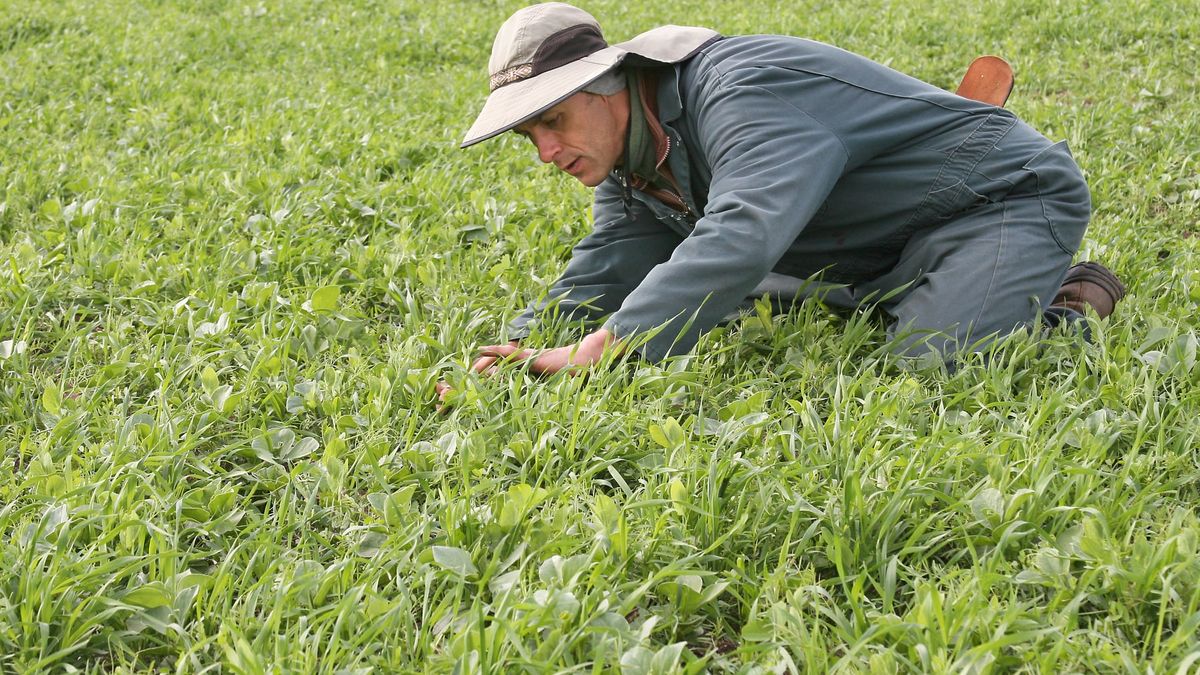
Question source: a follow-up to a Facebook cover crop discussion, collected by Saurav.
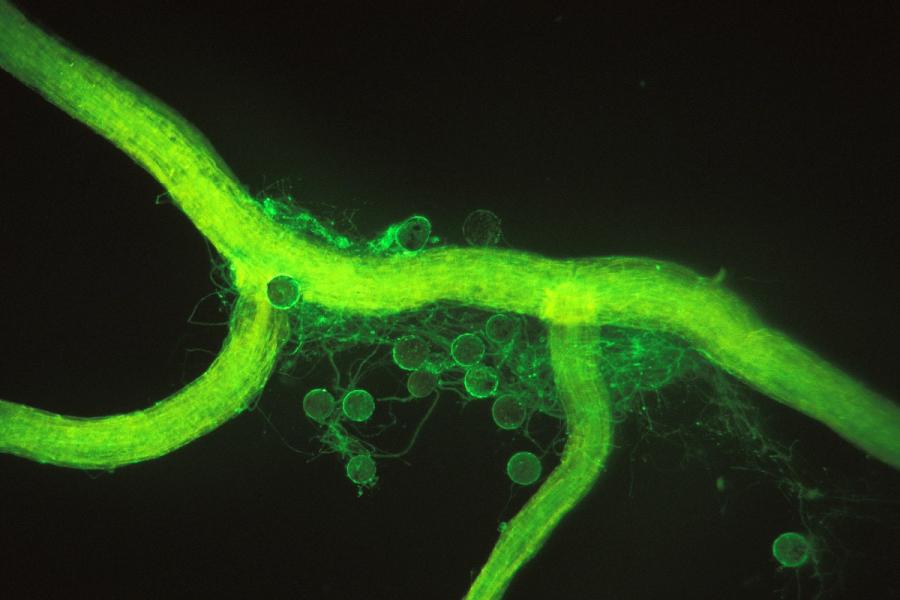
Brassicas don't host arbuscular mycorrhizal fungi, or AMF (see the companion answer). So it's fair to ask whether turnips leave fewer of these fungi for next year's corn or soybean. A mix with healthy host species typically matches or beats no cover crop for the next crop's AMF. The turnip may trim the hosts' benefit; the documented problems come from a brassica or other non-host that has the field to itself.
Where the losses come from
The clearest damage follows a non-host grown as the only crop. In Japanese field trials, maize grew much better after sunflower, maize, soybean, or potato than after rapeseed, sugar beet, or fallow, and maize phosphorus uptake and AMF colonization tracked that growth (Arihara and Karasawa, 2000). A review of University of Guelph maize studies found that after canola, AMF colonization was delayed, early phosphorus uptake fell, and yield could drop (Miller, 2000). The extreme case is long fallow disorder, which follows more than 12 months without host roots. In soil left fallow for three years, sunflower grown in the glasshouse reached 35% colonization at 72 days, against 80% in soil that had been cropped (Thompson, 1987).
These effects hit early and in lean conditions. In northern Japan, the previous-crop effect appeared in dry soils and low-phosphorus soils but not in wet or high-phosphorus soils. In one experiment, maize yields differed by previous crop only where no phosphorus fertilizer was applied. In an earlier field trial, 87 kg P/ha (about 178 lb P2O5 per acre) did not make up the loss after fallow, cabbage, or sugar beet (Karasawa, 2004). Part of the dip after canola may have other causes. In one study, maize after canola grew poorly regardless of its colonization, and the effect was gone by the second year of maize (Koide and Peoples, 2012).
Brassica cover crops in the field
A winter-killed brassica cover behaves differently from a canola crop. In Maryland, across three sites and two years of no-till silage corn, AMF colonization at the four-leaf stage after forage radish never differed from a weed-free check with no cover. Cereal rye raised colonization in three of six site-years. By the eight-leaf stage, the cover crops made no difference at any site (White and Weil, 2010).
Host covers still do more. A meta-analysis pooling 54 field studies found that winter cover crops raised AMF colonization of the following cash crop by 28.5% over winter fallow. Host covers raised it by 30.5%, and non-host covers such as radish, rapeseed, and buckwheat raised it by 17.4% (Bowles and colleagues, 2017). In another study, corn after rye or oats was more colonized than corn after canola, radish, or fallow, and higher colonization went with higher plant phosphorus and nitrogen (Murrell and colleagues, 2020).
Mixes keep the fungi fed
In South Dakota, a five-way fall mix of winter wheat, clover, vetch, turnip, and radish significantly increased soil AMF. The published chart shows about 118 AMF propagules per 100 g of soil after the mix, compared with about 45 without a cover crop (SDSU Extension and USDA-ARS, 2018). Compared with no cover, the brassicas did not cancel out the hosts. At one Maryland site, though, a forage radish and rye mix did not raise early corn colonization the way rye alone did, and the researchers suggested the radish may have limited rye's ability to host AMF (White and Weil, 2010). A brassica can trim a host's benefit without erasing it.
Older pot work found little direct suppression. Cabbage, kale, rapeseed, and swede grown beside host plants depressed the hosts' colonization no more than another host plant did (Ocampo and colleagues, 1980). Living mustard roots can inhibit AMF spore germination in the lab (Schreiner and Koide, 1993). In the field, the sharpest drop came after Indian mustard was disked in, which cut mycorrhizal inoculum potential by 56.5%; by maize harvest, inoculum potential had risen again in every treatment (Njeru and colleagues, 2014). Radish left to decompose on the surface under no-till showed no drop in the Maryland trials.
Reading your own mix
Sort the species by host status. Sunflower, barley, and red clover host AMF. Buckwheat is a weak host at best: it is usually classed as non-mycorrhizal, and roots examined in one study carried mainly dark septate endophytes with only occasional arbuscules (Likar and colleagues, 2008). Turnip is the non-host. Three of the five species feed the fungi. Judge the mix by the stand, too: if the turnips smother the barley and clover, the field behaves more like a brassica-only cover.
Timing matters as much as species. In Hokkaido, sunflower sown on August 7 raised AMF colonization and yield of the following maize. Sunflower sown in September or October was barely colonized and gave no benefit, and the researcher concluded that hosts must be sown in August in that climate (Karasawa, 2004). An early-August seeding, like this one, falls inside that window; the exact cutoff differs by climate.
When to plan around a brassica
Pay closer attention when canola, mustard, or sugar beet is the cash crop, or when a brassica-only cover follows a long bare period, especially on dry or low-phosphorus soil. Add a host to the cover. Sunflower or oats sown after cabbage raised colonization and growth of the following maize in Japan, and clover intercropped between cabbage rows raised colonization and yield of the following wheat (Karasawa and Takebe, 2012). In Pennsylvania, oats plus rye beat either species alone for sweet corn colonization, phosphorus uptake, and yield (Kabir and Koide, 2002). Keep phosphorus adequate by soil test, but don't count on fertilizer alone to erase a long non-host stretch; in the Japanese field trial above, it didn't.
To see the effect on your own field, compare strips next season. Look at early corn growth and leaf tissue phosphorus around the five-leaf stage after a host-rich strip and a brassica-heavy strip, then compare yield. Judge by the crop: soil AMF counts respond to fall cover crops, but in a USDA-ARS study those changes were not strongly related to corn performance (Lehman and colleagues, 2019).
Topics
Cite this
Reference this work
Soil Health Exchange Team (2026). Will a turnip or radish in my cover crop mix hurt mycorrhizae for next year's crop?. Soil Health Exchange. SHE-FA-2026-0062. https://soilhealthexchange.com/cite/SHE-FA-2026-0062
Soil Health Exchange assigns a stable identifier to every published answer and article. Citations keep working even if the URL changes later.
Keep exploring
Similar questions
From the blog
Discussion
No comments yet. Be the first to share your thoughts!