- Location
- Callao, Missouri
- Crop
- Corn
The challenge
“A Callao grower likes the corn response to Y-drop nitrogen, but the application overlaps soybean spraying, haymaking, wheat harvest and double-crop soybean planting. Could planter-applied liquid, stabilized broadcast nitrogen or a micronutrient package deliver a similar result? The grower wonders whether boron helped.”
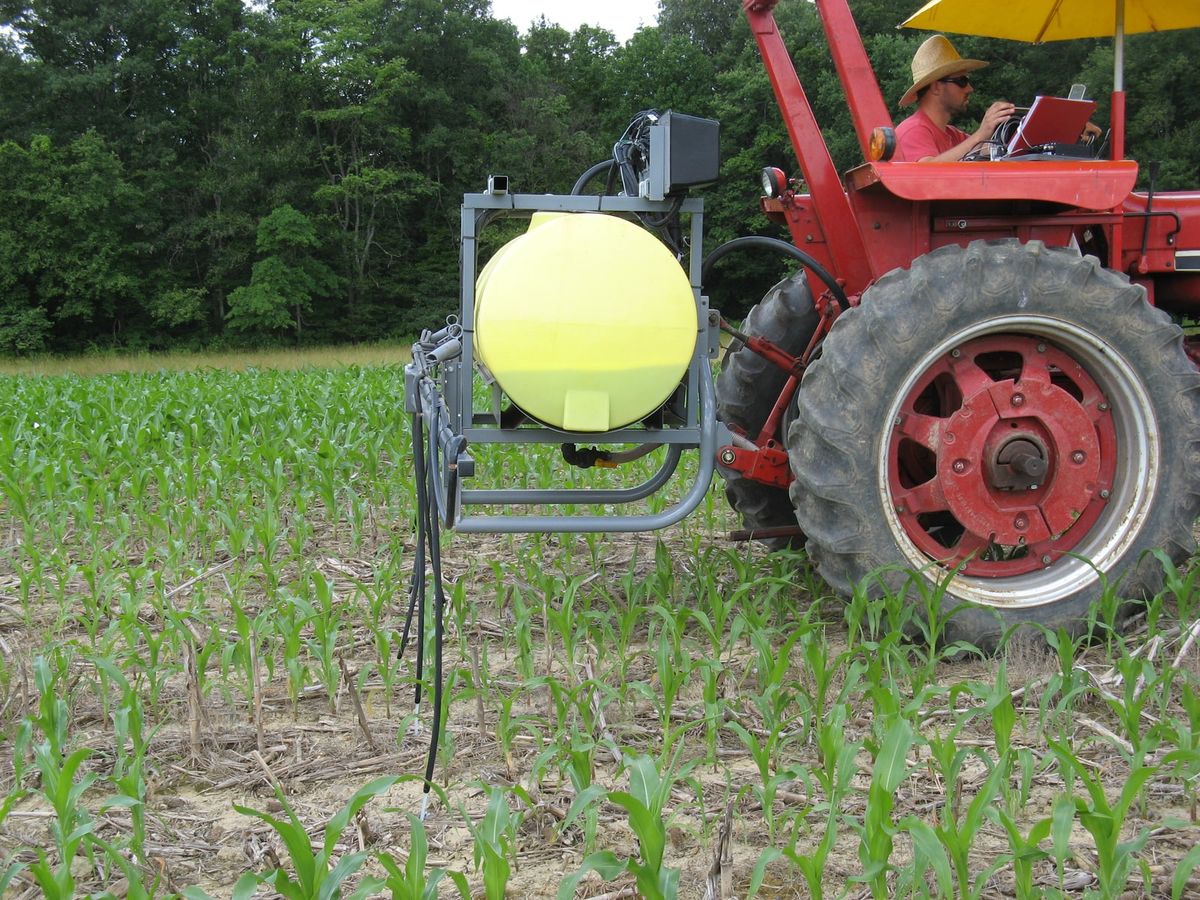
Which part of the Y-drop program is paying?
Y-drops place liquid nitrogen beside the row late enough to shorten the time between application and rapid corn uptake. Surface bands still benefit from rain moving nitrogen into moist rooting soil. If you also changed the total N rate, fertilizer source, inhibitor or micronutrients, any of those changes could be behind the response. In two years of Michigan State trials, Y-drop had no overall yield advantage over injected liquid N at the same timing and rate. Little rain fell in the first week after sidedress.
Fit the replacement to the field and planter
On well-drained fields, compare the current split with a spring preplant program you can get done on time. If you already broadcast, surface-applied urea can fit ahead of a soaking rain that moves it into the soil. A urease inhibitor can buy time before incorporation. A nitrification inhibitor slows conversion of ammonium to nitrate and addresses a different loss pathway. On soils that routinely pond or saturate, keep an option to apply some N later, including custom application if the crew is tied up.
Planter liquid can carry starter in an off-seed band, commonly 2 inches to the side and 2 inches below the seed. Before moving bulk N to the planter, work out safe placement and rate, how many acres a tank covers, and whether refill time would slow planting. Keep bulk N out of the seed furrow.
Make one comparison you can use next year
Run replicated strips of the existing Y-drop program and one simpler program. Match total actual pounds of N per acre and other nutrients, and log fertilizer source, placement, dates and rain. Compare grain revenue minus fertilizer and application costs per acre. Count the hours each system takes during the busy week. If boron is still in question, compare with and without boron under the same N program. Missouri Extension saw one statistically significant corn response in 21 trials and no average yield benefit. Once the simpler program works, test several N rates to find the point where the next pound of N costs as much as the additional grain it produces.
Adapted from a public AgTalk Crop Talk question. Read the original discussion.
Topics
Cite this
Reference this work
Soil Health Exchange Team (2026). Can corn keep the Y-drop response without a sidedress pass?. Soil Health Exchange. SHE-FA-2026-0073. https://soilhealthexchange.com/cite/SHE-FA-2026-0073
Soil Health Exchange assigns a stable identifier to every published answer and article. Citations keep working even if the URL changes later.
Keep exploring
Similar questions




From the blog

Discussion
No comments yet. Be the first to share your thoughts!