- Location
- Location Not Supplied
- Crop
- Grass–clover Silage
The challenge
“Looking at planting some acres of grass for silage harvest. Annual rye. Whatever. Farmer doesn't want manure on the ground because of his other crops and I just can't see buying fertilizer the way prices are. Is there a blend with clover that will set enough nitrogen to supply the needs of the grass? Or am I dreaming?”
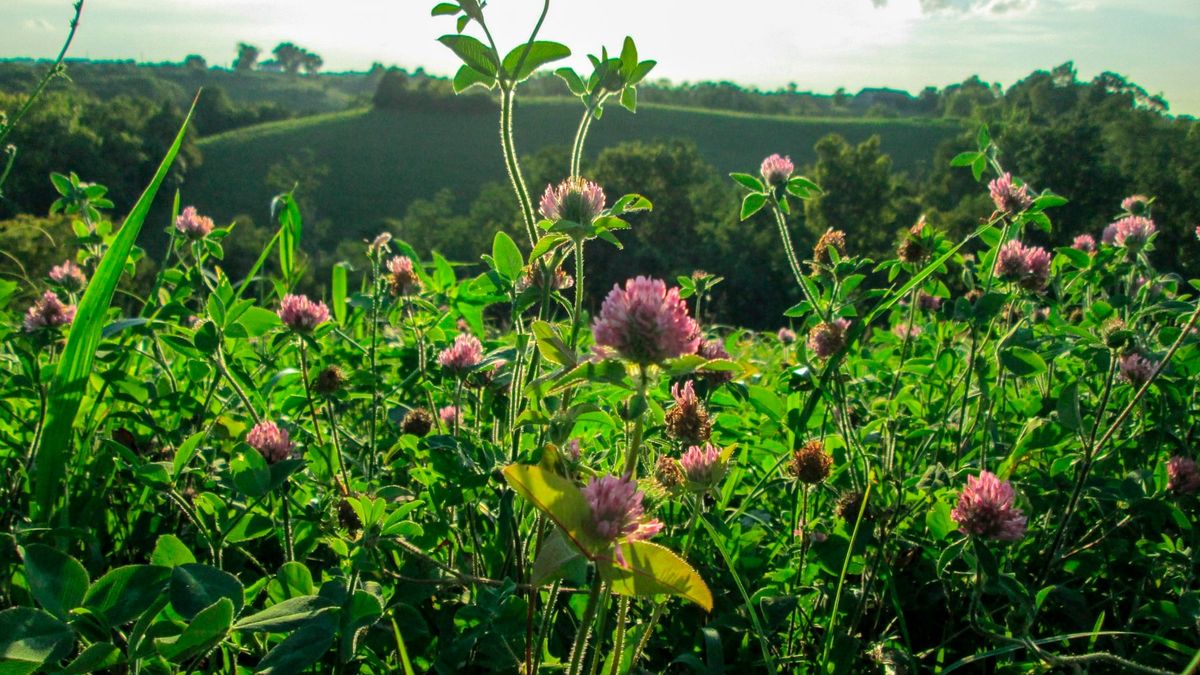
Question source: Everything Cover Crops Facebook group, collected by Saurav.
Clover can lower purchased nitrogen for a grass–clover silage crop because the legume produces forage using fixed nitrogen. Supplying the grass component is a separate budget: nitrogen held in clover tissue becomes available as that tissue breaks down. The first-cut deadline matters especially in a newly seeded mixture.
Count the clover as part of the crop
Clover and its root-nodule bacteria fix nitrogen that supports the clover's own growth. That gives you forage to harvest while the grass uses soil nitrogen. Some fixed nitrogen also reaches companion grasses through turnover and decomposition of legume tissues. The size and timing of that contribution depend on the stand. Minnesota Extension explains how legumes and grasses complement each other.
UK guidance from AHDB reports that a good grass–clover stand containing 30–40% clover in its dry matter can produce an annual dry-matter yield comparable to pure grass receiving about 180 kg nitrogen per hectare. This comparison describes whole-stand production over a season; the amount to budget for a new silage planting depends on its growing window and local conditions.
This makes the amount of clover in the harvested forage a central management decision. For example, Penn State's first-cut forage guidance advises against adding nitrogen when legumes make up more than half the stand. Use your regional guidance for the species, stand age, and yield goal. Measure the crop's actual composition through the season; the percentage of clover seed in a bag does not tell you its eventual share of forage dry matter.
How clover nitrogen reaches the grass
Fixed nitrogen is built into clover leaves, stems, roots, and nodules. When clover is terminated and its residues stay in the field, microbial decomposition releases part of that nitrogen for subsequent uptake. Temperature, moisture, residue composition, and placement affect the timing. SARE’s guidance on nitrogen release explains this process. Termination starts a residue-management phase; release continues as decomposition proceeds.
Some nitrogen can also reach grass while the clover stand remains alive, through root and nodule turnover and compounds released by roots. A tracer study in a young clover–ryegrass model pasture identified root exudation and decomposition as transfer pathways, with low overall transfer in that experimental system. Texas A&M’s forage guidance also describes the importance of decomposing legume material.
For a new silage planting, budget grass nitrogen from soil supply, previous-crop credits, and any planned inputs against the first-cut deadline. Keep the estimate of total nitrogen fixed by clover separate from the amount expected to reach the grass before that harvest.
Choose the blend around the harvest window
First clarify what you mean by annual rye. Cereal rye and annual or Italian ryegrass have different growth patterns, winter survival, and harvest uses. Even ryegrass cultivars differ in heading and regrowth. Nebraska Extension's rye and ryegrass guide explains the distinction.
For a cool-season silage stand kept for multiple cuts, red clover with a locally adapted companion grass is a useful starting point. Italian or hybrid ryegrass with red clover is an established option in suitable climates; AHDB's red-clover guidance describes its use in short forage rotations. Match the grass cultivar and clover to local winters, summer moisture, and your cutting schedule. For a short annual crop, an annual clover such as berseem or crimson may fit the growing window better, depending on region and planting date. Wisconsin Extension describes these annual-forage options.
Have the supplier specify forage varieties, pure live seed rates, and an establishment plan that gives the clover room to grow. Inoculate for the legume species you choose. Maine's red-clover guidance covers nodulation, establishment, and cutting management. The right blend is the one that produces enough legume at the time you intend to harvest.
Budget for what leaves in the silage wagon
Cutting a regrowing clover stand for silage removes forage while leaving the plants alive. Much of the nitrogen in the cut material leaves in the wagon. That fixed nitrogen has already helped produce the harvested clover feed, while roots and stubble remain for further cycling. A following-crop credit should reflect the residues actually retained: SARE’s soil-fertility guidance explains why harvesting a legume reduces its residual nitrogen contribution compared with leaving it as green manure.
Clover also needs suitable pH, phosphorus, potassium, and other essential nutrients to grow and fix nitrogen. Soil-test before sowing and account for the nutrients removed in repeated cuts. Keeping manure off this field is compatible with a clover-based plan, but deficiencies still need a source. Use the soil report to decide which purchases matter. Maine's red-clover guidance connects fertility with establishment and persistence.
Start with a strip you can measure
Before committing all the acres, try the proposed mixture on a manageable strip. At each cut, record dry-matter yield, clover share, and forage quality, along with seed, establishment, fertility, and harvest costs. Check nodulation on several clover plants and use a harvest and wilting plan suited to the mixture and storage system. Compare cost per ton of usable dry matter so differences in moisture do not distort the result. The nitrogen saving needs to cover any added costs while delivering the feed you need.
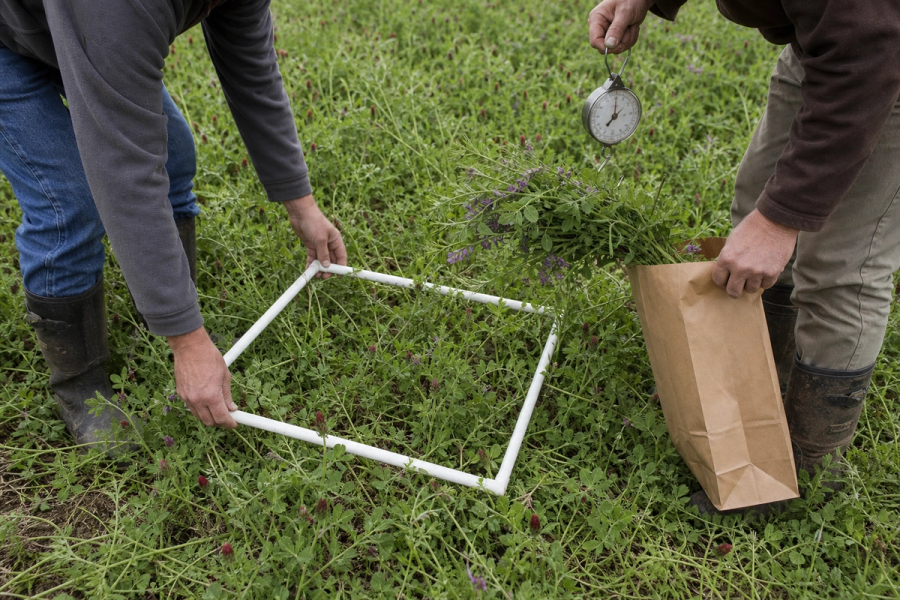
The details needed to choose a blend are your location, planting date, first-cut deadline, number of planned cuts, previous crop, soil report, and intended livestock. With those in hand, you can build a realistic plan for a crop in which clover supplies a meaningful part of the feed and reduces the nitrogen bill.
Topics
Cite this
Reference this work
Soil Health Exchange Team (2026). Can clover reduce nitrogen fertilizer purchases for grass silage?. Soil Health Exchange. SHE-FA-2026-0064. https://soilhealthexchange.com/cite/SHE-FA-2026-0064
Soil Health Exchange assigns a stable identifier to every published answer and article. Citations keep working even if the URL changes later.
Keep exploring
Similar questions
Growing milling wheat without herbicides, fungicides, or synthetic fertilizer in western Wisconsin
Pierce County, Wisconsin
How much manure is enough — and what happens to the rest?
Clay County, Nebraska
Interseeding into corn
IL
Reducing Cover-Crop Herbicide Use in Nebraska: Three Lanes, Measured Before Scaling
Nebraska
From the blog
Discussion
No comments yet. Be the first to share your thoughts!