- Location
- IL
- Crop
- Corn
- Acres
- 4,000
The challenge
“[Timeline: Needs help this week] What have people done for interseeding into corn?”
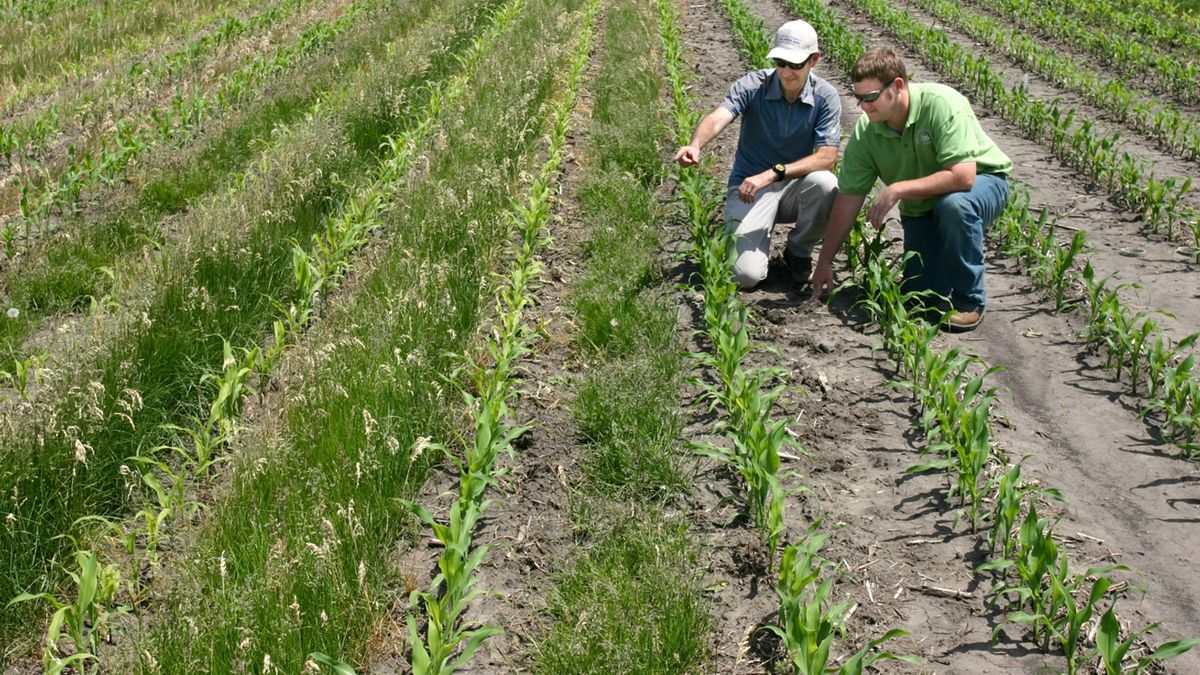
Why interseeding fits Illinois corn
The median first killing freeze arrives in mid to late October in northwest and central Illinois, and in late October or early November in southern and northeast Illinois, according to the Illinois State Climatologist. Once corn comes off, a cover seeded after harvest has little time to grow. Interseeding puts the cover into the living crop in early summer so it is already in place at harvest. On fields harvested early, especially in southern Illinois, drilling after harvest may still work; the Midwest Cover Crops Council selector tool, which University of Illinois Extension points growers to, shows recommended planting windows by location.
Pick the corn stage and the species
University of Wisconsin–Madison reports success from V3 to V7, and most of its research seeds at V5. Penn State work summarized by GROW found V4 to V5 gave the best cover emergence, and early interseeding at V3 to V4 in 30-inch rows gave the best weed suppression. In South Dakota State trials, seeding at corn planting or very early tended to reduce corn yield, while seeding after V4 generally did not. Expect the cover to germinate and then sit under the canopy; grass survival depends on how much light reaches it. Judge the stand by ground cover after harvest, not by what you see in July.
- Red clover: drilled at 12 lb/ac about ¼ inch deep into V5 corn with no significant grain yield difference in Wisconsin trials. It overwinters, so plan a spring termination.
- Annual ryegrass: a reliable choice on Wisconsin farms. Plan its spring kill as well.
- Cereal rye: did not always survive to fall harvest in Wisconsin, and tended to reduce corn yield in South Dakota trials.
- Radish: makes very little root below ground when interseeded, so do not count on a taproot effect.
- Mixes: in South Dakota, mixes of four or more species produced the most fall biomass without reducing yield. Buckwheat, berseem clover, hairy vetch and winter camelina tended to reduce corn yield.
Residual herbicides and seeding method make or break the stand
Herbicide injury depends on the product and the cover species. In trials at eight Pennsylvania, Maryland and New York site-years, mesotrione cut red clover biomass by 80%, while atrazine, saflufenacil and rimsulfuron did not reduce it. S-metolachlor, pyroxasulfone, pendimethalin and dimethenamid-P reduced annual ryegrass; acetochlor did not. Those trials were on silt loam soils, so pull every label you applied this year and read the rotational planting restrictions. South Dakota State advises against applying a product whose label keeps a species out for the following year or 18 months if you plan to interseed it. For next season, GROW recommends a shorter-lived residual before emergence and no residual in the postemergence pass.
Drilling gives better establishment and biomass than broadcasting but costs more. Broadcasting into corn has been difficult, especially in dry soil. If you broadcast, South Dakota State recommends a 15 to 25% higher seeding rate than drilled. Keep 30-inch rows: Penn State trials in 60-inch rows gave covers more light, but corn yields fell about 32% for determinate hybrids and 23% for flex-ear hybrids.
Next step: choose one field whose herbicide program is compatible with the cover. Drill red clover or annual ryegrass at V4 to V5 in several strips, and leave untreated check strips beside them. Record the herbicides, seeding date, seeding rate and rain in the week after seeding. After harvest, measure ground cover in each strip and compare corn yield on paired strips. Take the results to your University of Illinois Extension educator when you plan a larger program.
Topics
Cite this
Reference this work
Soil Health Exchange Team (2026). How do farmers interseed cover crops into growing corn?. Soil Health Exchange. SHE-FA-2026-0023. https://soilhealthexchange.com/cite/SHE-FA-2026-0023
Soil Health Exchange assigns a stable identifier to every published answer and article. Citations keep working even if the URL changes later.
Keep exploring
Similar questions
Reducing Cover-Crop Herbicide Use in Nebraska: Three Lanes, Measured Before Scaling
Nebraska
What cover crop should I plant after mid-October corn harvest in central Iowa, and will it establish before freeze-up?
Iowa
Organic Corn in Clover Living Mulch: Protect the Row and Test the Yield Response
PA
What is cover crop diversity, and how is it measured?
WI
From the blog
Discussion
No comments yet. Be the first to share your thoughts!