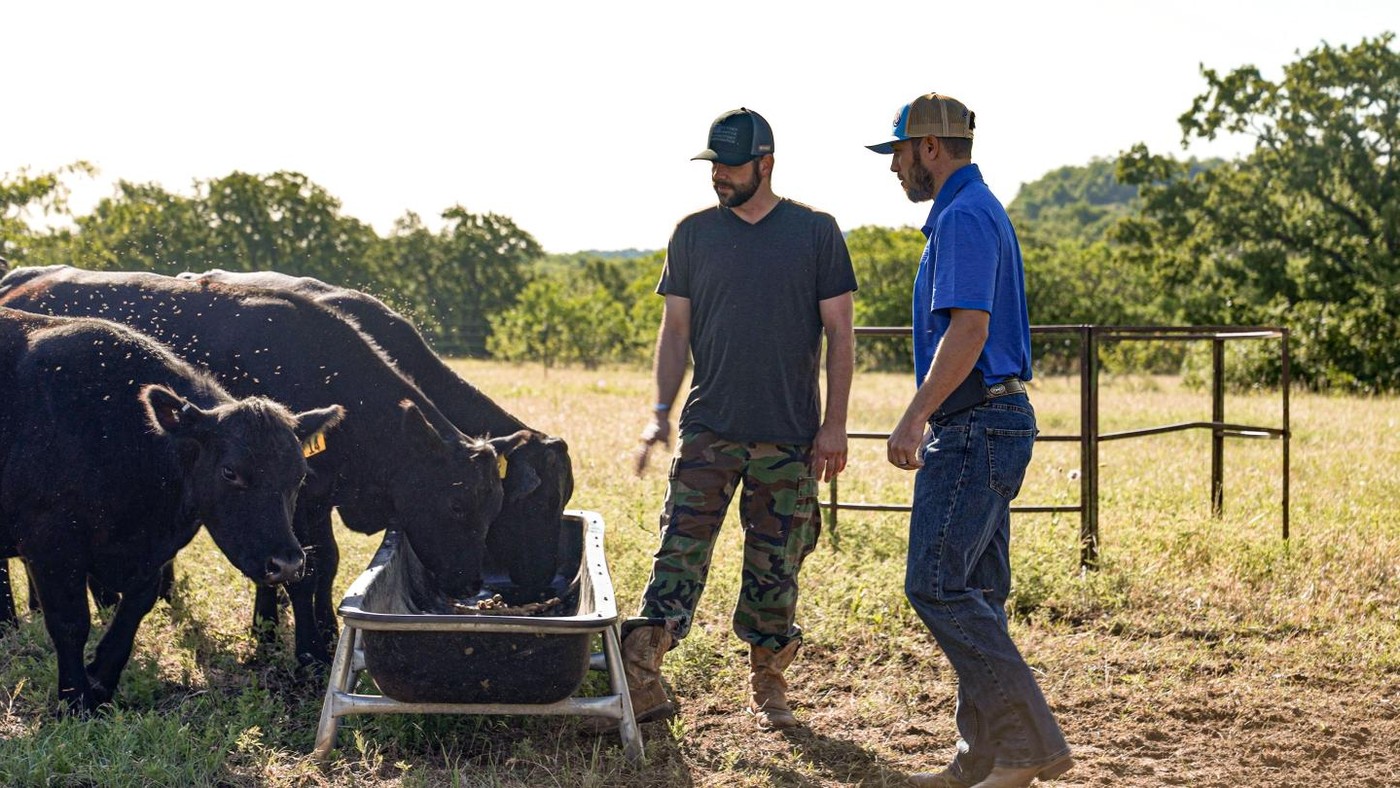
Take an example 640-acre pasture split into four paddocks around one central tank, fed from an existing well at the middle of one side. The job takes two miles of electric cross-fence, half a mile of buried pipe and a tire tank, and NRCS's fiscal 2026 cost estimates for Kansas put it at about $38,000, or $60 an acre. Spread over the fence's life at an example 6% interest, with a few hours of cattle moves added, it costs about $3,600 a year before repairs. To pay, the plan has to add roughly 123 AUMs of grass a year at Montana's 2025 lease rate, or about 35 AUMs if each extra grazing day keeps a day of hay in the stack.
Either number is forage the plan has to grow or capture, because paddocks and water only buy control over when and where cattle graze. That control pays through more usable forage, hay days avoided, or labor and drought flexibility worth the cost.
Price the fence and water first
Kansas posts its fiscal 2026 EQIP payment schedule next to the scenario booklet behind it, so NRCS's estimate of the full installed cost sits beside what the program pays, about three-quarters of it. Each state sets its own rates, listed on NRCS's payment-schedule page, so treat these Kansas figures, posted as of November 2026, as a template for checking your own. NRCS Kansas FY2026 scenarios
Cross-fence and water for an example 640-acre pasture split four ways
| Practice | Quantity | NRCS cost estimate | EQIP payment | Rancher's share |
|---|---|---|---|---|
| Fence (382), high-tensile electric, four wires or fewer | 10,560 ft | $28,829 | $21,648 | $7,181 |
| Livestock pipeline (516), 1¼-inch HDPE | 2,640 ft (818 lb of pipe) | $6,416 | $4,814 | $1,602 |
| Watering facility (614), tire tank | 981 gal | $3,001 | $2,246 | $754 |
| Total for 640 acres | $38,246 | $28,708 | $9,537 | |
| Per acre | $59.76 | $44.86 | $14.90 |
Example layout: two one-mile cross-fences meet at a central tank fed by 2,640 ft of pipe from an existing well. Costs are NRCS Kansas FY2026 scenario estimates; payments are the Kansas FY2026 EQIP schedule (June 23, 2026). Pipe weight is 0.31 lb/ft for 1¼-inch DR 11 HDPE (Chevron Phillips dimension sheet). Rows are rounded to the dollar.
With EQIP the rancher's share falls to about $15 an acre, so the break-even below is shown both ways. NRCS also pays toward the management under Grazing Management (528), long called Prescribed Grazing: $7.42 an acre in Kansas for standard range, against an estimated $9.90 that is nearly all labor for planning, monitoring and records. Part of a capital cost-share payment like EQIP's can also be excluded from income, subject to recapture if the property is disposed of within 20 years, so settle the tax treatment with a preparer first. IRS Publication 225
What the grazing studies measured
Rotational grazing has been tested on rangeland for decades, and experiments and ranchers' reports diverge in a useful way once you see what each counted. When Briske and colleagues reviewed the grazing experiments in 2008, they found no production advantage for rotation: plant production was equal or greater under continuous grazing in 20 of 23 experiments, and gain per animal in 35 of 38. They concluded that differences depend on how well a system is managed, noting that experiments run on more rigid schedules than adaptively managed ranches. Briske et al. 2008
The CARM experiment at USDA-ARS's Central Plains Experimental Range in northeastern Colorado tested adaptive management at ranch scale. Its ten pairs of 320-acre pastures carried the same stocking rate, one of each pair grazed season-long by its own small herd of yearling steers and the other part of a ten-pasture rotation for a single herd. Year-long rest was planned for a fifth of the rotated pastures, though the number actually rested ran three, six, three, one and one from 2014 to 2018. A group of 11 ranchers, land managers and conservation representatives set the moves from detailed monitoring data, yet the rotated steers gained 12–16% less each year and the perennial cool-season grasses did not respond. The authors suggested two causes, high stock density that limited what cattle could select and cattle entering rested pastures full of standing dead grass, and noted the five years held no severe drought. Augustine et al. 2020
Weight, though, is not revenue. Pricing the same steers at long-run Colorado prices, Windh and colleagues found the rotated cattle 40–53 lb lighter. Because lighter feeders sell for more per pound, the gross revenue gap ranged from $43.46 a steer in favor of season-long grazing to $5.72 in favor of rotation. Season-long grazing finished about 6% ahead over five years, before the rotation's higher fence and water costs, and the authors advised choosing ending weights and sale dates rather than chasing the "best" system. Windh et al. 2020
Ranchers' reports point to a different payoff, more days on grass, and the survey's authors note that producer observations have generally differed from experimental findings. In a 2018 survey, 875 producers in North Dakota, South Dakota and Texas reported how long their grazing season ran in a typical year. After adjusting for climate, land class and state, ranches with 16 or more paddocks per herd grazed about 39 days longer than continuous grazers. For 4–15 paddocks the adjusted gap was 7.6 days and only weakly significant, and before adjustment those ranchers reported slightly shorter seasons, 214.6 days against 220.1. These are differences between ranches, not measured effects of adding paddocks. Wang et al. 2022
A Nebraska budget built on 2011–2014 data from about 67 acres of sub-irrigated Sandhills meadow, not upland range, ranked four pastures grazed twice first on average returns and risk and mob grazing last. That lead owed partly to a late start for the other systems in 2011, a once-over rotation did best per acre in 2013–2014, and every system lost money in the 2012 drought. McMurtry 2015; Janssen et al. 2015
What the grazing studies measured
| Study | Setting | Animal gain | Forage and grazing days | Revenue | Labor |
|---|---|---|---|---|---|
| Briske et al. 2008 | Review of rangeland grazing experiments | Per head equal or greater under continuous in 35 of 38 | Production equal or greater under continuous in 20 of 23 | — | — |
| Augustine et al. 2020 (CARM) | 20 pastures of 320 ac, NE Colorado, 2014–18 | 12–16% lower with adaptive rotation each year | No response in perennial cool-season grasses; no added forage | — | Moves set by an 11-member stakeholder group |
| Windh et al. 2020 | CARM steers at long-run Colorado prices | Rotated steers 40–53 lb lighter | — | Season-long ahead in 3 of 5 years, about 6% over five | Not counted; fence and water cost more under rotation |
| Janssen et al. 2015; McMurtry 2015 | 160-ac budgets from a 67-ac sub-irrigated Sandhills meadow trial, NE, 2011–14 | From trial gains and stocking rates | — | Twice-over first on average and risk, mob last; once-over best per acre in 2013–14; all lost money in 2012 | 8 hours a season (twice-over) vs 60 (mob) |
| Wang et al. 2022 | Survey of 875 producers, ND, SD and TX | — | Adjusted: 39.3 more days (16+ paddocks), 7.6 (4–15, weakly significant); 37% of rotational adopters rated stocking-capacity gains significant | — | — |
Results as each source reports them. A dash means the study did not report that outcome.
Read together, the studies say the system label matters less than how the system is run. Stock density low enough to protect gains, ending weights and sale dates chosen for the market, a season stretched at the expensive end of the year and an early decision in a dry one are what turn fence into money.
A grazing day is cheaper than a hay day
The most valuable extra AUM is the one that replaces hay. NDSU Extension's carrying-capacity guide counts an AUM as 913 lb of air-dried forage, a month's intake for a 1,000-lb cow with a calf. At Montana's September 2026 all-hay price of $224 a ton, that much hay costs about $102 before feeding losses and hauling. Private, non-irrigated grass in Montana rented for $29.50 per animal unit a month in 2025, so a day on grass instead of hay saves about $2.40 per animal unit after rent. NDSU Extension R1810; MSU Extension lease rates
Between September 2025 and September 2026 the all-hay price rose 41% in Colorado, 48% in Wyoming and 58% in Montana, far faster than lease rates. USDA NASS Agricultural Prices
The hay value of one AUM
| State | All hay, Sept. 2025 | All hay, Sept. 2026 | Hay value of one AUM, Sept. 2026 |
|---|---|---|---|
| Colorado | $169/ton | $238/ton | $109 |
| Idaho | $158/ton | $207/ton | $94 |
| Montana | $142/ton | $224/ton | $102 |
| Oregon | $196/ton | $199/ton | $91 |
| Washington | $174/ton | $199/ton | $91 |
| Wyoming | $152/ton | $225/ton | $103 |
All-hay prices received, USDA NASS Agricultural Prices (released October 30, 2026). Hay value uses NDSU's 913 lb of air-dried forage per AUM, before feeding losses.
Stockpiled pasture and bale grazing, budgeted in the crop–livestock part, are how a plan collects that value by moving days from the stack to the field, and cross-fence lets a ranch hold a paddock back for them.
Where the break-even lands
Here the investment is spread at 6% interest over NRCS service lives: 20 years for fence and pipeline, from its 2004 program manual, and 10 for the tank, the minimum in its 2023 watering-facility overview. Labor adds eight hours a season of moves, the time Janssen and colleagues budgeted for four pastures grazed twice, at $17.13 an hour, the April 2025 wage for livestock workers in Idaho, Montana and Wyoming. Repairs come on top of these figures. NRCS service lives (2004); NRCS Watering Facility overview; USDA NASS Farm Labor
Break-even AUMs for the 640-acre example
| Cost basis | Annual cost | AUMs needed, valued as rented grass | AUMs needed, valued as hay | Extra grazing days for 100 AU, hay basis |
|---|---|---|---|---|
| Full NRCS cost | $3,618 | 123 | 35 | 11 |
| After Kansas FY2026 EQIP payment | $1,005 | 34 | 10 | 3 |
Annual cost is capital recovery at an example 6% interest rate plus $137 of labor, before repairs. Grass is valued at Montana's 2025 lease rate ($29.50 per AUM) and hay at Montana's September 2026 all-hay price ($102 per AUM). A 100-animal-unit herd uses about 3.3 AUMs a day.
The grass column shows why stocking rate alone struggles to pay for this plan on dry range. At CARM's moderate starting rate of 0.61 AUM per hectare, about 0.25 AUM an acre, this pasture carries about 158 AUMs, so the full-cost plan would need 78% more grass, and the CARM rotation grew no extra forage. The hay column is easier to reach but not easy. Eleven extra grazing days for 100 animal units at full cost, or three after cost share, still means about 35 or 10 AUMs the plan must grow or capture, 22% or 6% of this pasture's carrying capacity. So the plan pays only if it captures more usable forage, avoids hay in the years hay costs most, or saves enough labor and adds enough drought flexibility to cover the difference. Daily moves raise the bar, because an hour a day over a 60-day season replaces the eight budgeted hours, adds $891 of labor and needs about 30 more AUMs at the lease value. Augustine et al. 2020
Price the dry year before it comes
In a dry year the same herd takes a much bigger bite of the grass. At CARM, cattle took an estimated 17–23% of the forage grown in the wet years of 2014 and 2015, but 35% in dry 2016, when stocking was only about 10% above the 2014 rate. Colorado State University Extension puts lowering stocking rate to match forage first among drought responses and stresses acting early, because overuse in drought on top of past overuse can cut long-term production. Augustine et al. 2020; Colorado State University Extension
Utah State University Extension treats the next step, feed or sell, as a budget. Its approach sets the ranch's normal animal-unit-days beside the drought figure and prices the gap with hay or rented pasture, freight and labor included. It also counts each cow as a depreciating capital asset that, once sold, is not there when the grass returns. Utah State University Extension
Suppose a 1,200-lb cow with a calf, which NDSU puts at 35 lb of forage a day, has to be carried through 90 days of a summer shortfall. That takes about 1.6 tons of hay, or $353 at Montana's September 2026 price before waste and freight. At September 2026's national average of $159 per hundredweight for slaughter cows, selling her returns about $1,908 before selling costs. The ranch then gives up the calf she would have weaned and later has to buy or raise a bred replacement. The comparison is hay against the cost of rebuilding, and it tilts toward selling as hay climbs and the dry spell lengthens. USDA NASS Agricultural Prices
Dryland cover crops need forage value to pay
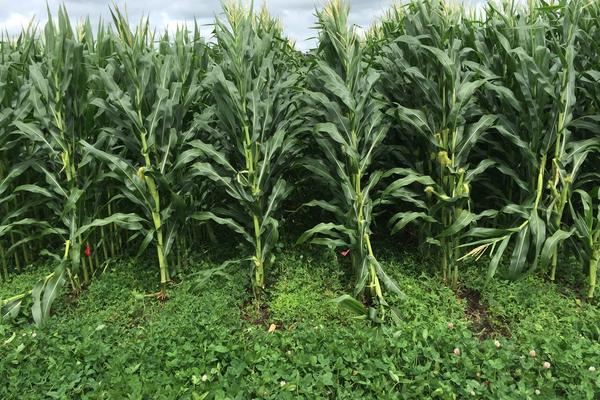
Dryland wheat ranches face the same arithmetic with cover crops. In two trials on the Colorado Plateau, fall-planted covers in a wheat–fallow rotation improved soil structure and erosion control over six years. They also cut wheat yield 48% on average and net returns by $176 a hectare per two-year cycle, about $71 an acre. Counting a hypothetical sale of forage from half the cover biomass turned that loss into a gain of $92 a hectare per cycle over fallow, about $37 an acre. Spring-planted covers cost less yield (24%) but did not grow enough to pay, so on dry ground the forage, or a conservation payment, has to cover what the wheat gives up. Eash et al. 2025
What a habitat partner would need from a grazing plan
The ranch can count bales left in the stack. A habitat partner cares about what remains in the pasture. Record ground cover and residual vegetation at the same marked sites and season, alongside rainfall, stocking rate and rest periods. That gives both parties a way to distinguish the work of a grazing plan from a wet year. A contract for a particular bird or habitat condition would need an agreed survey and area as well.
A conservation group might fund eligible habitat acres while a livestock buyer pays for documented grazing practices. Each agreement needs a survey or record suited to what it buys.
Keep the records that turn a plan into a budget
The break-even table becomes a ranch budget once it holds your own numbers, which these records supply:
- Dates in and out of each paddock, with head count and class, so grazing days and AUMs add up by paddock and season.
- Rest periods, forage at turn-in, and stubble height or photo points at turn-out, the monitoring NRCS asks for under practice 528.
- Hay fed each winter and in any drought, in tons and in days.
- Hours spent moving cattle, and the cost of fence and water repairs.
- Precipitation, so a good year and a good plan can be told apart.
After two or three seasons, set the AUMs harvested and hay days saved against the annual cost in the break-even table, and the plan will either pay on your own acres or show where it falls short. When the answer hinges on a forage estimate or a stocking decision, put the question to SHE's experts, who include a USDA-ARS rangeland scientist and grazing researchers.
Who can help fund the grazing plan?
For North Dakota ranches, Ducks Unlimited’s Grassland Working Lands Program shares grazing-infrastructure costs on existing grassland where rotational grazing enhances habitat. Across the U.S., ask NRCS EQIP whether prescribed grazing, fence or livestock water fits the local plan, or ask CSP about enhancements to an established grazing system. For an operation elsewhere, the grazing funding list can help locate a comparable program.
The rancher has a count of hay days saved. Repeated observations at the same pasture sites could give a habitat partner a basis for paying for something else the grazing plan produces. Before adding a fence, it is worth knowing who would pay for the surveys, how long the agreement would last, and how much would reach the ranch in a dry year.
Discussion
No comments yet. Be the first to share your thoughts!