- Location
- PA
- Crop
- Corn
The challenge
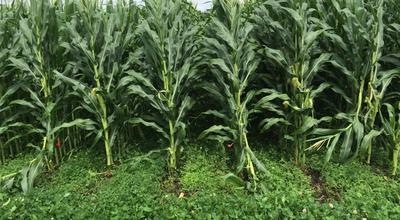
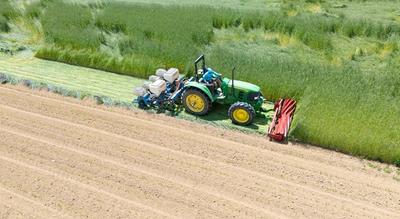
“We are testing organic corn in an established clover living mulch in Pennsylvania using zone tillage, mowing, and mechanical weed management. How should we protect the corn row from clover competition while retaining living cover between rows, and what should we measure before scaling?”
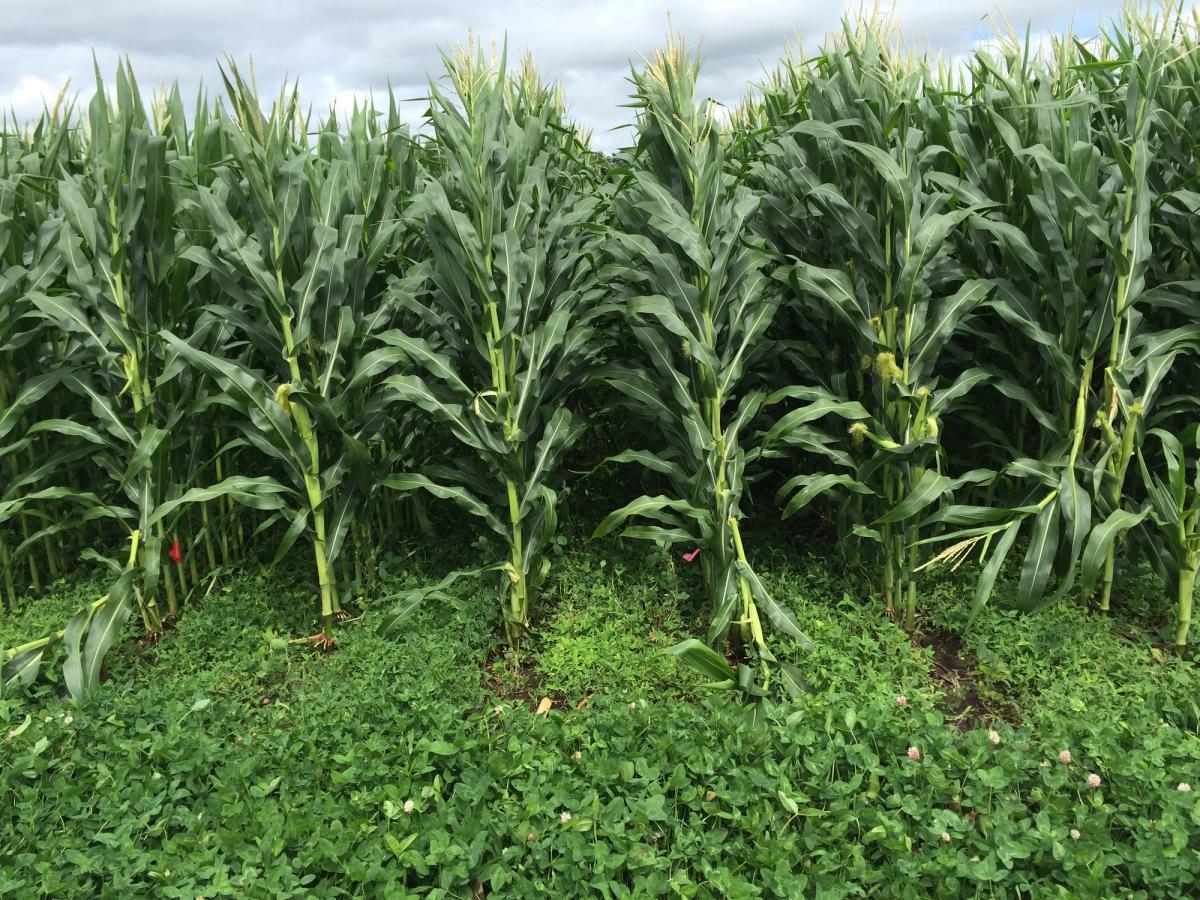
The idea is sound; the unresolved question is how much clover the corn row can tolerate
A living mulch can keep roots and cover in the field while reducing whole-field tillage. It can also compete with corn for light, water, and available nitrogen during establishment. The most useful next step is not to judge the system from appearance alone, but to compare row-zone suppression, stand, weeds, yield, and cost—and to keep the evidence from red clover, kura clover, planting green, and Pennsylvania conditions clearly separated.
For farmers planning next season
Confirm the living-mulch species, stand age, uniformity and soil moisture. Compare the current row treatment, a stronger row-only suppression treatment, and a terminated-cover or established farm benchmark in at least three replicated strips each. Set a rescue trigger before planting, do not credit living clover N without evidence of killed biomass and timely mineralization, and map and harvest every strip separately.
What the strongest available trials actually found
In a 2021–2022 Wisconsin red-clover study, undercutting increased corn yield by about 50 bu/ac in one year but not the next. A separate USDA-ARS kura-clover study found a roughly 64-bu/ac row-zone benefit in one of two years. Those results support testing stronger row protection; they are not expected gains or direct prescriptions for this Pennsylvania clover field.
Wisconsin red-clover trial: useful numbers with important limits
The two-year Agronomy Journal study compared undercutting versus direct no-till into red clover, immediate post-plant flaming versus no flaming, and inter-row crimping and/or high-residue cultivation. The land was not certified organic, although the researchers used organically approved management. There was no corn monocrop control inside the experiment, so the paper cannot calculate a formal yield penalty versus standard organic corn.
- Average corn yield across the experiment was 4.61 Mg/ha, approximately 73 bu/ac. For context only, the paper reports nearby best-management organic monocrop averages of 11.5 and 8.85 Mg/ha in 2021 and 2022; because those fields were not randomized controls, they should not be treated as a measured living-mulch penalty.
- Undercutting severed clover roots at about 5 cm depth. In 2021 it increased yield by 3.15 Mg/ha—8.46 versus 5.31 Mg/ha, approximately 135 versus 85 bu/ac. In 2022, inadequate suppression left yields statistically alike: 2.40 versus 2.26 Mg/ha.
- Flaming immediately after planting increased yield by 0.74 Mg/ha (about 12 bu/ac) across years. Where the row had not been undercut, flaming increased yield by 1.51 Mg/ha (about 24 bu/ac) and produced a result statistically similar to the undercut treatment.
- Inter-row crimping reduced early clover height but did not change end-of-season clover biomass or corn yield. High-residue cultivation reduced inter-row clover biomass but also did not increase corn yield. Suppressing more clover between rows was therefore not the same as protecting the corn row.
USDA-ARS kura-clover trial: row width mattered, but species and year mattered too
USDA-ARS compared a 30-cm (about 12-inch) rotary-tilled row zone with traditional shank strip tillage in perennial kura clover over two Minnesota seasons. Corn emerged earlier and developed faster with the wider cleared zone in both years. Grain yield did not differ in year one; in year two, the rotary zone produced 4.0 Mg/ha more grain and 3.5 Mg/ha more stover without reducing kura-clover biomass. Kura clover is rhizomatous and recovers differently from red or white clover, so 12 inches is a defensible treatment to test—not a guaranteed optimum for this field.
Pennsylvania planting-green data add a warning, not a direct comparison
Penn State compared corn planted into living annual cereal covers with corn planted after preplant termination at five Pennsylvania locations over three years. Corn planted green was significantly lower or trended lower in more than half of 12 site-years; soybean yield did not differ over 14 site-years. A cereal cover terminated at planting is not a perennial clover living mulch, and the study was not an organic living-mulch trial. Its relevance is narrower: corn establishment and early nitrogen access are more sensitive than soybean, and a living cover at planting deserves a strong row-zone and fertility plan.
Confirm the starting condition before interpreting the plots
Make the treatment record decision-grade
Record the actual clover species, stand age and uniformity; the completed date, method, width and depth of every suppression pass; and planting and fertility details by plot. A planned operation becomes a treatment only when it is completed and mapped. Without that record, a yield difference cannot be tied confidently to management.
What to measure in the current plots
- At emergence and V3–V4, count corn plants in fixed row lengths in each treatment; record doubles, skips, seed-slot closure, and clover regrowth inside the row.
- Before each suppression pass, estimate clover and weed cover separately inside the corn row and between rows. Identify dominant weed species; a clover treatment can suppress one weed while opening space for another.
- Record visible moisture stress and, if possible, soil water at a consistent row-zone depth. The decision trigger is competition affecting corn, not simply a high clover biomass number.
- Harvest each replicated strip separately, correct grain to the same moisture, and record harvestability or lodging. A yield monitor average without treatment boundaries is not adequate for this comparison.
- Track every pass, propane or fuel use, labor hour, repair, seed cost, fertility input, and any forage or soil-cover value the farm can actually capture.
Do not count living clover nitrogen twice
Nitrogen contained in living clover is not automatically available to corn. Availability comes after tissue is killed or senesces and decomposes, and the timing depends on biomass, C:N ratio, temperature, moisture, and the size of the suppressed strip. Build the base fertility plan from a current soil test, realistic yield goal, and manure or compost analysis. If testing a clover credit, keep total management identical and compare an agronomically appropriate N rate or timing in replicated strips; pair yield with tissue or soil measurements. Do not subtract all measured clover N from the corn requirement.
A decision-grade comparison for the next corn cycle
- Use at least three replicated strips of: the current row treatment; a stronger, row-only suppression treatment; and a terminated-cover or established farm benchmark. Keep hybrid, population, planting date, and fertility otherwise consistent.
- Include a measured row-zone width. A roughly 12-inch cleared zone comes from the USDA kura-clover study and is a useful test level, but choose the treatment around planter fit, slope and erosion risk, clover species and vigor, and available organic-compliant equipment.
- Set a rescue trigger before the season—for example, failed seed-slot closure, clover regrowth inside the row, or measured corn water stress. Record any mowing, flaming, cultivation, or added fertility as part of that treatment’s cost.
- Preserve a living inter-row refuge where the crop is not being limited. The Wisconsin data did not show a corn-yield return from simply suppressing more inter-row clover, so every extra disturbance needs a measured weed, harvest, or crop-competition reason.
Convert the agronomy to a break-even yield
Net change/ac = yield difference × corn price + passes avoided + forage or soil-cover value actually captured − seed, row-zone operation, mowing/flaming/cultivation, labor, added fertility, and equipment ownership. Yield needed to cover the added treatment (bu/ac) = added net cost/ac ÷ corn price. Use the organic corn price the farm can contract or reasonably receive, not a generic conventional price.
Expand, redesign, or stop using rules written before harvest
- Expand only when the treatment maintains an acceptable stand and harvestable yield, controls weeds, allows clover recovery after harvest, and produces a competitive net return in two seasons.
- Redesign when the result identifies a correctable row problem—uneven slot closure, insufficient in-row suppression, wrong timing, or early N shortage—even if the overall system misses its target.
- Stop scaling a treatment when vigorous clover repeatedly wins the row, yield loss exceeds the value of saved passes and soil cover, or the rescue workload erases the reduced-tillage benefit.
Keep the organic plan aligned
Confirm seed treatments, fertility products, flaming, cultivation aids, and any pest-control input with the certifier before use. Keep the material label, approval, agronomic reason, rate, field, and date with the trial record.
Bottom line
The research supports the purpose of the trial and also shows why the corn row needs its own protection. Use the Wisconsin red-clover numbers to test mechanical suppression, the USDA kura-clover result to test a wider row zone, and the Pennsylvania planting-green work as a reminder that corn is sensitive to living-cover competition. None of those studies replaces replicated yield and cost data from this clover field.
For the broader evidence, species differences, field-fit screen, and trial protocol, read Living Mulch in Row Crops: Where It Fits, Why Corn Struggles, and How to Test It.
Topics
Cite this
Reference this work
Soil Health Exchange Team (2026). Organic Corn in Clover Living Mulch: Protect the Row and Test the Yield Response. Soil Health Exchange. SHE-FA-2026-0045. https://soilhealthexchange.com/cite/SHE-FA-2026-0045
Soil Health Exchange assigns a stable identifier to every published answer and article. Citations keep working even if the URL changes later.
Keep exploring
Similar questions

From the blog
Discussion
No comments yet. Be the first to share your thoughts!